The Federal Government and the Central Bank of Nigeria (CBN) have moved to bring government spending and monetary policy decisions closer together, with the signing of a new agreement aimed at improving coordination of the country’s economic management.
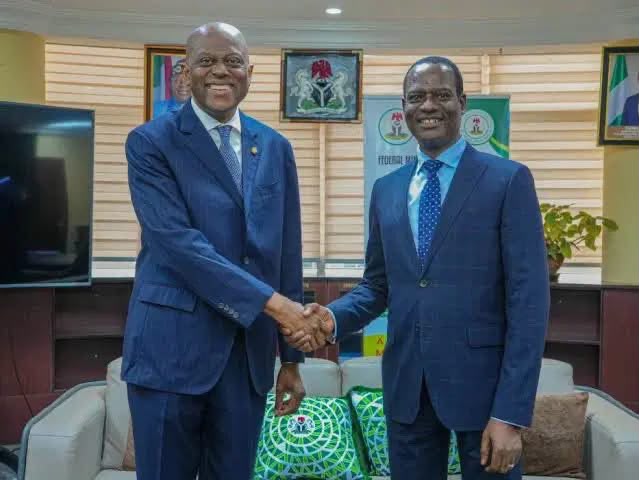
The CBN Governor, Olayemi Cardoso, and the Minister of Finance and Coordinating Minister of the Economy, Taiwo Oyedele, signed the Memorandum of Understanding (MoU) on Monetary-Fiscal Policy Coordination at the CBN headquarters in Abuja yesterday.
The agreement is expected to provide a framework for closer collaboration between the two institutions as they work to address economic challenges, promote macroeconomic stability and support sustainable growth.
Cardoso said the MoU reflected a shared commitment by the CBN and the Finance Ministry to deepen cooperation in managing the economy in the interest of Nigerians.
He explained that fiscal and monetary policies were separate but complementary tools, with government spending, taxation and borrowing shaping economic activity, while monetary policy influences liquidity, interest rates and broader monetary conditions.
According to him, the effectiveness of the two policy arms increases when they operate in harmony rather than in isolation.
“Fiscal and monetary policies remain two important and complementary instruments for the management of a modern economy,” Cardoso said.
He explained that fiscal policy affects economic activity through government expenditure, taxation and borrowing decisions, while monetary policy focuses on price stability and financial system soundness through the management of liquidity, interest rates and monetary conditions.
The Governor said closer coordination would enable the combined impact of both policy instruments to be greater than their individual effects.
The MoU therefore places the relationship between the fiscal authority and the monetary authority at the centre of efforts to strengthen macroeconomic management, with both institutions committing to a more structured partnership.
The development comes as Nigeria continues to navigate the complex interaction between government financing needs, monetary conditions, inflation and broader economic stability.
The Finance Ministry and the CBN are expected to use the framework to strengthen policy alignment and cooperation in pursuit of economic stability and sustainable prosperity.