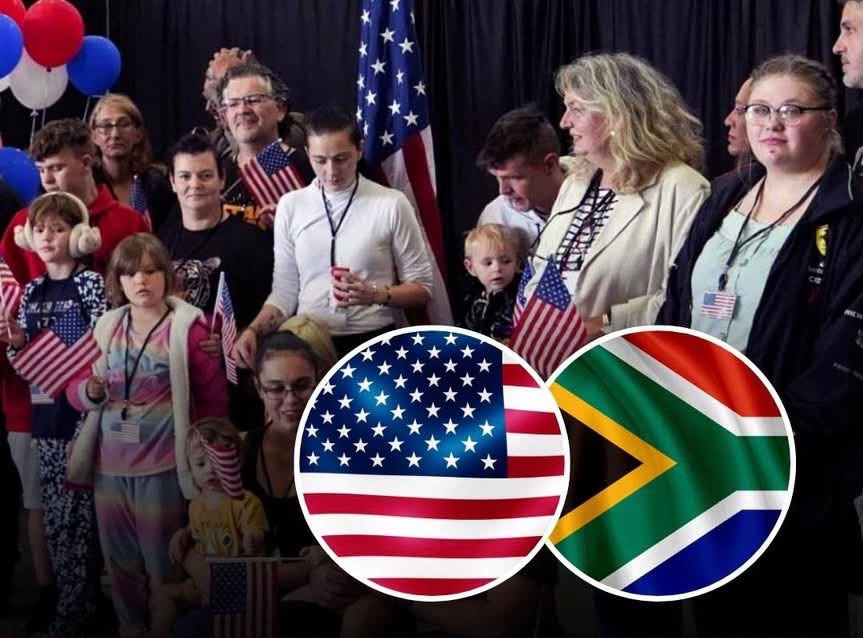
The Trump administration is preparing to reshape America’s refugee programme around a highly specific population, proposing to admit up to 17,500 refugees in fiscal 2027, with the majority expected to be Afrikaners from South Africa, in a policy shift that places the South African minority at the centre of Washington’s resettlement plans.
The proposal, contained in a notification sent to Congress, represents a striking departure from the broader geographic spread traditionally associated with the US refugee programme. Reuters reported that the administration intends the 17,500 places to consist “primarily” of South Africans, particularly Afrikaners.
The planned programme is also expected to carry a price tag of about $500 million, according to the congressional notification obtained by CBS News, effectively putting the projected cost of the initiative at roughly $28,500 per proposed refugee if the full ceiling is utilised.
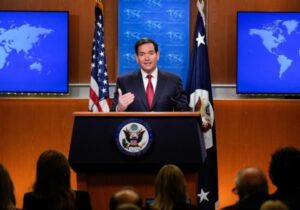
The administration’s justification centres on its contention that Afrikaners face racial discrimination, violence and threats to their property and livelihoods in South Africa. The State Department’s notification specifically cited alleged racial discrimination and violence as grounds for prioritising the group.
That assessment, however, remains sharply disputed by South African authorities. The government of President Cyril Ramaphosa has repeatedly rejected claims that Afrikaners are being subjected to systematic racial persecution or a “genocide”, while South African officials have argued that violent crime affects communities across racial lines.
The policy is significant not only because of who Washington plans to admit, but also because of who is being left with fewer opportunities under a drastically reduced refugee programme. Pew Research Center reported that the United States had admitted just 10,258 refugees through July 31, 2026, compared with 38,102 in fiscal 2025 and 100,034 in fiscal 2024.
The proposed 17,500 ceiling for fiscal 2027 therefore comes against a backdrop of historically low overall refugee admissions. The previous fiscal-year ceiling was itself 17,500 after the Trump administration raised the 2026 limit from 7,500 to accommodate additional Afrikaner admissions.
The concentration on South Africans has already produced an unusual pattern in the US refugee programme. Reuters reported in May that roughly 6,000 white South Africans had been admitted at that stage of fiscal 2026, compared with only three refugees from outside South Africa.
More recent reporting indicates that more than 13,000 Afrikaners had been admitted under the programme, underscoring how dramatically the South African component has come to dominate the administration’s refugee resettlement effort.
The policy has its roots in Trump’s earlier executive action directing the United States to facilitate the resettlement of Afrikaners whom his administration considers victims of racial discrimination. In May 2026, Trump formally increased the fiscal 2026 refugee ceiling to 17,500, specifically citing what his administration described as an emergency situation involving Afrikaners.
For fiscal 2027, the administration is now seeking to maintain the same numerical ceiling while again directing the programme primarily towards the South African group. The proposal still requires the normal congressional process surrounding the annual refugee determination.
The development places America’s refugee policy at an unusual intersection of immigration, foreign policy and Washington’s increasingly contentious relationship with Pretoria. Rather than simply expanding the refugee programme, the administration is directing a substantial share of its limited capacity toward a population it argues faces a distinct form of racial persecution.
For South Africa, however, the American characterisation remains disputed, making the proposed resettlement programme not merely an immigration policy but also a point of continuing diplomatic disagreement between Washington and Pretoria.
Source: The report is based on the latest reports by Reuters and CBS News, alongside U.S. government refugee-admission documents and State Department data.