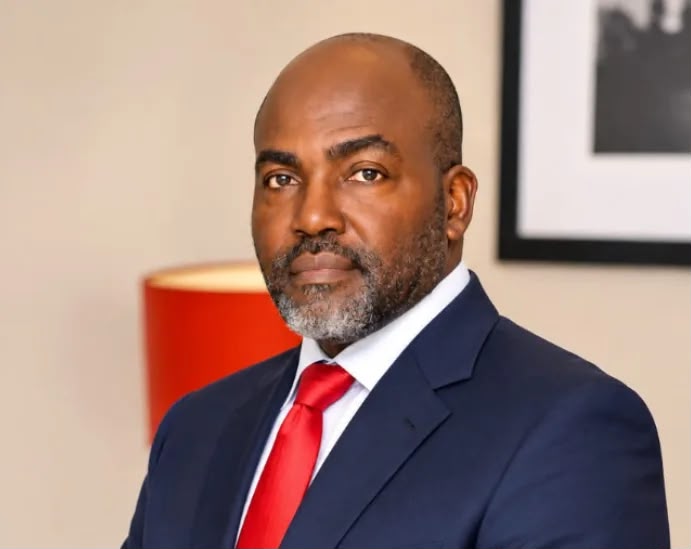
The 2027 Delta State governorship contest has taken a fresh turn as the Nigeria Democratic Congress (NDC) candidate, Deacon Chris Iyovwaye, declared that no traditional endorsement could determine who occupies the Government House, Asaba.
Iyovwaye’s position followed the endorsement of Governor Sheriff Oborevwori as the “sole candidate” of the Urhobo Nation by Ukoko R’Ivie R’Urhobo, a forum of Urhobo traditional rulers.
Rejecting the endorsement, Iyovwaye said the decision could neither bind voters across Delta State nor remove his constitutional right to seek the governorship, insisting that he would remain in the race.
He said traditional rulers deserved respect as custodians of the culture, history and values of their people, but their endorsement could not replace the electoral process through which Deltans choose their governor.
“I hold our royal fathers and the exalted institutions they represent in the highest esteem. They are sacred custodians of our history, culture, customs and communal values,” he said.
But, he added, “An endorsement, no matter how dignified its source, cannot supersede or extinguish Deltans’ democratic right to choose their leaders.”
Iyovwaye also questioned the premise of presenting the 2027 governorship as an Urhobo consensus, noting that the electorate extends beyond the Urhobo ethnic group to include Ijaw, Itsekiri, Isoko, Anioma and other communities across the state.
“As an Urhobo man, I deeply understand the value of unity. But Delta State belongs to all of us — Urhobo, Ijaw, Itsekiri, Isoko, Anioma, and every community that calls this state home,” he said.
Beyond the endorsement controversy, the NDC candidate shifted attention to the performance of the Oborevwori administration, arguing that the real test of the 2027 election should be what residents can point to as the tangible benefits of government.
He questioned the economic returns Deltans were getting from the state’s substantial resources, asking, “What measurable economic transformation are Deltans receiving in return for these substantial resources?”
Iyovwaye equally challenged the political argument that Governor Oborevwori’s relationship with the Federal Government should confer an electoral advantage, asking what measurable benefits that alignment had produced for ordinary residents.
“These are not partisan questions. They are questions every responsible government should be prepared to answer,” he said.
While acknowledging government projects in roads, bridges and other areas, Iyovwaye argued that the existence of projects should not be confused with their ultimate impact on the people.
“Those projects should be acknowledged where they serve the people. But expenditure is not the same thing as transformation,” he said.
He said the 2027 election should consequently be driven by candidates’ records, programmes and accountability rather than traditional endorsements or political arrangements.
“Performance must be the standard. Development must be the measure. Accountability must be non-negotiable. And the people must remain the final judge,” he said.
Iyovwaye subsequently ruled out withdrawing from the contest, saying he would continue his campaign across the state while maintaining that his position was not intended as a confrontation with the traditional institution.
“I respect our royal fathers. I respect Governor Oborevwori’s right to run. And above all, I respect the sacred right of every Deltan to choose. I will continue to campaign peacefully, constructively and firmly. I will not step down,” he said.