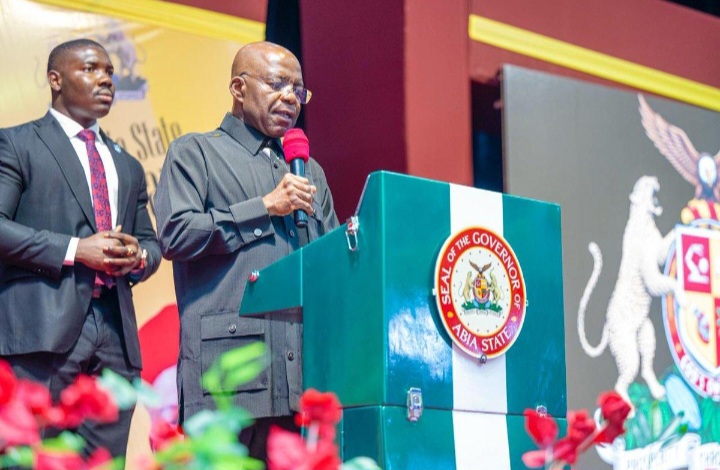
Abia State has risen to second place in Nigeria’s 2026 State Performance Index, marking a 34-place improvement from its position in the assessment two years earlier.
Punch reports that the revised assessment by Phillips Consulting placed Jigawa State first nationally, while Abia recorded a composite score of 0.55. Enugu came third, putting two South-East states among the top three in the latest ranking.
Abia’s position has improved sharply across the three editions of the index, moving from 36th in 2024 to 10th in 2025 before attaining second place in the revised 2026 edition. The progression represents the largest net improvement recorded among the states ranked in the latest assessment.
The revised methodology separates a state’s current performance from its progress over time. Phillips Consulting said it reviewed and adjusted the initial 2026 methodology, with momentum now determined by changes in ranking rather than differences between scores calculated on varying scales.
Citizen satisfaction was one of Abia’s strongest areas, with the state recording a standardised score of +1.78 and an absolute score of 3.92, classified as “Good”. The assessment drew on responses from 770 residents, who rated government support for businesses at 4.45, roads at 4.42 and publicity of government policies at 4.33.
Lower ratings were recorded for access to employment opportunities, which scored 3.12, clean water at 3.22 and law-enforcement conduct at 3.56. The fiscal assessment showed 27 per cent revenue self-reliance, IGR per capita of about ₦13,100 and debt per capita of approximately ₦31,300, while debt-to-revenue stood at 36 per cent and capital expenditure accounted for 70 per cent.
The revised report also adjusted its assessment of transparency and debt sustainability. Abia posted a transparency score of 0.38, while the debt assessment now considers both debt per capita and debt relative to revenue.
Phillips Consulting said the revised index provides a distinction between a state’s present position and its movement across successive editions, combining citizen experience with indicators covering fiscal sustainability, revenue performance, transparency and other aspects of state-level performance.