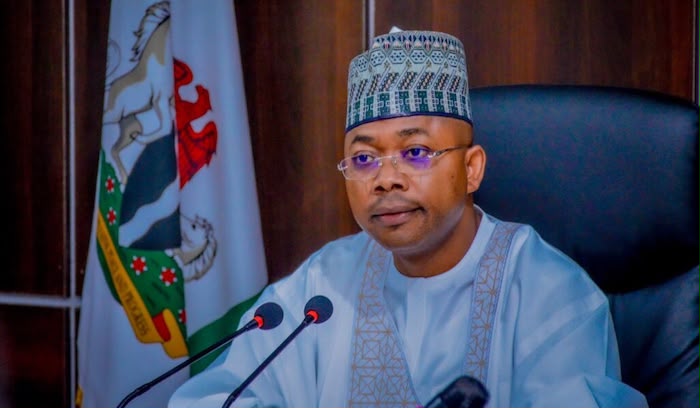
Kogi State has substantially expanded its financial support for students in tertiary institutions, with Governor Usman Ododo approving ₦646.8 million for bursary payments and raising the allowance for medical students to ₦75,000.
The new package covers 20,157 students, with undergraduates now entitled to ₦30,000, up from ₦12,000 previously, while medical students will receive ₦75,000 against the former ₦30,000.
The adjustment represents more than a routine bursary review, coming amid increasing pressure on families to meet the cost of tertiary education and as state and federal interventions seek to keep students in school.
Ododo announced the approval at the flag-off of the bursary disbursement to Kogi students in tertiary institutions, held at the Banquet Hall of the Government House, Lokoja, where he said his administration would continue to place students’ welfare among its priorities.
The governor, represented by the Commissioner for Education, Wemi Jones, said the selection process had been opened to Kogi students studying in tertiary institutions across Nigeria.
The development was reported by THISDAY.
The Executive Secretary of the Kogi State Scholarship Board, Dr Afolabi Raji, said the latest increase represented a significant expansion of the state’s bursary commitment.
He said the undergraduate allowance had risen progressively from ₦12,000 in 2024 to ₦18,000 and subsequently ₦30,000, while the medical students’ allowance had increased from ₦30,000 to ₦75,000.
Raji said the revived Scholarship Board had introduced new processes to improve the administration of student support schemes.
According to him, more than 20,000 applications were received following an online advertisement, after which a screening and verification exercise produced 13,157 successful beneficiaries for the latest disbursement.
He said successful students would begin receiving alerts for the approved payments, depending on their category.
The governor also acknowledged the Federal Government’s intervention through the Nigerian Education Loan Fund, NELFUND, urging students to take advantage of available education-financing opportunities.
He said combining federal interventions with the state’s bursary programme would provide additional support for students pursuing higher education.
Representing the student community, the outgoing National President of the National Association of Kogi State Students, Sunday Adeola, commended the increase but appealed for the scheme to cover Kogi indigenes in law schools and other higher institutions not currently captured.
He assured the state government of continued constructive engagement by the student community.
With the latest adjustment, the Kogi bursary programme has shifted from a modest educational allowance towards a broader intervention targeted at reducing the financial burden on students, particularly those in courses such as medicine where the cost of training can be considerably higher.