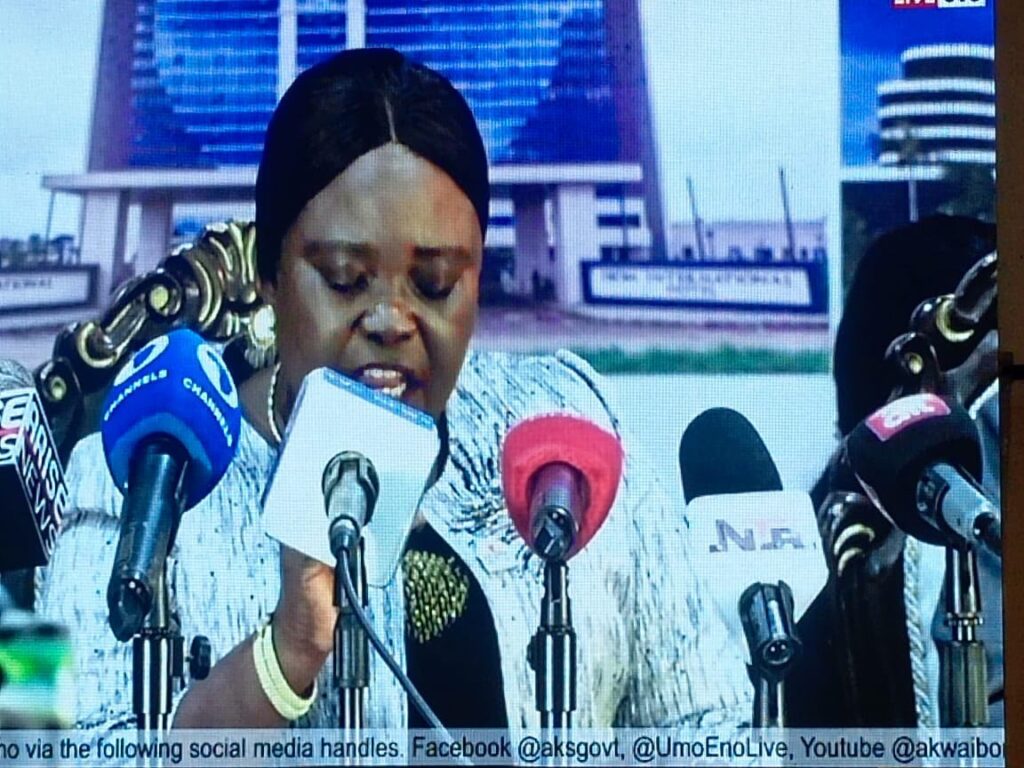
The growing number of vulnerable children being rescued from the streets of Uyo and brought into government care is putting increasing pressure on Akwa Ibom’s existing children’s homes, the Commissioner for Women Affairs and Social Welfare, Hon. Inibehe Silas Etukudo, has disclosed.
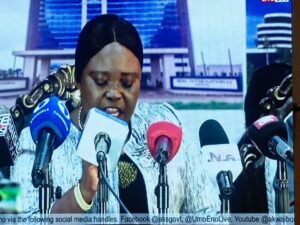
Etukudo who made the disclosure on Monday during a press briefing on the ministry’s achievements said the ministry was receiving children from the streets as well as those brought by the police, anti-kidnapping authorities and agencies handling trafficking cases, making additional accommodation necessary.
“We need space to keep them,” the commissioner said, explaining that the state was considering expanding its government children’s homes, including the possibility of establishing facilities across the three senatorial districts.
The situation has also extended to children who are found sleeping around public spaces in Uyo at night. Etukudo said the ministry had intensified efforts to remove such children from the streets and provide them with shelter, education and other forms of support.
According to her, 493 children are currently receiving care and support in government children’s homes, with 89 in primary schools, 53 in secondary schools and 62 in tertiary institutions.
The commissioner said 100 children in the government homes were recently trained in skill acquisition and entrepreneurship, while 22 caregivers were granted automatic employment by the state government.
She said the ministry’s child protection work also covers children rescued from trafficking and other dangerous circumstances, adding that 47 girls and children brought through NAPTIP and the Anti-Kidnapping Squad had received support.
Etukudo said the pressure on government facilities was not limited to children, as the ministry also receives vulnerable adults requiring shelter, rehabilitation and reintegration.
On mentally ill persons living on the streets, she disclosed that five persons had been rescued, treated, empowered and reunited with their families, while two others were recently reintegrated.
“We don’t just send them to their families, we empower them,” she said, stressing that successful rehabilitation also depended on families accepting responsibility for their relatives.
She lamented that some families had previously allowed rehabilitated relatives to return to the streets, saying, “Most of the people you are seeing now on the street are those we have treated before.”
The commissioner also disclosed that the ministry had supported 93 survivors of gender-based violence, settled more than 300 family disputes and sensitised 28 communities against harmful traditional practices.
Beyond emergency welfare interventions, she said the ministry was pursuing economic empowerment, including 60 livelihood processing mills comprising five cassava and 55 oil palm facilities across six local government areas, as part of efforts to help vulnerable families achieve greater economic independence.