The Nigerian National Petroleum Company (NNPC) Limited has agreed to suspend its petrol retail profit margin for 30 days, selling the product at cost as the Federal Government rolls out additional measures to cushion households and businesses against rising fuel prices.
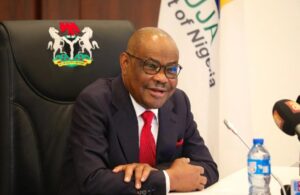
The Finance Minister and Coordinating Minister of the Economy, Taiwo Oyedele, announced the arrangement on Thursday, October 8, saying the intervention, backed by President Bola Tinubu, was intended to ease the pressure of global crude oil price shocks on Nigerians, particularly vulnerable households and commercial transport operators.
Under the arrangement, NNPC Retail will sell petrol at the same price it incurs in procuring the product, without adding its retail profit margin. For instance, where its landing cost is ₦1,300 per litre, the company will sell at that price.
Oyedele, who expressed hope that other fuel marketers would follow the company’s example, stressed that the temporary measure should not be interpreted as a return to petrol subsidy, which the Federal Government abolished on May 29, 2023.
The minister also announced plans to stabilise petrol prices through forward sales of crude oil to domestic refineries, alongside negotiations to establish a ceiling of ₦1,350 per litre on the ex-gantry or landing cost of petrol.
Under the proposed arrangement, where production or importation costs exceed the ceiling, refiners and importers would initially absorb the difference and recover it later when crude oil prices or exchange rates become more favourable.
“This is neither a subsidy nor a price control: it is designed to smooth prices over time rather than suppressing them,” Oyedele said, explaining that the objective was to reduce the uncertainty associated with sharp fluctuations in fuel prices.
“The reasoning is simple. 1,400 naira a litre today and 1,400 tomorrow is better than 1,500 today and 1,300 tomorrow, because volatility itself adds to uncertainty and cost. And when fares rise sharply, they rarely fall as fast,” he added.
According to the minister, the proposed price ceiling would be reviewed monthly and adjusted in line with prevailing costs, with the relevant figures published to ensure transparency.
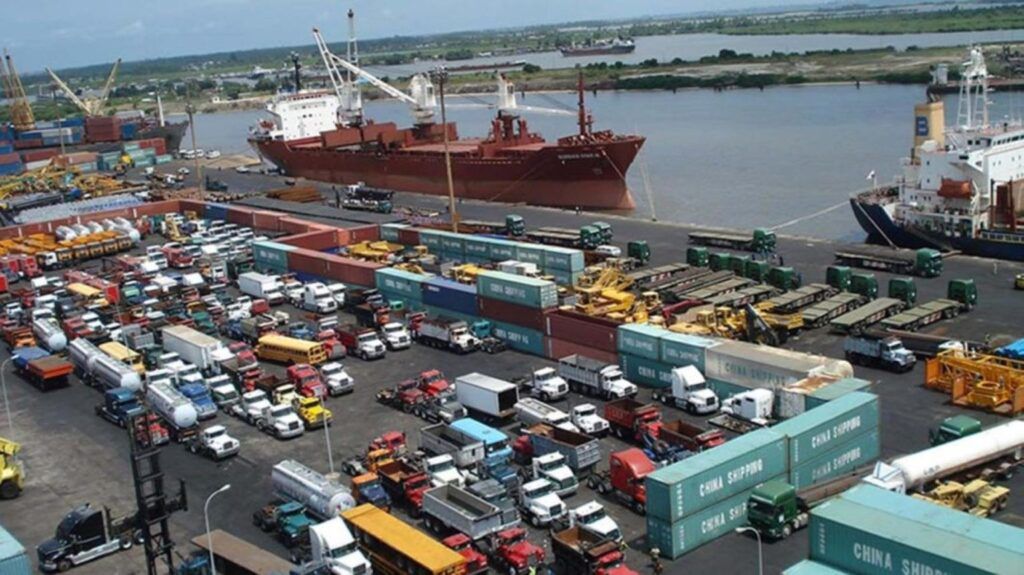
The Federal Government is also expanding measures to reduce transportation and logistics costs, including the accelerated deployment of compressed natural gas (CNG), which it said was between 60 and 70 per cent cheaper than petrol. Transport operators are expected to reflect the savings in lower passenger fares.
Other interventions include increased funding for cash transfers to vulnerable households, subsidised credit for small businesses and consumers, and efforts to curb the collection of road taxes and levies that contribute to higher transport and distribution costs.
The government is also considering an excess-profit tax for operators found to be taking undue advantage of consumers across the energy value chain. Proceeds from such taxes, according to the announcement, would be dedicated to transport support or vouchers for urban minimum-wage earners.
It further disclosed plans to work with the National Assembly on additional tax relief for low-income earners under the 2027 Finance Bill, while cutting regulatory costs that contribute to the rising prices of goods and services.
Another major component of the package is a proposed National Strategic Fuel Reserve, through which refined petroleum products would be released into the market under clearly published rules whenever global disruptions or hoarding threaten supply and price stability.
The government said the reserve would help prevent artificial scarcity, discourage market manipulation and strengthen long-term energy security without fixing pump prices or restoring a blanket subsidy.
Improved traffic management in major urban centres and the use of address codes recently introduced by the Nigerian Postal Service (NIPOST) are also expected to reduce fuel consumption and improve the efficiency of goods distribution.
The Presidency acknowledged the economic difficulties Nigerians continue to face amid high fuel prices but maintained that reversing the subsidy removal would expose the country to the fiscal and supply problems experienced in the past.
“Removing the fuel subsidy came at a price. But the alternative has been tried. Nigeria has already lived through that cycle: scarcity, smuggling, a collapsing currency and a fiscal crisis,” the Presidency said.
It added that the government was not seeking to reverse the reform but to ensure that its benefits reached more Nigerians “faster and in more tangible ways.”
The Presidency also disclosed that the Federal Government was working on a comprehensive package of fiscal measures aimed at bringing inflation down to single digits sustainably in the near term.
The measures were announced in a statement issued by Bayo Onanuga, Special Adviser to the President on Information and Strategy, on October 8, 2026.