GAZA — Three years of devastating conflict have dramatically transformed the Gaza Strip, leaving communities struggling to rebuild their lives amid widespread destruction, crippled public services and the disappearance of landmarks that once defined their neighbourhoods.
For many Palestinians returning to their former homes, the challenge goes beyond finding shelter. Familiar streets, banks, bakeries, markets and residential towers that once helped residents navigate their communities have been reduced to rubble, making some areas almost impossible to recognise.
In Tal al-Hawa, a neighbourhood in Gaza City, the destruction has erased much of the landscape residents once knew. Buildings that served as familiar meeting points have collapsed, roads have been altered, and debris has replaced the bustling streets where traders, commuters and families once went about their daily activities.
Residents of other communities, including Zeitoun and Shuja’iyya, have experienced similar devastation. Some families have returned to find their homes destroyed, while others remain in damaged structures or makeshift shelters because they have nowhere else to go. In Shuja’iyya, fewer than 50 families reportedly remain in an area that housed more than 100,000 people before the war.
The scale of the destruction is reflected in assessments by the United Nations Satellite Centre, which estimated that approximately 81 per cent of buildings across Gaza had sustained damage. In Gaza City, the figure was estimated at 83 per cent, with around 200,000 buildings affected across the territory, including approximately 123,000 classified as destroyed.
Beyond housing, the conflict has severely weakened the infrastructure required to sustain everyday life. According to UN-Habitat, more than 95 per cent of Gaza’s neighbourhoods fall into low or extremely low categories of functionality, while approximately 77 per cent of the road network has been damaged.
Access to clean water has also become increasingly difficult. Gaza City needs an estimated 100,000 cubic metres of water daily during summer, but only around 30,000 cubic metres are available. Municipal officials have reported damage to 85 per cent of the city’s central wells and more than 150,000 metres of water distribution networks.
The electricity crisis has further complicated efforts to restore essential services. Although some water and sanitation facilities have been repaired, many cannot operate effectively because of insufficient power and fuel. Across Gaza, wastewater treatment plants remain out of service, while widespread disruptions to sewage pumping have increased the discharge of untreated wastewater.
Healthcare and education have suffered similarly severe setbacks. The World Health Organisation reported that only 19 of Gaza’s 36 hospitals were partially operational, with none functioning at full capacity. Meanwhile, UNICEF estimates that approximately 98 per cent of school buildings have been damaged or destroyed, leaving hundreds of thousands of children facing interrupted education.
Economic recovery remains another major obstacle. Although some shops have reopened and goods have returned to certain markets, many households cannot afford basic necessities. Inflation has reportedly risen to around 207 per cent above pre-war levels, while unemployment has reached approximately 78 per cent. A separate assessment by the United Nations Conference on Trade and Development estimated that around 92 per cent of Gaza’s economic establishments had been damaged or destroyed.
The damage extends to Gaza’s cultural and historical identity. UNESCO has verified damage to 164 cultural heritage sites, including historic buildings, religious landmarks, museums and archaeological locations. Among the affected sites are the Great Omari Mosque, Qaysariyya market, Pasha’s Palace, Hammam al-Samra and the St Porphyrius church complex.
Historical records have also been lost or damaged. The International Council on Archives reported that shelling struck Gaza City’s Central Archives and main public library building, threatening documents that preserved important aspects of the city’s social, political and economic history.
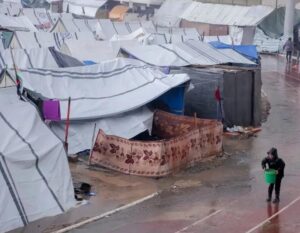
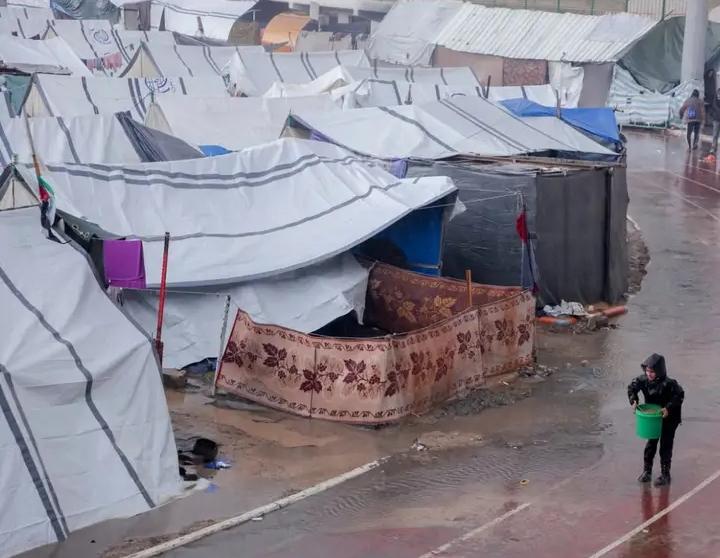
Displacement has further reshaped the territory’s population distribution. UN-Habitat estimates that approximately 1.4 million people are living across around 1,000 displacement sites. Many residents have moved repeatedly during the conflict, with a United Nations Population Fund study finding that people in Gaza experienced displacement an average of seven times.
For those returning to their neighbourhoods, the emotional consequences are difficult to separate from the physical devastation. Some residents have pitched tents beside the remains of their former homes, choosing to remain close to their land even when their houses no longer exist. Others describe feeling like strangers in places where they spent their childhoods.
Despite the destruction, efforts to restore parts of Gaza continue. Workers are repairing sections of Salah al-Din Road, while some businesses and essential facilities are attempting to resume operations. However, rebuilding the territory will require resources on an enormous scale.
A joint assessment by the World Bank, the United Nations and the European Union estimated Gaza’s recovery and reconstruction needs at approximately $71.4 billion over a decade. The conflict has also generated an estimated 68 million tonnes of rubble, presenting a major challenge for reconstruction.
The rebuilding process will involve more than replacing damaged buildings and repairing roads. Restoring water supplies, healthcare, education, livelihoods and historical sites will be essential to helping communities recover.
For Gaza’s residents, the central question is no longer simply when life will return to normal, but what normality can mean after so much has disappeared. Although parts of the territory remain inhabited and some services are gradually being restored, the landscape, economy and social fabric have been profoundly altered.
The task ahead is therefore twofold: reconstructing a devastated territory while preserving the memories, identities and community connections that made Gaza home to millions of people.