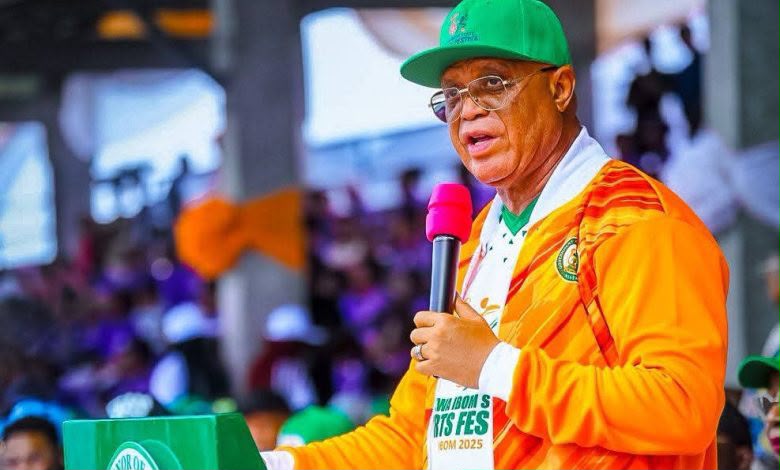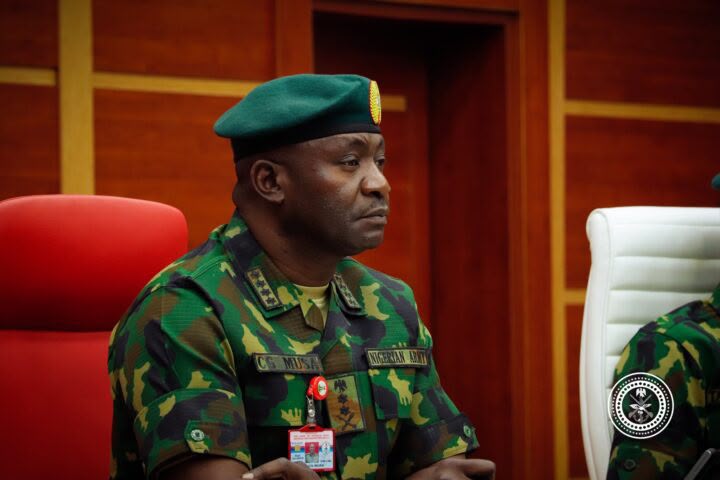
Nigeria’s efforts to tackle insecurity are being affected by difficulties in procuring weapons and ammunition from foreign suppliers, Defence Minister Christopher Musa has said.
Musa, a retired general, said ongoing wars in different parts of the world had made it increasingly difficult for Nigeria to obtain essential military equipment, including ammunition and armoured personnel carriers.
He said the situation had reinforced the need for the country to strengthen its local defence manufacturing capacity and establish partnerships with international manufacturers.
The minister spoke on Friday at the University of Ibadan while commissioning the CG Musa Security Management Hub donated to the TETFund Centre of Excellence in Security Management.
He said the government planned to expose Nigerian defence manufacturers to foreign companies to improve local production and reduce dependence on imported military equipment.
“Our intention is to expose our local producers to foreign and international manufacturers so that we can continue to produce what we need or what we rely on,” he said.
Musa explained that even when Nigeria had the funds to purchase military supplies, availability had become a major challenge.
“With the wars going on in Ukraine, Russia and the Strait of Hormuz, it has become extremely difficult buying as little as ammunition to use, talk less of APCs,” he said.
He added that local manufacturers were making efforts but needed stronger international partnerships to expand their capacity.
The minister said Nigeria had intensified military operations and was gradually recording improvements in the security situation, but stressed that defeating insecurity required more than military action.
He identified extremism, weak governance, political factors and social exclusion among the conditions sustaining insecurity, arguing that these challenges required coordinated national responses.
“Security cannot be achieved through military operations alone. It requires informed policies, credible institutions, technological innovation and a comprehensive understanding of the human dimensions of conflict,” he said.
Musa also called for stronger collaboration between defence institutions and universities, saying research and evidence-based analysis were important to developing effective security policies.
He described the academic community as a strategic part of Nigeria’s security architecture, noting that universities could help investigate the causes of conflicts and develop lasting solutions.
The Vice-Chancellor of the University of Ibadan, Professor Kayode Adebowale, said the newly commissioned hub would support security research and provide a platform for interaction between academics and policymakers.
He said the university hoped the facility would become a centre for multidisciplinary research and generate data to guide the Ministry of Defence and security agencies.
Adebowale stressed that the hub should not merely serve as a collection of security materials but should be actively used to produce research that would inform national security decisions.
The Centre’s lead researcher and technical officer, Professor Isaac Olawale Albert, urged the Defence Ministry to provide more research funding and encourage security agencies to engage the centre’s experts in policy development.
The Director of the TETFund Centre of Excellence in Security Management, Professor Benjamin Aluko, also called on Nigerians to enrol in the centre’s master’s and doctoral programmes in Security Management.