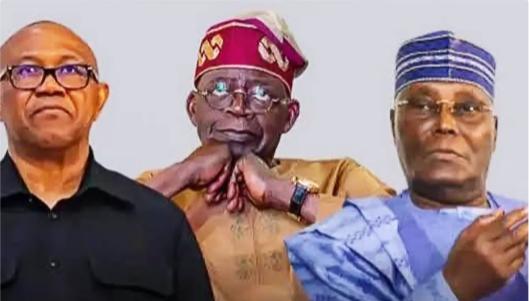
With the 2027 presidential election approaching, President Bola Tinubu appears to have gained a significant political advantage, with more than 30 state governors openly supporting his re-election campaign. However, the growing opposition mobilisation led by Atiku Abubakar and Peter Obi suggests that the battle for Aso Rock may not be as straightforward as the ruling party expects.
The number of governors backing Tinubu has raised questions about the ability of opposition candidates to challenge the president at the polls. Yet, Nigeria’s electoral history shows that controlling several states does not automatically translate into victory in a presidential election.
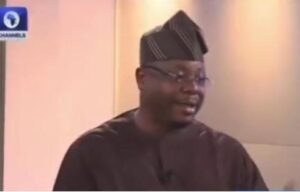
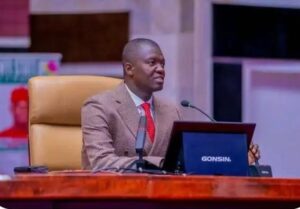
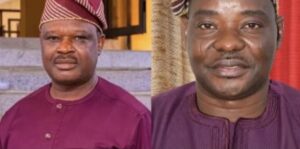
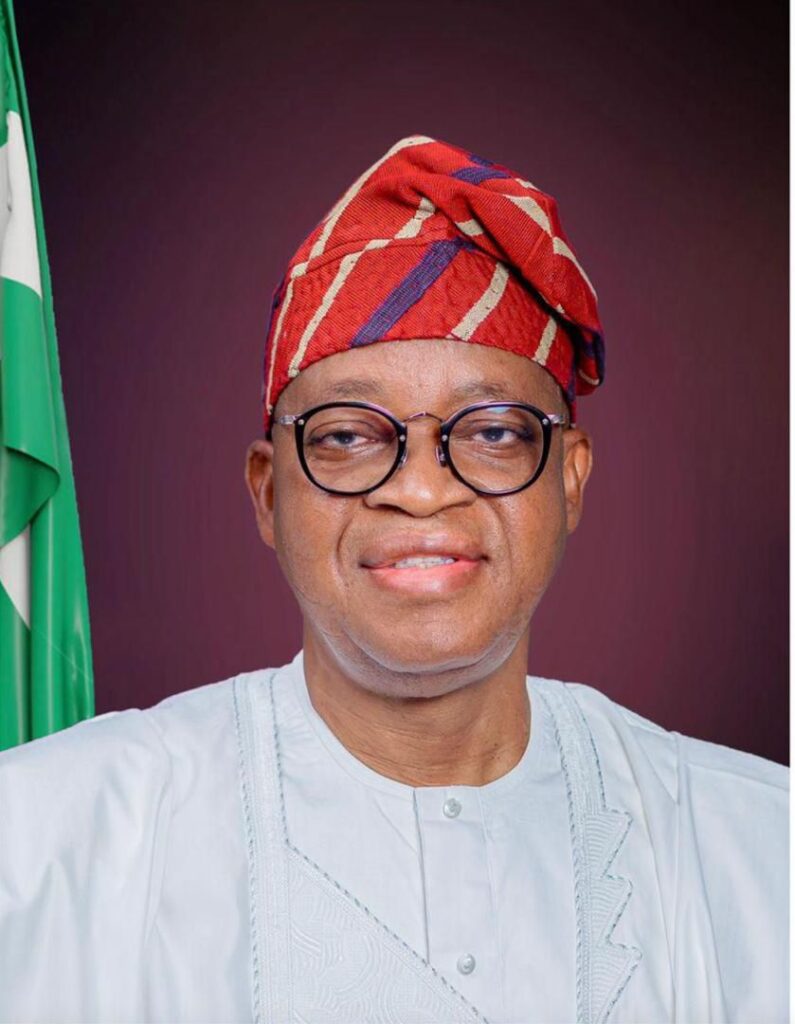
At present, 31 governors elected on the platform of the All Progressives Congress (APC) are supporting Tinubu’s second-term ambition. The president has also secured the backing of three governors from opposition parties: Chukwuma Soludo of Anambra, Ademola Adeleke of Osun and Alex Otti of Abia.
This leaves only two governors, Seyi Makinde of Oyo State and Bala Mohammed of Bauchi State, as the major state-level political figures openly opposed to Tinubu’s re-election.
Interestingly, neither Atiku, who is contesting under the African Democratic Congress (ADC), nor Obi of the Nigeria Democratic Congress (NDC) has the backing of a sitting governor. Despite this disadvantage, both opposition figures remain confident that they can convince Nigerians to vote against the incumbent president.
Their confidence is partly informed by the 2023 presidential election, when Tinubu, Atiku and Obi won 12 states each, despite differences in the political structures available to them.
Before that election, the APC controlled 21 states, while the Peoples Democratic Party (PDP), under which Atiku contested, governed 14 states. The All Progressives Grand Alliance (APGA) controlled Anambra, while the Labour Party had no state under its control.
Nevertheless, Obi polled 6,101,533 votes, finishing third behind Atiku’s 6,984,520 and Tinubu’s 8,794,726 votes.
One of the most notable outcomes was Obi’s performance in Lagos, Tinubu’s traditional political stronghold. The Labour Party candidate secured 582,454 votes against Tinubu’s 572,606, defeating the APC candidate by 9,848 votes.
The result has continued to feature in arguments that voters can reject the political preferences of governors, regardless of the strength of their party structures.
Former Kaduna State Governor Nasir El-Rufai made a similar argument when he called for an opposition coalition ahead of the 2027 election. He maintained that governors could not determine how millions of Nigerians would vote, insisting that electoral victory ultimately rested with the electorate.
Former Osun State Governor Rauf Aregbesola also questioned the belief that controlling government houses automatically guarantees presidential victories.
Citing the 2023 results in the South-West and South-East, Aregbesola argued that the APC’s control of several states did not prevent opposition candidates from securing substantial votes.
He called on the government to guarantee a credible election, saying the real strength of political parties should be measured by their acceptance among voters rather than the number of governors in their ranks.
Atiku’s camp has also dismissed concerns about the absence of governors in the ADC’s political structure. Kola Ologbondiyan, Director of Media and Publicity for the ADC Presidential Campaign Council, said the former vice president would personally reach out to Nigerians instead of depending on political surrogates.
Similarly, Obi’s running mate, Rabiu Kwankwaso, has argued that the APC’s control of more than 30 states should not be mistaken for an assurance of victory.
Kwankwaso recalled the 2015 presidential election, when former President Goodluck Jonathan lost his re-election bid to Muhammadu Buhari despite the PDP controlling 21 states before the contest.
Jonathan eventually won 15 states and the Federal Capital Territory, while Buhari secured 21 states, including 11 previously controlled by the PDP.
The former Kano governor said the experience should serve as a warning to those who believe that having more governors automatically guarantees electoral success.
However, the growing confidence among Tinubu’s supporters has also brought pressure on governors and members of the APC Presidential Campaign Council to produce results.
Minister of the Federal Capital Territory, Nyesom Wike, recently warned campaign council members against celebrating victory if they failed to deliver their respective states to the president.
Wike, who remains a PDP chieftain but is supporting Tinubu’s re-election, was appointed coordinator for the FCT and Rivers State.
He insisted that the responsibility of campaign council members was to secure votes for the president, rather than occupy positions within the campaign structure.
Kaduna State Governor Uba Sani has taken an even stronger position, declaring that the APC would consider it a failure if an opposition candidate secured as much as 25 per cent of the votes in Kaduna.
Sani said federal government projects in the state should encourage residents to support Tinubu’s second-term ambition.
Among the projects he highlighted were the reconstruction of the 123-kilometre Kaduna-Birnin Gwari road, the proposed Kaduna metropolitan light rail project, and improvements in federal educational institutions.
He also disclosed that $865 million had been approved for the proposed rail project, with $300 million already released as mobilisation funding to the contractor.
Other governors supporting Tinubu have similarly pointed to improved allocations to states following the removal of petrol subsidy, infrastructure development, foreign reserves, currency stability, student loan opportunities and economic reforms as reasons the president deserves another term.
Edo State Governor Monday Okpebholo has argued that the increased funds available to state governments after subsidy removal demonstrate the benefits of Tinubu’s policies.
He also expressed confidence that the APC could secure its target of 2.5 million votes in Edo State.
Soludo, who recently joined Tinubu’s re-election campaign despite belonging to APGA, has described the president’s economic reforms as difficult but necessary. He believes a second term would allow the administration to consolidate and accelerate its reform programme.
On the other side, Atiku and Obi are hoping that widespread economic difficulties will weaken support for the president.
Atiku has repeatedly criticised the removal of petrol subsidy, arguing that the policy has increased transportation costs, pushed up food prices and placed additional pressure on households and businesses.
His position received further attention following an SBM Intelligence survey released in September, which indicated that 67.4 per cent of respondents wanted the Federal Government to restore petrol subsidy.
Reacting to the findings, Atiku said the figures reflected growing dissatisfaction with the administration’s economic policies.
He proposed an alternative arrangement that would subsidise petroleum products refined locally and sold within Nigeria, rather than returning to the previous subsidy system that covered imported fuel.
According to him, such an arrangement would have spending limits, legislative oversight and independent audits.
Obi has also intensified his criticism of Tinubu’s administration, accusing the government of worsening poverty, unemployment, insecurity and corruption.
Speaking at the inauguration of the NDC National Campaign Council in Abuja on October 26, the former Anambra governor said Nigerians were looking for a change in leadership.
He also questioned the administration’s borrowing record, arguing that Tinubu should explain how funds obtained through loans and successive national budgets had been utilised.
Obi maintained that Nigeria needed a different approach to governance, insisting that the country could not continue on its present path.
However, the opposition’s position on fuel subsidy may also face questions, particularly following warnings from the International Monetary Fund that blanket fuel subsidies are expensive, place additional pressure on government finances and often benefit wealthier consumers more than poorer households.
This means the 2027 campaign may revolve around two competing arguments: Tinubu’s supporters will be asking Nigerians to give his reforms more time, while the opposition will be urging voters to reject an administration they believe has made life increasingly difficult.
Ultimately, the number of governors supporting the president will be only one part of the equation. Their ability to translate political influence into actual votes will be the bigger challenge.
The January 16, 2027 presidential election could therefore become a defining moment for Nigeria’s political system, particularly in determining whether governors still hold the kind of electoral influence many politicians attribute to them.
For Tinubu, the task is to turn the support of more than 30 governors into votes at the polling units. For Atiku and Obi, the challenge is to convert public dissatisfaction into a nationwide electoral movement.
The outcome will reveal whether political control at the state level remains a powerful advantage or whether Nigerian voters are increasingly prepared to make their own decisions at the ballot box.