Rising operating expenses are putting additional pressure on Nigerian businesses, even as the country’s private sector continues to record growth, according to the latest economic indicators published by The Guardian.
Data from the October Stanbic IBTC Bank Purchasing Managers’ Index (PMI) showed that business conditions remained in expansion territory, with the headline index standing at 55.7 points, compared with 56.4 points in September.
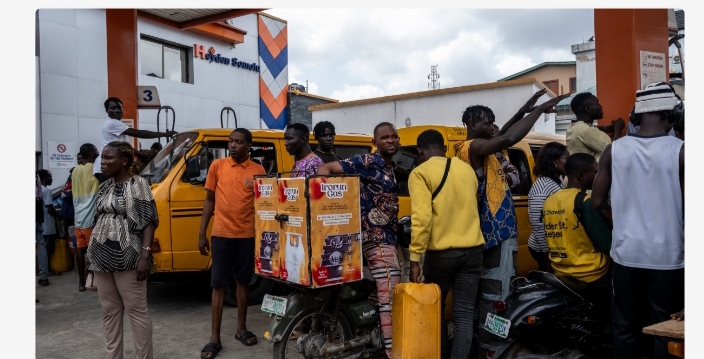
The increase in fuel-related expenses contributed to a four-month high in input price inflation, while businesses also faced higher costs for food products and building materials. Although some employers reviewed salaries to cushion the effects of rising living costs, the rate of increase in staff expenses slowed.
The survey further revealed an uneven employment situation across the economy. Agriculture and manufacturing businesses increased their workforce, but wholesale and retail trade, as well as services, recorded job reductions. Overall job creation fell to its slowest pace in three months.
Nevertheless, businesses continued to receive new orders for the ninth consecutive month, while output maintained its expansion streak, extending to 23 months across the four sectors covered by the survey.
The economic developments come amid renewed calls for government policies to deliver more tangible benefits to Nigerians.
Incoming Nigerian Economic Summit Group (NESG) Chairman, Omoboyede Olusanya, said the effectiveness of economic reforms should be measured by their impact on employment, household earnings, business productivity and living standards.
Speaking at the conclusion of the 32nd Nigerian Economic Summit in Abuja on October 27, Olusanya argued that improvements in economic stability would have limited value unless ordinary citizens experienced better living conditions.
He outlined “Growth that Delivers” as the central principle of his incoming leadership, promising stronger accountability for summit resolutions through assigned implementation officers, clear deadlines and measurable targets.
Olusanya also pledged to strengthen policy research and publish progress reports on agreed commitments before the 33rd summit, with recommendations aligned with the National Development Plan 2026–2030.