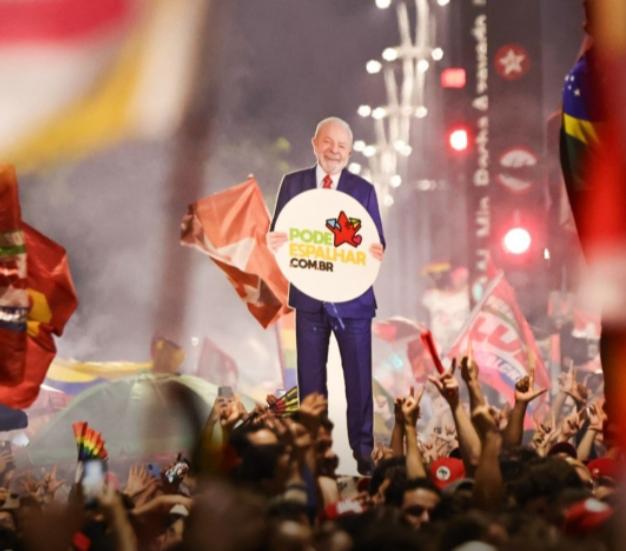
Brazil’s left-wing political movement has demonstrated how an organised social media campaign can change the direction of an election, after supporters of President Luiz Inácio Lula da Silva adopted digital mobilisation tactics previously associated with the country’s political right.
The strategy became particularly important after Lula suffered an unexpected setback in the first round of voting on October 4, losing to right-wing candidate Flávio Bolsonaro. With the possibility of losing the presidency becoming increasingly real, supporters turned to an aggressive online campaign to secure Lula’s return to power.
At the centre of the operation was Brazilian Congressman André Janones, who transformed a WhatsApp channel known as “Lula’s Army” into a platform for coordinating supporters across the country.
The group reportedly attracted nearly 11 million followers within three weeks, growing from about 50,000 members before the first-round election.
Through the platform, Janones assigned daily tasks to supporters, encouraging them to share campaign materials, promote hashtags, engage with political discussions, circulate videos and recruit more people into the movement.
Members were also encouraged to use other platforms, including Instagram and X, to spread pro-Lula messages and counter the influence of Bolsonaro’s supporters.
The approach represented a major shift for Brazil’s left, which had previously struggled to match the digital influence of the country’s conservative political movement.
In 2018, former President Jair Bolsonaro benefited significantly from networks of WhatsApp groups that helped spread political messages and mobilise voters. His political camp continued to rely heavily on social media in subsequent elections.
However, political analysts believe Lula’s camp failed to give the digital space sufficient attention before the first round of the 2026 election, allowing Flávio Bolsonaro to gain an advantage.
Janones’ intervention changed that approach by turning ordinary supporters into active campaign promoters rather than leaving online communication entirely in the hands of politicians and major influencers.
The congressman used emotionally charged messages, provocative language and coordinated activities to keep supporters engaged. He also advised members against interacting with opposition publications, arguing that such engagement could increase their visibility through social media algorithms.
In one of the campaign’s more unusual activities, Janones called on supporters to participate in a traditional Brazilian protest known as panelaço, which involves banging pots and pans, during Flávio Bolsonaro’s television interview on TV Globo.
The campaign’s intensity was such that supporters were encouraged to find replacements before taking breaks from their online assignments.
Political communication researcher Viktor Chagas described the strategy as a form of gamification, where participants were given specific responsibilities and made to feel part of a coordinated national movement.
However, the campaign also attracted criticism over the circulation of misleading content. One manipulated image, which appeared to show Brazilian football legend Ronaldo wearing a national team jersey with Lula’s ballot number and making a gesture associated with the president, was reportedly generated using artificial intelligence.
Fact-checkers later identified the image as manipulated, while Ronaldo’s representatives said it had been circulated without his permission.
There were also concerns that adopting aggressive political communication tactics could further deepen divisions and reduce meaningful political discussions to online confrontations.
The operation faced a legal challenge after a Supreme Court judge ordered the temporary suspension of the WhatsApp channel on October 11 following a complaint from Bolsonaro’s campaign over alleged disinformation. The decision was subsequently overturned.
Although Lula’s victory cannot be attributed entirely to online mobilisation, some experts believe the digital campaign played an important role in his comeback.
Leonardo Magalhães Firmino, head of research firm IPSE Global, argued that Janones gave Lula’s supporters the organisation and direction they needed to turn their political support into practical action.
Rather than focusing mainly on persuading opponents online, the strategy concentrated on energising existing supporters and encouraging them to influence people within their families, workplaces and communities.
One of the participants, 48-year-old Veridiana Cunha, said joining the campaign gave her a renewed sense of purpose during a difficult period in her personal life.
She explained that her participation helped convince a friend who had been considering staying away from the polls to eventually vote for Lula.
For her, that single vote was proof that the campaign’s activities could make a difference.
The Brazilian experience has since drawn attention to the growing importance of organised digital movements in modern elections, showing how political parties can use ordinary supporters, coordinated messaging and social media platforms to strengthen their electoral campaigns.