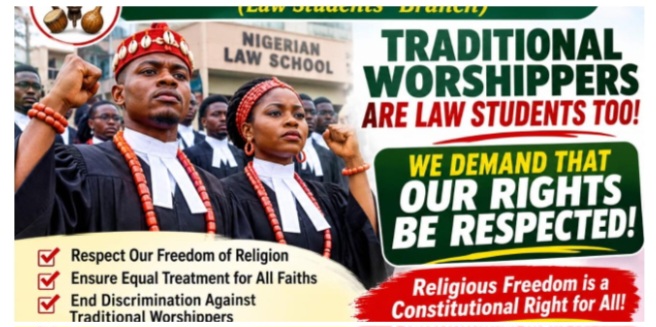
The controversy surrounding religious expression at the Nigerian Law School has taken another dimension, with traditional religious practitioners insisting that their beliefs must receive equal constitutional recognition if exemptions are made for other faiths.
The Association of Traditional Worshippers in Nigeria has weighed into the disagreement over the institution’s examination dress code, arguing that the debate should extend beyond the rights of Muslim students to include adherents of indigenous African religions, according to SaharaReporters.
The group maintained that allowing students to wear religious garments such as hijabs while restricting similar expressions from other religious communities would raise questions about equal treatment. It also expressed support for the Law School’s decision to uphold its examination rules, warning that institutional regulations should not be altered through pressure from religious groups.
Invoking Section 38 of the 1999 Constitution, the association said freedom of religion covers every Nigerian, irrespective of whether their beliefs are rooted in Christianity, Islam or traditional African practices.
It challenged the authorities to adopt a clear and consistent position on religious accommodation, arguing that any concession made on faith-based grounds should apply equally to all recognised religious traditions.
The association also appealed to the Muslim group reportedly considering a protest over the matter to pursue dialogue and lawful administrative procedures instead of demonstrations.
It further cautioned against creating a situation in which practitioners of indigenous religions are denied the same recognition afforded to followers of other faiths.
The statement concluded with a call for equal rights and protection for all religious communities, maintaining that no religious affiliation should determine the extent of a Nigerian’s constitutional privileges.