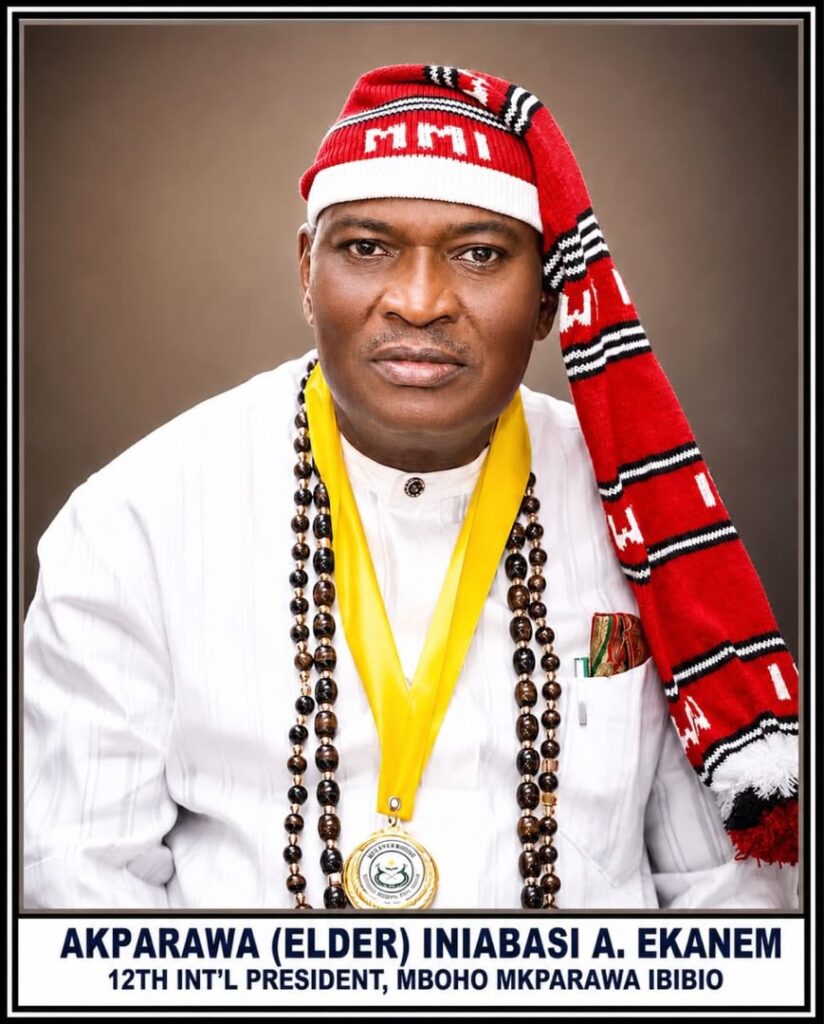
Mboho Mkparawa Ibibio has called on Senate President Godswill Akpabio to clarify remarks reportedly made about the institutional status of the Oku Ibom Ibibio, warning that comments questioning the standing of traditional institutions could undermine their historical significance and dignity.
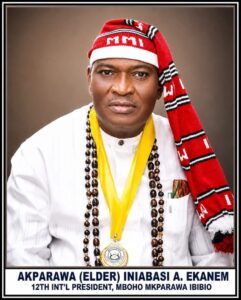
The position was contained in a communiqué signed by the organisation’s International President, Akparawa (Elder) Iniabasi Ekanem, and International Secretary General, Akparawa John Offiong, following its Central Working Committee meeting held at Sir Udo Udoma House, Uyo.
The organisation said it was concerned that remarks attributed to Akpabio during his recent visit to the Obong of Calabar could create an impression that the office of the President General of the Supreme Council of Akwa Ibom State Traditional Rulers, occupied by Oku Ibom Ibibio, Ntenyin (Dr.) Solomon Etuk, lacked an established legal and institutional foundation.
Reaffirming the position of the Ibibio traditional institution, MMI described Ntenyin Etuk as a recognised First-Class Traditional Ruler who occupies a revered and distinctive place in the cultural heritage of Akwa Ibom State.
It argued that the Ibibio people, being the largest ethnic nationality in Akwa Ibom and the fourth largest in Nigeria, had a legitimate interest in the recognition and protection of their traditional institution.
While expressing respect for the Obong of Calabar and the traditional institution of the Efik people, MMI maintained that recognition accorded one traditional authority should not diminish the standing of another.
“The recognition and elevation of one traditional institution should never be construed, directly or indirectly, as diminishing the historical significance, standing or dignity of another,” the communiqué stated.
It urged Akpabio to clarify the reported remarks in the interest of historical accuracy, institutional respect and harmonious relations between the ethnic nationalities concerned
The group also reminded public office holders, especially those occupying senior legislative positions, of the need for caution when making public statements on matters involving traditional institutions, their legal status and cultural relevance.
Beyond the controversy surrounding the traditional institution, MMI expressed disappointment over President Bola Tinubu’s failure to include a courtesy visit to the traditional rulers in his itinerary during his recent official visit to Akwa Ibom.
Although it commended Governor Umo Eno for successfully hosting the President and commissioning critical infrastructure projects, the organisation considered the omission of the traditional institution from the presidential programme unfortunate.
It said a courtesy visit would have demonstrated recognition of the cultural heritage, traditional authority and historical identity of the people, urging that such recognition be incorporated into future high-level visits.
MMI also called on the Federal Government to translate Tinubu’s expressed commitment to the Ibom Deep Seaport into concrete action, describing the proposed facility as a national economic asset with the capacity to strengthen Nigeria’s maritime and commercial position in the Gulf of Guinea.
According to the organisation, the project could drive industrialisation, generate employment, attract local and foreign investments and open new economic opportunities across Akwa Ibom and the wider West African sub-region.
It therefore urged both the Federal and Akwa Ibom State Governments to sustain the necessary policy support, regulatory approvals, strategic partnerships and financial commitments required to move the project towards actualisation.
The organisation further called on Ibibio sons and daughters, both at home and in the diaspora, to remain united in protecting their cultural identity, language, heritage and collective interests.
It stressed that peaceful coexistence, mutual respect and constructive engagement among ethnic nationalities remained essential to the development of Akwa Ibom State and Nigeria.