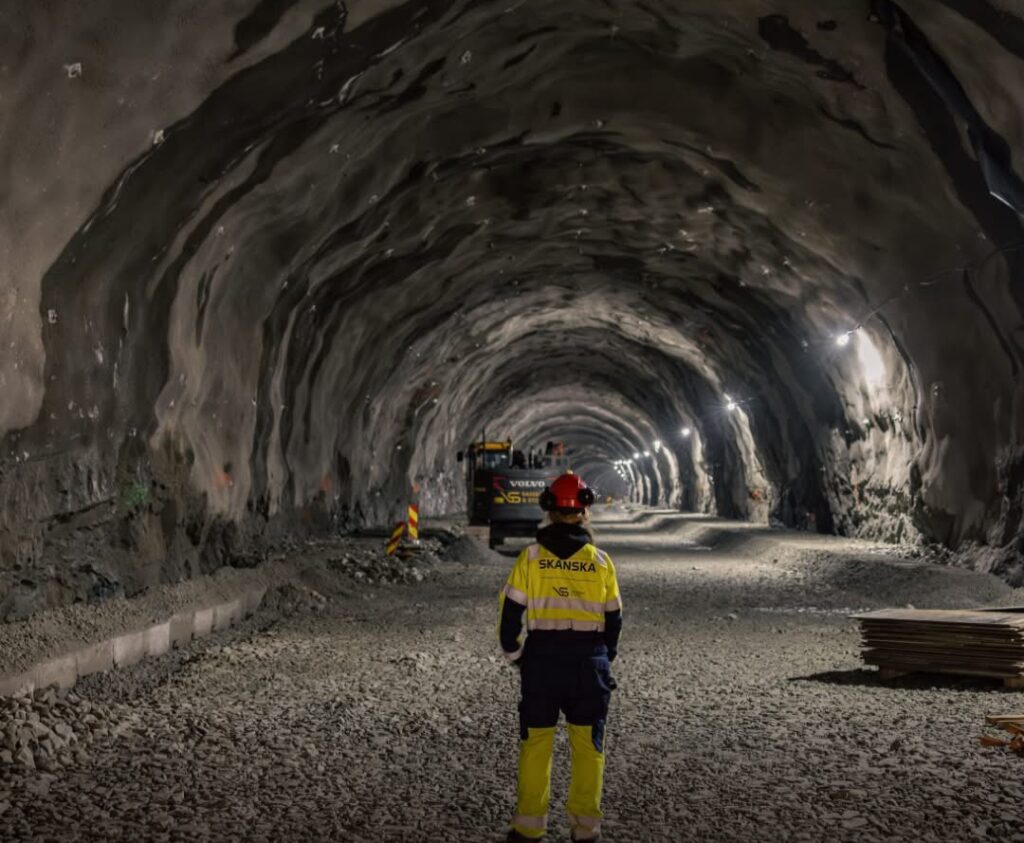
Norway is constructing a 27-kilometre undersea road tunnel designed to transform transportation along its western coastline, with the project expected to become the world’s longest and deepest of its kind when completed.
Known as Rogfast, the tunnel will reach a depth of 392 metres below sea level and connect areas around Stavanger and Haugesund, reducing dependence on ferry services and improving road access between major communities.
The project, estimated to cost 25 billion Norwegian kroner (approximately $2.4 billion), is scheduled for completion in 2033. Construction began in January 2018 but was suspended towards the end of 2019 following concerns over rising costs. Work resumed in late 2021 after the project underwent restructuring.
According to a report by CNN, the facility will comprise two separate tunnels, each accommodating two lanes of traffic. A distinctive feature of the design is an underground double roundabout, situated about 260 metres below sea level, which will connect motorists to the island municipality of Kvitsøy through an additional passage.
Rogfast forms part of Norway’s wider plan to upgrade the 1,100-kilometre E39 coastal highway, which currently requires motorists to use seven ferry crossings along its route between Trondheim and Kristiansand. The national infrastructure programme aims to replace the ferry connections with bridges and tunnels, reducing the journey time across the highway from about 21 hours by half. The overall programme is expected to extend beyond 2050.
The construction has involved complex engineering operations, including simultaneous excavation from opposite ends of the tunnel. Advanced laser scanning technology is being deployed to ensure that both sections align within a five-centimetre margin when they meet.
However, managing underground water remains a major construction challenge. Project officials have reported saltwater seepage at depths of about 300 metres, prompting additional efforts to seal the surrounding rock and maintain safe working conditions as excavation progresses towards the planned maximum depth.
The tunnel will also feature ventilation systems, surveillance cameras, radar equipment and real-time incident detection technology to manage air quality, monitor traffic and respond to emergencies.
Beyond reducing journey times, the project is expected to improve access to employment, education and public services, while lowering transportation costs for businesses, particularly those in Norway’s seafood industry.
When completed, Rogfast will surpass existing undersea road tunnels in depth and length. The Seikan Tunnel in Japan and the Channel Tunnel connecting Britain and France are longer overall, but both are railway tunnels rather than road facilities. Rogfast is expected to establish a new record among undersea road tunnels.