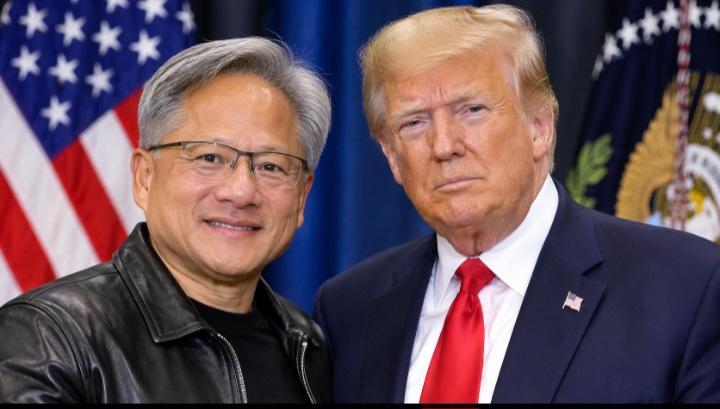
The departure of Nvidia co-founder Jensen Huang has intensified scrutiny of US President Donald Trump’s administration, with lawmakers demanding answers over alleged national security risks and the government’s handling of the company’s chip exports to China.
Democratic lawmakers are seeking explanations over the administration’s response to intelligence suspicions surrounding Huang’s relationship with Alice Huang, a former executive at Singapore-based data centre firm Megaspeed, who is suspected by US intelligence agencies of having links to Chinese espionage. China has rejected the allegations.
Senate Democratic leader Chuck Schumer said Huang’s departure should not prevent Congress from investigating whether his dealings exposed American national security interests to potential risks. He also questioned what Trump and senior government officials knew about the alleged relationship and what action they took after receiving intelligence about it.
“Despite Jensen Huang’s resignation, Congress must demand answers from Mr Huang and others at Nvidia about how they may have put US national security at risk,” Schumer said in a social media post.
“The Trump administration must also answer for what it did once it learned about Mr Huang’s relationship with a suspected Chinese intelligence asset,” he added.
According to Channels Television, the controversy has also drawn attention to the administration’s approval of Nvidia chip sales to Chinese companies despite concerns about Beijing’s military and technological ambitions. Democratic lawmakers have accused Trump and Commerce Secretary Howard Lutnick of overlooking potential security implications in approving the transactions. Three Republican House committee chairmen had earlier indicated plans to question Huang in a closed-door session scheduled for November 18.
Beyond the espionage allegations and export policy, Democrats are also examining Nvidia’s reported $25 million contribution towards a ballroom project at the White House. The donation reportedly came months after chip sales to China resumed, although the company maintains that the contribution was unrelated to its business interests. Republican Senate leader John Thune has also expressed support for congressional scrutiny, citing the national security implications.