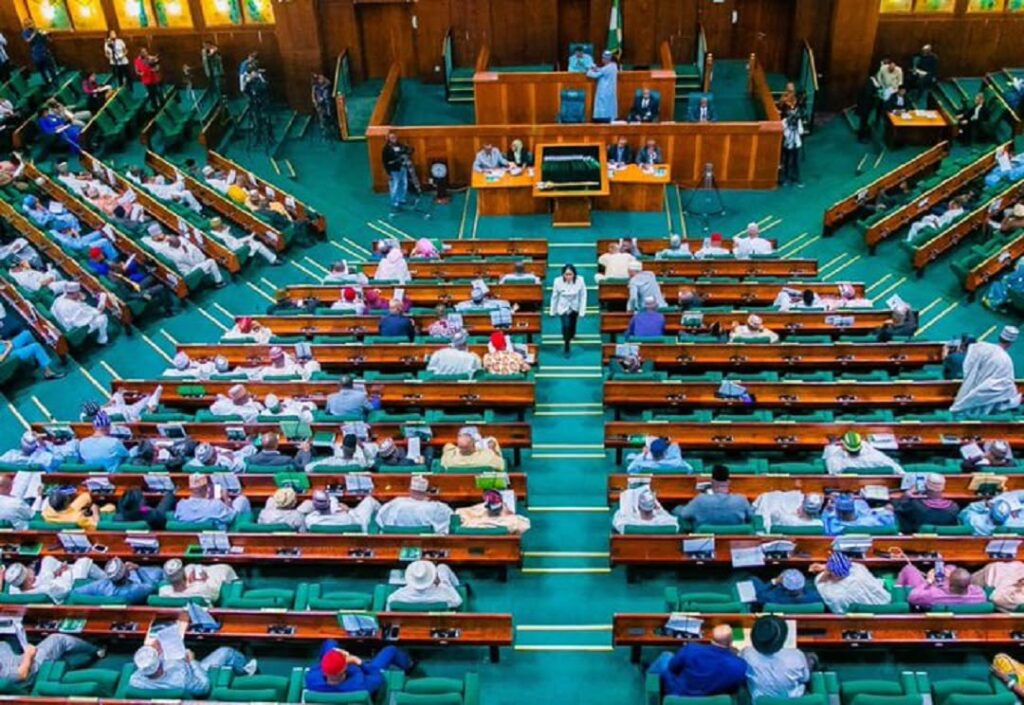
A report by Vanguard Newspaper has revealed that the House of Representatives is probing how N432.07 billion in petroleum-related obligations accumulated over several years without being fully recovered, with lawmakers now demanding explanations from the Nigerian Midstream and Downstream Petroleum Regulatory Authority, NMDPRA, and affected oil companies.
The investigation, according to the report by Vanguard is being conducted by the House Public Accounts Committee, PAC, following findings contained in the Auditor-General’s annual audit reports on unpaid regulatory and petroleum-sector obligations.
The development has raised fresh questions about revenue collection and regulatory enforcement in the petroleum industry, particularly as the outstanding liabilities include statutory payments and sector-related charges that should have accrued to government.
According to the report, the Auditor-General’s 2023 Annual Audit Report initially put the combined liabilities at N392.73 billion, with the Nigerian National Petroleum Company Limited, NNPCL, accounting for N162.46 billion and oil companies owing another N230.27 billion.
The debts, Vanguard reported, arose from Balancing Allowance, National Transport Average, the one per cent Midstream and Downstream Gas Infrastructure Fund, as well as legacy obligations associated with imports, coastal and credit transactions.
The Auditor-General’s 2024 report subsequently placed outstanding indebtedness at N432.07 billion, while submissions by NMDPRA to the lawmakers showed that 146 companies operating under DAPPMAN, MOMAN and MEMAN owed the authority N327.53 billion as of 2025.
The committee is now seeking to establish how the obligations, some of which date back to 2017, were allowed to remain unpaid, the amounts already recovered, balances still outstanding and measures taken by the regulatory authorities to enforce payment.
Chairman of the PAC, Rep. Bamidele Salam, said the probe was aimed at establishing the facts, protecting public revenue and ensuring that every naira due to government was properly accounted for, stressing that the exercise was not designed to witch-hunt any company.
Salam also warned companies and institutions summoned by the committee against ignoring parliamentary invitations, insisting that they must appear with appropriate representation and relevant documents to enable lawmakers determine the circumstances surrounding the accumulated liabilities.
The probe therefore goes beyond the immediate recovery of the N432.07 billion, as lawmakers are also seeking to strengthen the system for tracking and recovering government revenue and prevent statutory obligations in the petroleum sector from building up for years without effective enforcement.