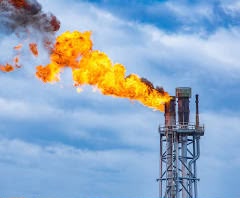
Communities in Nigeria’s oil-producing region are still bearing the health and environmental burden of gas flaring as the Federal Government moves to revoke the licences of investors who fail to develop projects meant to commercialise gas now being burnt at flare sites.
The warning from the Nigerian Upstream Petroleum Regulatory Commission (NUPRC) comes despite N521.87 billion collected as gas-flare penalties in 2025, raising fresh concerns over whether financial sanctions alone can end a practice that continues to expose host communities to pollution while valuable gas is wasted.
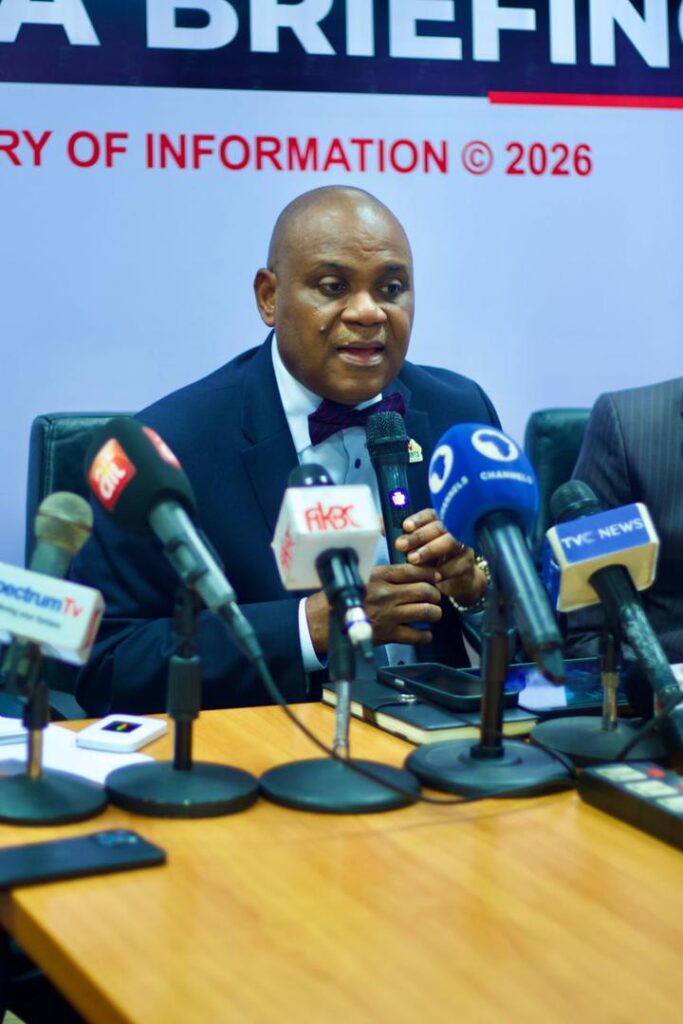
NUPRC Chief Executive, Oritsemeyiwa Eyesan, disclosed the planned enforcement during a working visit to the Minister of State for Petroleum Resources (Gas), Ekperikpe Ekpo, in Abuja. She said the Commission reviews the performance of investors one year after an award under the Nigerian Gas Flare Commercialisation Programme (NGFCP), with failure to make sufficient progress potentially leading to withdrawal of the award.
Under the programme, 43 flare sites were initially identified and 27 have so far been awarded for development. The initiative was designed to move Nigeria beyond simply imposing penalties by enabling investors to capture associated gas and turn it into commercially useful products, including power, LPG and compressed natural gas.
But the scale of continuing flaring suggests that the commercialisation drive has yet to match the magnitude of the problem. Between January 2025 and June 2026, Nigeria produced about 4.132 trillion standard cubic feet of gas and flared approximately 301.60 billion cubic feet, representing an average flaring rate of 7.3 per cent.
At a prevailing gas price of $2.84 per million British thermal units, the flared volume was estimated at about $888.24 million. Although the figure does not represent immediate recoverable revenue because infrastructure, processing, transportation and markets are required to monetise the gas, it highlights the economic value being lost alongside the environmental damage.
The World Bank’s 2025 Global Gas Flaring Tracker Report also ranked Nigeria among the world’s nine biggest gas-flaring countries, recording an eight per cent increase in flaring as oil production rose by a similar margin. Stakeholders have linked the persistence of the problem to inadequate gas infrastructure, ageing processing facilities and weak commercial incentives for investment.
Community Development Committees of Niger Delta Oil and Gas Producing Areas Chairman, Joseph Ambakederimo, backed the government’s threat to revoke inactive awards but called for stronger infrastructure and market incentives.
Former Nigerian Economic Society President, Prof. Adeola Adenikinju, similarly argued that government should make gas utilisation economically attractive, while environmental activist, Dr Nnimmo Bassey, said the continuing delays had left affected communities paying the price of successive unfulfilled promises to end routine flaring.