For Flight Lieutenant Damilola Adekunle, the Nigerian Air Force has now become the setting for two devastating family losses separated by 20 years.
In 2006, she lost her father, Wing Commander E.O. Adekunle, in a Nigerian Air Force aircraft crash in Benue State. On Monday, she lost her husband, Squadron Leader Ahamefule Man-Ugwueje, in another NAF aircraft crash in Ondo State.
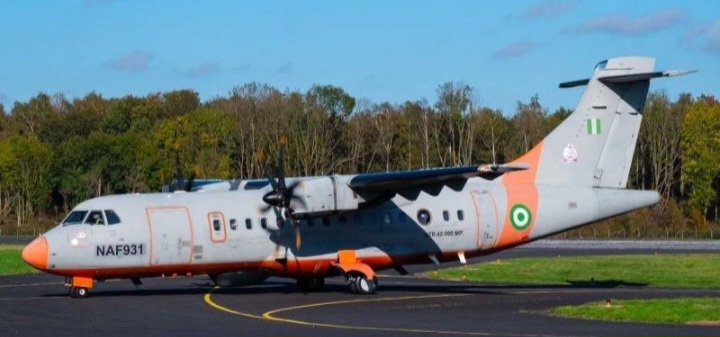
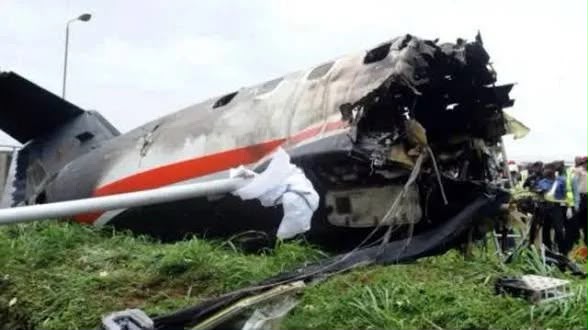
Man-Ugwueje was one of the two co-pilots aboard the NAF ATR-42 aircraft that crashed at Igbokoda, Ondo State, killing all 25 people on board.
The tragedy came just 16 days after he and Damilola exchanged marriage vows on September 19, making the crash one of the most painful turns in what had barely begun as a new chapter for the couple.
Man-Ugwueje, who had risen to the rank of squadron leader, was from a military family. His father, a retired group captain, had also served in the Nigerian Air Force.
His own military career began at Air Force Comprehensive School, Oyo, where he studied between 2001 and 2007, before proceeding to the Nigerian Defence Academy, Kaduna, to study civil engineering.
He later moved into military aviation and, in April 2018, was among 14 officers decorated with pilot wings after completing flight training in Nigeria and South Africa.
From the rank of flying officer, he progressed through the service to become a squadron leader and served as a co-pilot before his death.
His professional journey also reflected an interest in practical military challenges. While at the NDA, he was among four authors of a research paper on waste management at a Nigerian Air Force base in Kaduna.
But his connection to the Air Force became even more profound when he married Damilola, whose own family history was marked by an earlier military aviation tragedy.
Her father, Wing Commander E.O. Adekunle, was among 13 senior military officers killed on September 17, 2006, when a NAF Dornier 228-212 aircraft crashed in Vandeikya, Benue State.
The officers were travelling from Abuja to Obudu in Cross River State for a retreat at Obudu Cattle Ranch as members of a presidential committee on repositioning the Nigerian Army.
Eight major-generals, two brigadier-generals, a lieutenant-colonel and two wing commanders died in the crash, while three colonels survived.
The incident prompted the then President Olusegun Obasanjo to cut short an overseas engagement, return to Nigeria and declare three days of national mourning.
Nearly two decades later, Damilola herself became an officer in the Nigerian Air Force, attaining the rank of flight lieutenant. Her younger brother also joined the service.
Her marriage to Man-Ugwueje consequently brought together two families whose histories were deeply tied to the Air Force.
That union lasted only 16 days before another military aircraft crash claimed her husband.
The circumstances have given the latest NAF tragedy a deeply personal dimension for the Adekunle family, which had already experienced the loss of a family patriarch in an Air Force crash two decades earlier.
Tributes have continued to pour in for Man-Ugwueje, with those who knew him recalling his leadership qualities and willingness to support younger colleagues.
Beyond the uniform and the ranks he attained, however, his death has left a young marriage abruptly ended and a family confronting a loss eerily connected to one it suffered 20 years ago.
Even his first name, Ahamefule, meaning roughly “my name is not lost” or “let my name not be forgotten,” has taken on a poignant significance following his death.