The political temperature ahead of Nigeria’s 2027 presidential election has entered a new phase, with the Independent National Electoral Commission (INEC) formally putting names to the contest and effectively drawing the first official battle lines for the race.
With 18 presidential candidates now cleared to contest under 18 political parties, President Bola Tinubu of the All Progressives Congress (APC), former Vice President Atiku Abubakar of the African Democratic Congress (ADC) and Peter Obi of the Nigerian Democratic Congress (NDC) emerge among the most closely watched contenders in a field that also features former governors, ministers, activists and politicians seeking to upset the dominant political calculations.
INEC Secretary, Rose Oriaran-Anthony, released the final list in Abuja on Saturday, transforming months of political manoeuvring, defections, coalition-building and presidential speculation into a formally defined contest.
The development is particularly significant because the list provides voters and political parties with a clearer picture of the competing political camps ahead of what is expected to be one of Nigeria’s most consequential presidential elections since the return to democratic rule.
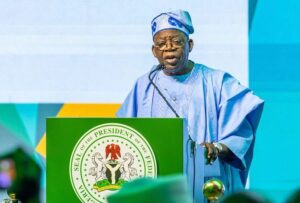
Tinubu, 74, will seek another term on the APC platform with Vice President Kashim Shettima, 59, while Atiku, 79, enters the race under the ADC banner with former Rivers State governor and former Minister of Transportation, Chibuike Rotimi Amaechi, 61, as his running mate.
Obi, 65, is listed as the presidential candidate of the NDC, with former Kano State governor Rabiu Musa Kwankwaso, 69, as his running mate—an arrangement that is certain to attract considerable political attention given the national following associated with both politicians.
The list also places former Oyo State governor Oluseyi Abiodun Makinde, 58, in the presidential contest under the Allied Peoples Movement, while former Cross River State governor Donald Duke flies the flag of the Peoples Redemption Party.
Other notable names include Social Democratic Party candidate Adewole Ebenezer Adebayo, African Action Congress candidate Omoyele Sowore and Peoples Democratic Party candidate Sandy Ojang Onor.
The remaining presidential candidates are Rufai Adekunle Omo-Aje of the Action Alliance; Aliyu Abbas-Bin of the Action Democratic Party; Kabiru Yusuf of the Allied Peoples Party; Sunday Adenuga of the Boot Party; Moses Olusoji Adebisi of the Democratic Leadership Alliance; Ada Elizabeth Fredrick Okwori of the National Democratic Party; Nkem Esther Okereke of the National Rescue Movement; Peter Ada Agada of the Young Progressive Party; and Daniel Daberechukwu Nwanyanwu of the Zenith Labour Party.
The final list also reveals a gender imbalance at the presidential level, with 16 men and only two women among the candidates. At the vice-presidential level, however, four women feature among the 18 running mates.
The female vice-presidential candidates are Peace Egobia Ofordile of the Allied Peoples Party, Nafisat Usaku Abubakar of the Democratic Leadership Alliance, Hajja Bintu Konto of the Labour Party and Patience Ndidi Key of the Young Progressive Party.
The Labour Party’s presidential candidate is Sunday Chibuzo Okereke, with Hajja Bintu Konto as running mate, while the PDP ticket comprises Sandy Ojang Onor and Umaru Babangida.
The emergence of the final list is expected to intensify negotiations within and across political parties as the contenders move from nomination battles and coalition calculations to the more demanding task of mobilising voters across Nigeria’s six geopolitical zones.
It also gives political watchers a clearer framework for assessing possible alliances, regional voting patterns, third-force strategies and the ability of opposition blocs to translate their combined political influence into a viable presidential challenge.
For the electorate, however, the most important shift may be that the 2027 presidential contest is no longer merely a subject of political speculation. With INEC’s publication of the final candidates, the names on the ballot are now becoming the names around which the next major struggle for Nigeria’s presidency will be fought.