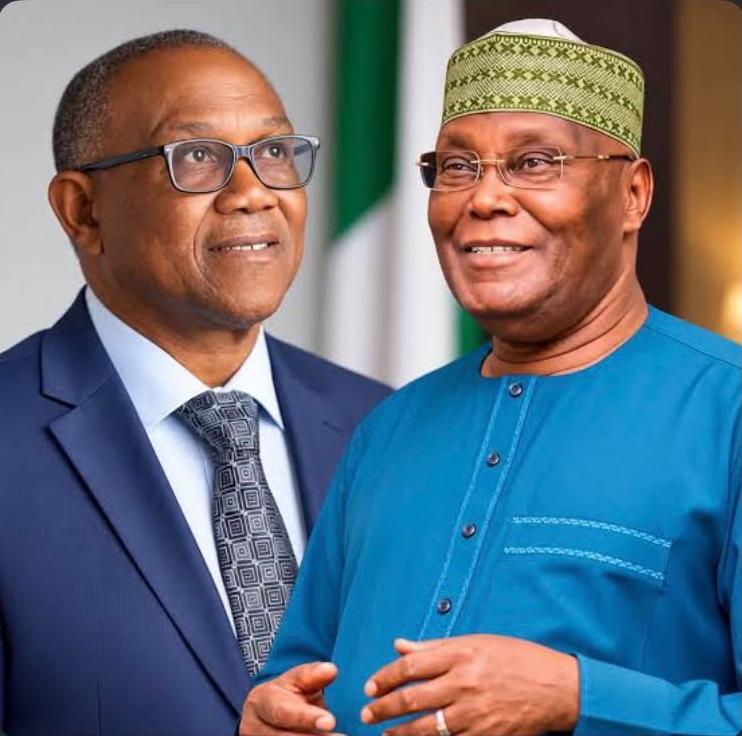
The search for a common opposition candidate to challenge President Bola Tinubu in the 2027 presidential election is facing an early test, with competing political ambitions threatening to undermine efforts to unite parties against the ruling All Progressives Congress (APC).
The disagreement has exposed a central dilemma for the opposition: how to persuade presidential aspirants to surrender their individual ambitions for a joint ticket2027: Opposition Unity Faces Test as Atiku, Obi Camps Resist Single-Ticket Plan without shutting out candidates who believe they have the political strength to win the election.
The Guardian reported that the G100 coalition, convened by Salihu Lukman, is considering an incremental approach to the selection process, with five political parties and their presidential candidates expected to remain in contention while the group assesses their electoral prospects.
The strategy is intended to postpone a final decision until the candidates have had an opportunity to demonstrate their popularity among voters. According to a source within the coalition, the electoral picture could become clearer between 30 and 45 days before the election, when the group hopes to identify the candidate with the strongest prospect of defeating Tinubu.
However, the plan has not resolved disagreements over who should be included in the contest, particularly as some aspirants maintain that withdrawing from the race prematurely could weaken the opposition’s chances.
The presidential candidates of the Allied Peoples Movement (APM), Governor Seyi Makinde, and the Social Democratic Party (SDP), Prince Adewole Adebayo, are reportedly among those unwilling to be excluded from the process.
Both politicians are said to believe that their candidacies offer credible alternatives to Tinubu and that a decision to sideline them could have unintended consequences for the opposition’s electoral calculations, particularly in the South-West.
Makinde has challenged Tinubu to consider withdrawing from the presidential race, arguing that the president’s failure to groom a successor strengthens the case for the emergence of a credible South-West candidate.
Adebayo, on his part, has questioned the legitimacy of any arrangement that would deny Nigerians the opportunity to choose their preferred presidential candidate at the ballot.
Although he believes Tinubu does not deserve a second term, the SDP candidate has cautioned opposition politicians against assuming that an alliance formed primarily to defeat the president would automatically produce better governance.
He argued that political parties and their candidates must demonstrate their own credibility rather than concentrate exclusively on criticising the incumbent.
“Politics is a game where condemnation is easy. It’s easy to criticise Tinubu, criticise other people,” Adebayo said, urging political actors to examine their integrity and conduct.
“What will take you far in politics is not how you focus on others. Focus on yourself and say, am I an honest political dealer? Am I an honest player?” he added.
His position introduces another dimension to the coalition’s challenge: beyond agreeing on a candidate capable of defeating the APC, opposition leaders must convince voters that their proposed alternative would deliver meaningful improvements in living conditions.
Adebayo also argued that the search for Nigeria’s next president should not be left entirely to political elites, insisting that citizens must take a more active role in determining the country’s political direction.
He urged voters to examine their participation in political affairs, the reasons for their party affiliations and the credibility of the candidates they support.
The coalition’s approach has also drawn attention to concerns about personal ambition among opposition leaders. Former Cross River State governor Donald Duke has reportedly expressed frustration with what he considers the excessive ambitions of some presidential aspirants, warning that their inability to compromise could strengthen Tinubu’s re-election prospects.
For the opposition, the immediate task is therefore not simply to identify a popular candidate but to establish a credible process through which competing ambitions can be reconciled.
Whether the G100’s plan to retain multiple contenders until closer to the election will encourage cooperation or deepen divisions remains uncertain.
With Tinubu and the APC preparing for another presidential contest, the opposition’s ability to turn its criticism of the administration into a coordinated electoral alternative could prove as consequential as the eventual choice of its candidate.