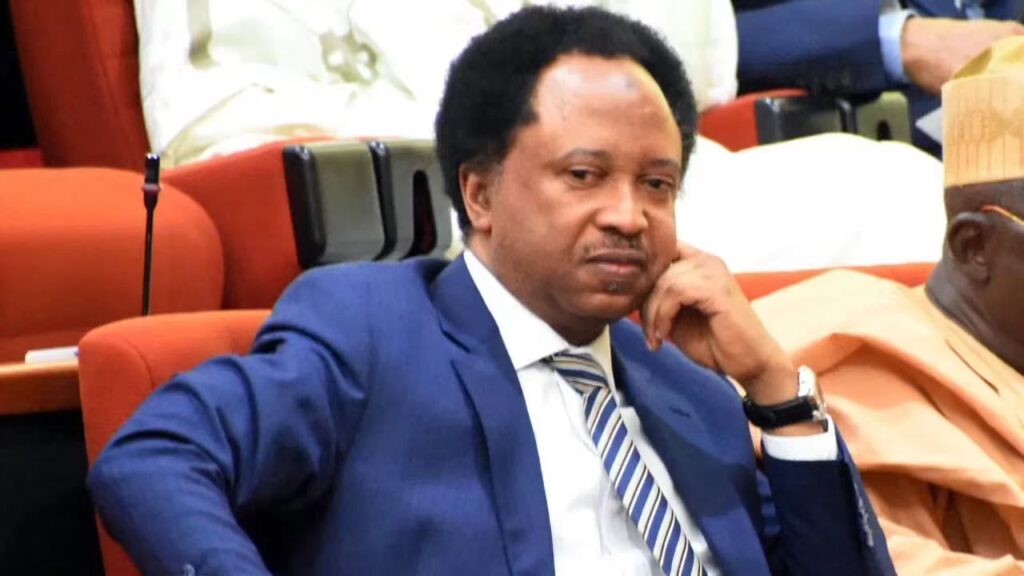
The 2027 presidential election could determine the future of Nigeria’s informal North-South power-sharing arrangement, former Kaduna Central Senator Shehu Sani has said, arguing that an Atiku Abubakar victory would effectively end the practice of rotating presidential power between the two regions.
Sani made the observation while speaking on Channels Television’s Politics Today on Friday, stressing that the issue should be viewed beyond the constitutional right of individual aspirants to contest elections.
According to him, while Atiku, the African Democratic Congress presidential candidate, has a constitutional right to seek the presidency, political considerations surrounding fairness, equity and national stability should also influence the 2027 contest.
“I never said Atiku should not run. Constitutionally, he has the right to run for any election. But what I said was that the southern part of Nigeria should be allowed to have its eight-year tenure in office,” Sani said.
The former lawmaker argued that since the North had occupied the presidency for eight years between 2015 and 2023 under former President Muhammadu Buhari, the South should similarly be allowed to complete an eight-year stretch before presidential power returns to the North.
Sani’s position places the informal power-sharing arrangement at the centre of the 2027 political debate, even though rotational presidency is not provided for in Nigeria’s Constitution.
He maintained that constitutional provisions were not the only considerations in managing a politically diverse country, arguing that political conventions could also be sustained where they promote fairness, equity and peace.
“There are things that are not written in our constitution, but in the interest of justice, fairness, equity, and peace, we need to consider all these things here,” he said.
Sani proposed that southern aspirants should compete among themselves for the presidency in 2027, naming Rotimi Amaechi, Peter Obi and Oyo State Governor Seyi Makinde as examples of politicians who could represent different southern platforms.
“Let the South struggle it out and see who wins, and for four years. And when the tenure is done by 2031, the North shall have its unchallengeable opportunity to produce leadership of the country,” he said.
He also rejected the idea that population or electoral strength should be the sole basis for determining who controls the presidency, insisting that broader considerations of equity and national stability should form part of the political calculations.
Sani’s argument therefore draws a distinction between what the Constitution permits and what political actors may regard as an equitable power-sharing convention, making the regional balance of power a central issue in his assessment of the 2027 election.
He maintained that Atiku’s right to contest remained intact, but argued that the political consequences of a northern candidate returning to power before the South completes an eight-year tenure should also be considered in the wider national interest.