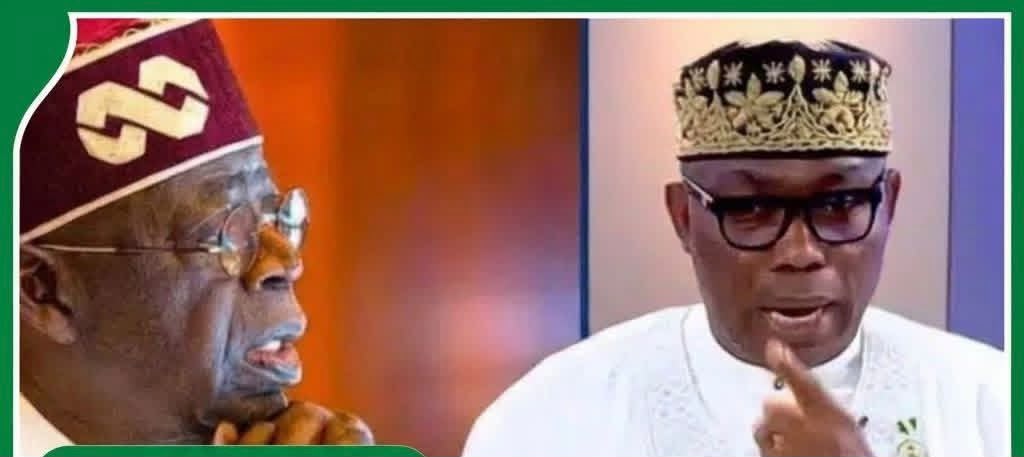
Social Democratic Party (SDP) presidential candidate Adewole Adebayo has turned President Bola Tinubu’s biblical defence of fuel subsidy removal against him, arguing that the administration’s economic policies bear a closer resemblance to Pharaoh’s rule than Moses’ leadership.
Adebayo said the central issue was not whether Nigeria should return to the past, but whether the government was providing the care, relief and opportunities Nigerians needed to cope with the consequences of its economic decisions.
He made the remarks on Wednesday during an appearance on Arise TV’s Morning Show, responding to Tinubu’s assertion that calls for the restoration of fuel subsidy amounted to asking Moses to return to Egypt.
Rather than accepting the President’s comparison, Adebayo argued that Moses’ defining role was not simply leading people away from Egypt, but also ensuring their survival and welfare during the difficult journey to freedom.
“If you want to go biblical or Quranic now, Tinubu is the Pharaoh and not Moses because if you want to be a Moses you will have manna for the people, have kindness for the people,” he said.
The SDP candidate maintained that a government could not claim the moral authority of a liberator while leaving citizens to bear the harsh consequences of its policies without sufficient support.
“You can see that the policies of the President are looking like that of Pharaoh where you take care of yourself and neglect the needs of the people, you don’t allow them to express their God-given qualities,” Adebayo added.
His argument shifts the subsidy debate from the question of whether the government should reverse its policy to whether the benefits of reform justify the immediate sacrifices demanded of citizens.
The removal of petrol subsidy has remained a major source of economic pressure for Nigerian households and businesses, with higher transport and operating costs affecting the prices of goods and services. The controversy has also intensified calls for effective social protection measures to cushion the impact of the reforms.
For Adebayo, the biblical journey out of Egypt is a metaphor for the political change he believes Nigerians are seeking. He argued that citizens want to move away from the All Progressives Congress (APC) and towards what he described as the promised land, with the SDP offering a better alternative.
His comments also echo a wider opposition criticism of Tinubu’s economic management, with political figures questioning whether the administration has done enough to protect vulnerable households from the effects of its policies.
The dispute, however, raises a broader question about the meaning of economic reform: whether success should be measured primarily by the government’s willingness to take difficult decisions or by its ability to ensure that citizens can withstand the resulting hardship.
While the Tinubu administration has defended its reforms as necessary to address longstanding economic problems, critics insist that the burden on ordinary Nigerians makes adequate relief measures indispensable.