Idara Jerome, Uyo
Kenyan scholar and Pan-African advocate, Prof. Patrick Lumumba, has warned that Africa’s economic independence will remain elusive unless countries on the continent begin to process their natural resources and manufacture products they currently depend on foreign nations to supply.
He said the continent’s practice of exporting raw materials while importing finished goods had entrenched economic dependence and weakened its capacity to compete with developed economies.
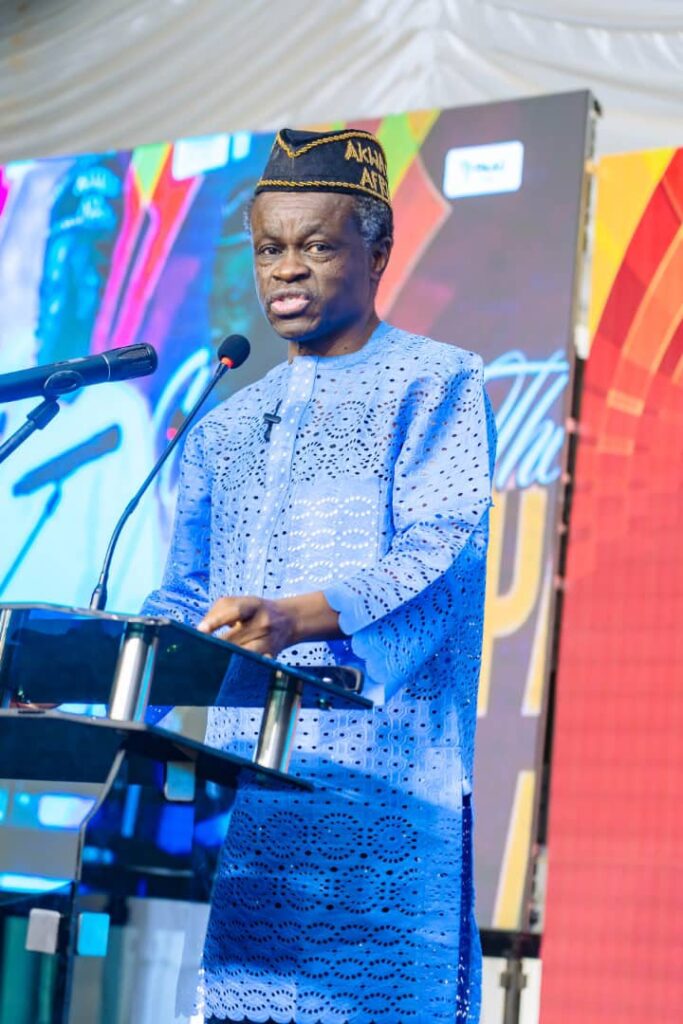
Lumumba, who spoke at the maiden Pan African Awakening Conference (PAAC), organised by the Social Engagement and Reorientation Initiative (SERI) in Uyo, Akwa Ibom State, said Africa’s development challenge was rooted partly in the mentality that foreign products and expertise were superior to those available locally.
He cited the paradox of African countries producing cotton but importing bedsheets, exporting leather but purchasing expensive foreign-made bags, and producing milk without developing sufficient capacity to manufacture dairy products for local consumption.
The professor argued that the continent could not achieve economic transformation by continuing to serve as a supplier of raw materials to other economies while depending on them for finished products.
“Why is it that our cows produce milk, and when we want butter, we still go to the Netherlands? Why is it that we produce cotton, but once we have produced cotton we are still importing bedsheets from Vietnam and China?
“Why is it that we have leather, and you sell it in Kano, and in Kaduna, and in other places, but when we want bags for our ladies, we still go to Italy to get Gucci and Dolce & Gabbana?” he queried.
He maintained that the situation reflected a deeper problem of mindset which must be addressed if African countries were to develop their productive capacities and reduce dependence on foreign economies.
Quoting African scholar Ali Mazrui, Lumumba recalled the observation that “we produce what we do not consume, and consume what we do not produce”, describing it as a troubling reflection of the continent’s economic reality.
He said African governments must move beyond imitation and deliberately build indigenous expertise, industries and institutions capable of converting local resources into finished products.
Lumumba also questioned the confidence African leaders had in their own institutions, noting that governments continued to engage foreign contractors for infrastructure projects despite training engineers in local universities.
He expressed concern that political leaders and senior government officials who oversee public health institutions often travelled abroad for medical treatment rather than patronising hospitals within their countries.
“They teach us engineering, but largely when we want to do our roads, we still call the Chinese to do them for us,” he said.
He urged African countries to study the development experiences of China, India and South Korea but adapt relevant lessons to their peculiar economic and cultural circumstances rather than reproduce foreign models without local relevance.
“We can learn from the Indians. We can learn from the Caucasians. We can learn from the Chinese. We can learn from the Koreans, but once we have done so, let us give it an African flavour,” he said.
The professor called on Nigeria to assume a leading role in the campaign for African economic independence, citing its population, human resources and material endowments as advantages that should translate into greater influence across the continent.
He also urged Nigerian youths to reject ethnic and religious divisions, arguing that national development required citizens who placed the collective interest of the country above sectional considerations.
“You are Nigerians. You are the ones who are going to change Nigeria. And you can only change Nigeria if you are a Nigerian citizen, not if you are a tribalist and an idiot. So be citizens,” he said.
Lumumba, who disclosed that 22 African and Caribbean countries had united to establish a common front against colonial attitudes and dependency, said a change in the mindset of the continent’s leadership was necessary to close the widening technological and economic gap between Africa and the developed world.
He commended the Akwa Ibom State Government for its infrastructure development efforts, describing the state’s road network as an indication of what could be achieved through deliberate investment.
Earlier, Founder and Executive Director of SERI, Engr. Ekemini Amos, said the conference was designed to mobilise young Nigerians across ethnic backgrounds towards a common commitment to Africa’s development.
Amos described the gathering as an attempt to revive the Pan-African liberation ideals associated with Kwame Nkrumah, Thomas Sankara and Murtala Muhammed, which he said had been weakened by years of silence, foreign dependence and the preference for foreign products.
He said the 500 youths at the conference represented a generation determined to challenge the continent’s development challenges through collective action and responsible citizenship.
The SERI founder solicited partnerships for the organisation’s mentorship initiative, which comprises a Youth Membership Hub for young people aged 18 to 35 and a Nation Builders Club for secondary school students aged 10 to 18.
He explained that the programme would run annually from January to June, with mentors assigned between 10 and 20 participants in groups expected to undertake community development projects.
The highlight of the conference was the unveiling of the SERI Mentorship Programme by Lumumba, who serves as its Chief Adviser and Grand Patron.
Lumumba and his wife were also honoured with the titles Akwa Uyo Africa and Mkpouto Africa, respectively.