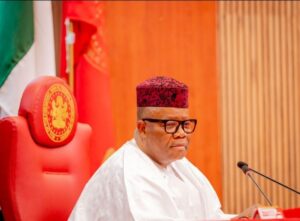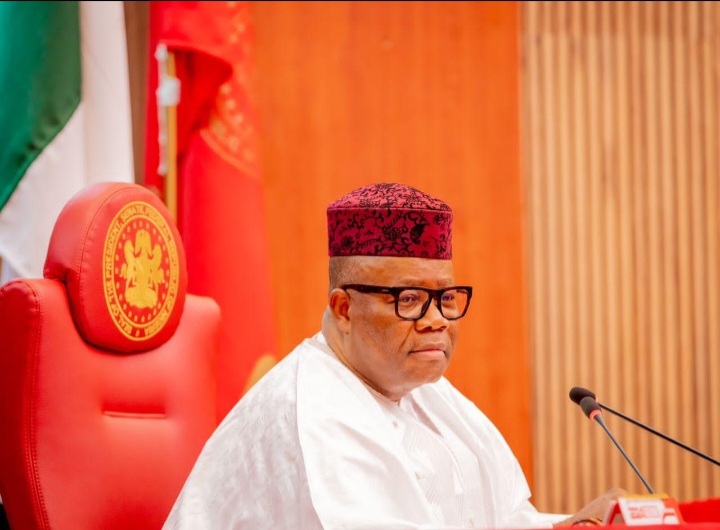
Senate President Godswill Akpabio has called for closer scrutiny of the Petroleum Industry Act (PIA), with particular emphasis on whether oil-producing communities are receiving meaningful development benefits from petroleum operations.
Akpabio made the demand on Wednesday in Abuja during a stakeholders’ meeting on the implementation of the law, insisting that the success of the petroleum reform framework must be reflected in tangible improvements rather than the mere existence of regulatory institutions.
According to The Southern Examiner, which reported his remarks through his Special Adviser on Media and Publicity, Eseme Eyiboh, Akpabio said the National Assembly would maintain its oversight role to ensure that implementation challenges were addressed and the law’s objectives achieved.
He argued that the country’s petroleum wealth should be assessed not only through production figures and government earnings but also through job creation, industrial growth and better living conditions for communities affected by oil and gas activities.
A major issue under the PIA is the operation of Host Communities Development Trusts, which are designed to channel funding into development projects in eligible communities. The law requires qualifying upstream and designated midstream operators to contribute three per cent of their preceding year’s operating expenditure to the trusts.
The legislation allocates 75 per cent of the funds to capital projects, 20 per cent to a reserve fund and up to five per cent to administrative expenses. However, questions surrounding the establishment of some trusts, disputes over community representation and the influence of petroleum companies over trustee appointments have remained points of concern.
Akpabio urged stakeholders to examine such implementation difficulties and establish practical measures to ensure that the benefits reach their intended recipients.
He also called for a review of the wider industry’s performance, identifying investor confidence, petroleum output, regulatory efficiency, energy infrastructure and the commercial operations of the Nigerian National Petroleum Company Limited as areas requiring attention.
“We have enacted the law. We have established the institutions. We have declared the promise of reform. Now we must deliver the results,” he said.
The Senate President said some shortcomings might require legislative action, while others could be resolved through improved administration, stronger regulatory practices and better cooperation among relevant agencies. He cautioned that collaboration should not shield institutions from accountability.
He further identified crude oil theft, investment uncertainty and avoidable regulatory delays as challenges that continue to weigh on the sector. He called for predictable rules and accountable institutions capable of attracting responsible investment without compromising Nigeria’s interests.
On the changing global energy landscape, Akpabio urged the country to develop its natural gas resources, strengthen domestic energy security and improve the competitiveness of its petroleum industry.
The PIA, enacted in 2021, restructured the governance of Nigeria’s petroleum sector and established the Nigerian Upstream Petroleum Regulatory Commission and the Nigerian Midstream and Downstream Petroleum Regulatory Authority, alongside provisions governing NNPC Limited.
Akpabio reaffirmed the National Assembly’s support for President Bola Tinubu’s economic reform agenda, stressing that effective oversight remained necessary to ensure that policy changes produced lasting benefits.
He called on participants at the engagement to produce actionable recommendations, clear responsibilities and implementation timelines, rather than allow the meeting to end with declarations without follow-through.