Bangladesh is facing a major public health emergency after a deadly measles outbreak exposed weaknesses in childhood vaccination, healthcare delivery and disease surveillance, with young children bearing the greatest burden.
According to figures reported by the World Health Organization (WHO), the country had recorded more than 202,000 suspected measles cases and approximately 22,000 laboratory-confirmed infections as of October 9, while at least 1,147 deaths had been reported since the outbreak began in mid-March. Children below five years accounted for about 94 per cent of the fatalities.
The scale of the outbreak has raised concerns about the sustainability of Bangladesh’s previous achievements in childhood immunisation. Health estimates from WHO and UNICEF showed that vaccination coverage declined in 2025, with first-dose coverage falling to 90 per cent and second-dose coverage dropping to 86 per cent. Both figures remain below the approximately 95 per cent level needed to prevent sustained measles transmission.
Beyond the national statistics, families in affected communities have described difficulties accessing vaccination services, particularly in remote areas. In Sylhet, one of the worst-hit regions, a two-year-old boy, Arman Hossain, died in July after contracting measles without having been vaccinated. His family reportedly sold its auto-rickshaw to cover hospital expenses, but the child died shortly after admission.
His father, Amin Mia, said health workers did not reach their village in time to vaccinate his children. Arman’s four-year-old sister, who was also unvaccinated, survived the infection. Another family in Chhatak lost a nine-month-old daughter, Labiba Akter, after reportedly missing opportunities to access the emergency vaccination programme.
Bangladesh launched an emergency campaign in April and May, targeting children aged six months to five years. Authorities said nearly 20 million children received vaccines during the exercise, and officials initially reported significant improvements in outbreak hotspots. However, infections rose again in subsequent months, raising questions about whether the campaign reached every eligible child.
Concerns have also emerged over the accuracy of vaccination records. A comparison with another government health programme reportedly revealed that its target list contained about four million more children in the same age group than the measles campaign. The discrepancy has fuelled questions about population estimates and whether vulnerable children were excluded from vaccination efforts.
Political instability and disruptions to public services have further complicated the response. The political upheaval of 2024, followed by health worker strikes, delays in vaccine procurement and interruptions to routine follow-up services, contributed to difficulties maintaining immunisation coverage.
Preparations for the emergency campaign have also come under scrutiny. Meeting records reviewed by Reuters indicated that authorities conducted only one round of preparedness assessments before the campaign began, despite the usual process involving four rounds. Such checks are designed to ensure adequate vaccine storage, staffing and reliable estimates of the number of children requiring protection.
The challenges are particularly severe in underserved communities, where incomplete birth registration and shortages of healthcare personnel make it difficult to identify children who have missed their vaccines. Estimates from UNICEF and the Bangladesh Bureau of Statistics suggest that as many as 40 per cent of children are not registered, while government figures indicate that roughly one-third of health worker positions remain vacant.
In response to the continuing outbreak, authorities launched another vaccination drive at the end of September, targeting approximately 3.4 million children believed to have been missed during earlier efforts. Health officials say they intend to intensify community mobilisation to improve coverage.
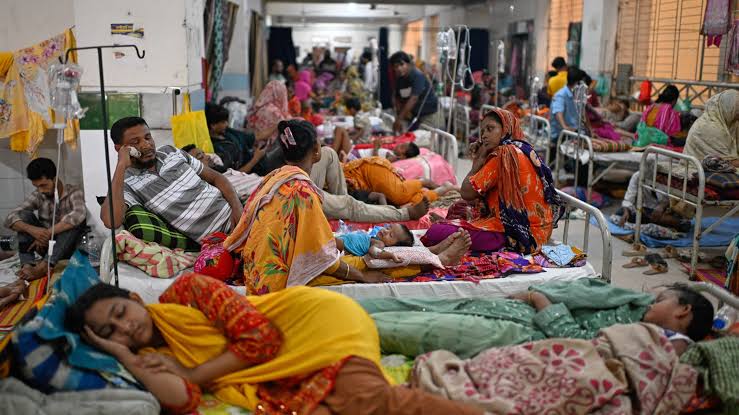
Meanwhile, hospitals are under additional pressure from measles cases and a concurrent dengue outbreak. A visit to a 100-bed hospital in Sylhet in September found that 178 patients had been admitted, highlighting the strain on facilities already struggling to provide adequate care.
Health experts have warned that emergency vaccination campaigns alone cannot guarantee lasting protection. They argue that Bangladesh must improve routine immunisation, strengthen disease monitoring, recruit more healthcare workers and maintain accurate population records to prevent future outbreaks.
The crisis offers a broader warning about the consequences of declining vaccination coverage. Measles is highly contagious but preventable through immunisation, and children who miss recommended doses face a greater risk of serious complications and death.
For Bangladesh, the immediate task is to contain the outbreak and reach children who remain unprotected. The longer-term challenge is to rebuild a dependable healthcare system capable of ensuring that vaccination services reach every child, regardless of where they live or their family’s financial circumstances.