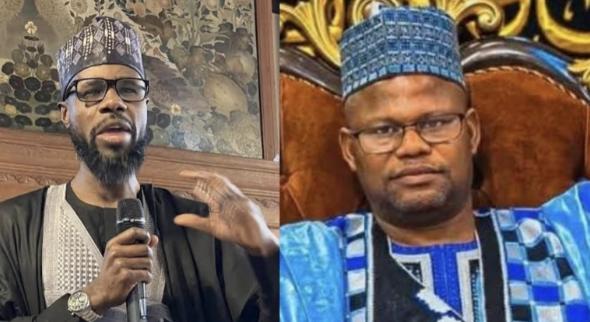
UK-based Nigerian lawyer and security analyst, Dr Bulama Audu Bukarti, has defended his decision to share an audio message in which the terrorist group Ansaru allegedly claimed responsibility for the killing of Katsina Islamic cleric, Sheikh Yahaya Masussuka.
Bukarti spoke out after facing criticism and accusations over the publication, with some questioning the source of the recording and others alleging that his actions were influenced by religious affiliations.
In a video posted on his Facebook page, the security expert addressed the controversy, explaining how he came across the audio and why he decided to make it public.
He said the recording had already circulated on social media for more than two hours before he shared it, insisting that he was neither the first nor the second person to publish it.
According to Bukarti, he first encountered the message through a post by Vincent Foucher, a foreign researcher known for his work on Boko Haram and other extremist groups. He said Foucher published the message at 12:42 a.m. on X, formerly Twitter.
Bukarti added that another security researcher, Malik Samuel, shared the same information two minutes later, at 12:44 a.m. He encouraged critics to check the original posts on the platform to verify his account of events.
The analyst also dismissed suggestions that he released the audio to protect the Izala Islamic movement because of his alleged membership of the group. He maintained that his work focuses on open-source intelligence, security research and public awareness rather than promoting religious interests.
Bukarti further rejected claims that he was acting as a spokesperson for Ansaru, describing such allegations as unfounded. He said his professional work involves studying terrorist organisations, monitoring their activities and providing information that can help security agencies and the public understand emerging threats.
He explained that security researchers sometimes examine and report claims made by extremist organisations as part of efforts to understand their operations and activities. He also condemned terrorism and extremism, warning against the spread of misinformation and urging the public to rely on verifiable information when discussing sensitive security matters.