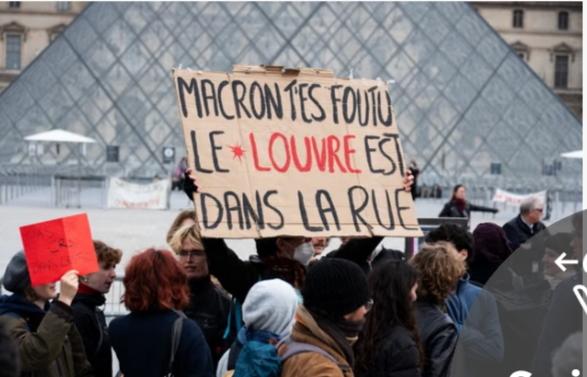
The French government is preparing to introduce additional local curfews following a weekend of violent demonstrations that left businesses damaged, public buildings vandalised and thousands of people arrested.
Prime Minister Sébastien Lecornu said the restrictions imposed in several locations helped restore calm overnight. He added that local authorities would determine where further measures were necessary, working alongside mayors to respond to developments in their communities.
The unrest followed nationwide demonstrations driven by concerns over rising living costs, deteriorating public services and conditions in schools. What began as peaceful protests escalated into clashes, looting and attacks on public property in several French cities.
French authorities have arrested at least 2,400 people in connection with the weekend’s violence, while reports cited by Le Monde indicated that nearly 1,000 security personnel were injured. Business representatives have also warned that the destruction could result in losses worth hundreds of millions of euros.
The government has responded with tighter security measures and warnings that those responsible for violence will face legal consequences. Restrictions have also been introduced in selected areas, including parts of Paris, while some cities have imposed overnight curfews for minors.
Meanwhile, the demonstrations have generated fresh concerns about the potential spread of unrest beyond France. Similar incidents were reported in Belgium, Albania and Italy, where Deputy Prime Minister Matteo Salvini announced plans to deploy 500 army personnel to Milan following clashes between protesters and police.
The developments have raised questions about whether Britain could experience comparable demonstrations. However, the possibility of protests spreading to the UK remains uncertain, and the situation in France alone does not establish that similar unrest will occur there.
Public anger in France has been fuelled by mounting economic pressures. An analysis published by Le Monde indicated that consumer prices had increased by 23.4 per cent since Emmanuel Macron became president in 2017, while median salaries rose by 22.8 per cent over the same period.
Rising energy costs, expensive groceries and concerns about inequality have added to public frustration. Lower-income households have reportedly responded by reducing food purchases or switching to cheaper alternatives, while pressure on public services has become another major point of contention.
The protest movement is also preparing for further action. France’s Yellow Vest movement has called for fresh demonstrations on Saturday, October 24, under the banner of “Act II”. Organisers have also announced plans for another mobilisation on October 31, ahead of a wider strike and protest campaign scheduled for November 5.
The planned November action, supported by five major trade unions, is expected to focus on wages, employment, public services and industry. Students have also continued to express dissatisfaction with educational conditions, with a blockade at the Louvre Museum in Paris forcing the institution to remain closed on Monday.
The unrest has drawn international political attention, with US President Donald Trump attributing the French crisis to immigration and urging Macron to tighten border controls. His interpretation differs from accounts highlighting economic hardship, school conditions and dissatisfaction with public services as major factors behind the demonstrations.
As France prepares for further protests and additional security restrictions, authorities face the challenge of preventing fresh violence while addressing the grievances driving public discontent. Whether the unrest will inspire similar large-scale demonstrations in Britain remains an open question.