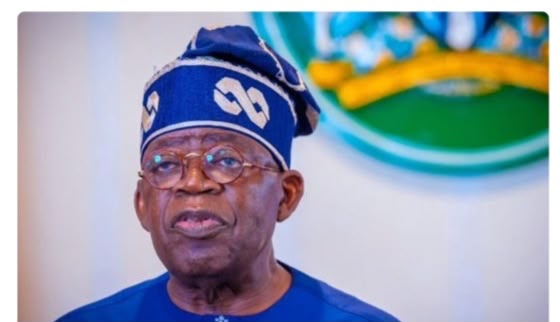
President Bola Tinubu has defended his administration’s proposed external borrowing, insisting that Nigeria needs long-term financing to build infrastructure capable of supporting a $1 trillion economy by 2030, amid growing questions over the country’s need for additional loans.
Tinubu argued that investments in major highways, transportation, healthcare, education and vocational training would expand economic activities, reduce the cost of doing business and attract private investors.
He specifically projected that the Lagos-Calabar Coastal Highway could cut logistics costs along its route by between 15 and 20 per cent, while contributing up to two per cent to Nigeria’s Gross Domestic Product through increased trade, tourism and industrial activities.
The project, according to him, could also generate about 100,000 direct jobs in construction and engineering, as well as more than 150,000 indirect employment opportunities in logistics, building materials and related sectors.
“We are not simply building highways. We are opening economic corridors, connecting markets, unlocking industries and reshaping Nigeria’s economic geography,” the President said.
He maintained that the country’s ambition of attaining a $1 trillion economy by 2030 would remain difficult without sustained investment in infrastructure, arguing that existing facilities were inadequate for an economy of the proposed size.
“We cannot build a USD 1 trillion economy with infrastructure designed for an economy a fraction of that size,” he said.
To justify the administration’s economic direction, Tinubu cited improvements in some macroeconomic indicators since the introduction of reforms in May 2023, including petrol subsidy removal, foreign exchange market liberalisation and tax restructuring.
He said Nigeria’s real GDP growth reached 4.43 per cent in the second quarter of 2026, while headline inflation dropped to 14.63 per cent in September from 20.98 per cent recorded a year earlier.
The President also put the country’s gross external reserves at $55.1 billion as of October 9, 2026, including approximately $46 billion in net reserves, while the tax-to-GDP ratio, he said, had increased from seven to 12.5 per cent.
He argued that the figures reflected improvements in public finances and investor confidence, adding that Nigeria’s declining borrowing costs and risk premium could create room for more favourable long-term financing.
Tinubu said his administration was seeking to redirect public borrowing towards projects capable of generating economic returns rather than using loans mainly to meet immediate fiscal obligations.
He also outlined five priorities for the next phase of the Federal Executive Council’s economic strategy, including food affordability, energy price stability, fiscal discipline, completion of major infrastructure projects, improved regulation and targeted support for households.
However, the President said the success of the borrowing strategy should be judged by what Nigerians eventually receive from the investments rather than the volume of funds secured.
“Securing financing is not the achievement. Completing the project, delivering value and improving the lives of Nigerians is the achievement,” he said.
But the Nigeria Labour Congress (NLC) has questioned the rationale for continued external borrowing, arguing that the Federal Government’s claims of increased revenue following subsidy removal should be reconciled with its requests for fresh loans.
NLC President Joe Ajaero, speaking on Channels Television’s The Morning Brief, asked why Nigeria should continue approaching the International Monetary Fund, World Bank and other international institutions for loans if government revenue had substantially improved.
“If you come out to tell us that the subsidy is gone, that you are making more money and then you are giving more money to states, what is the justification for continually borrowing from the International Monetary Fund and the World Bank and other agencies when there is enough money?” he asked.
Ajaero also questioned the borrowing plan against the backdrop of rising international crude oil prices, noting that the 2026 budget was based on an oil benchmark of $70 per barrel, while prices had reportedly risen above $100 amid tensions involving the United States and Iran.
He urged the government to explain why additional loans were necessary when higher oil earnings could potentially provide more revenue.
Similarly, Paul Ibe, media aide to former Vice President Atiku Abubakar, demanded full disclosure of the proposed borrowing arrangements, including the projects involved, financing conditions and repayment schedules.
In a post on X, Ibe argued that describing the loans as investments did not remove the country’s obligation to repay the principal and interest.
He demanded details of the 46 proposed projects across 11 sectors, including their costs, locations, implementing agencies, procurement arrangements and expected completion dates.
Ibe also questioned the reported interest rates attached to the proposed $5 billion World Bank component and the commercial financing portion, demanding explanations of how the loans would be serviced if oil revenue declined, the naira weakened or project implementation suffered delays.
The National Democratic Congress (NDC) National Presidential Campaign Council also expressed concern over the country’s rising debt exposure.
The council, in a statement signed by its spokesperson, Dr Chiogo Constance Ikokwu, said Nigeria’s external debt increased from $43.16 billion in June 2023 to $54.52 billion in June 2026, representing an increase of $11.36 billion.
It further put total public debt at N166.79 trillion in June 2026, compared with N87.38 trillion in June 2023.
The council warned that the latest borrowing request, together with previously approved but undrawn facilities, could raise Nigeria’s potential external debt exposure to approximately $81.96 billion if all the financing were eventually accessed and there were no overlapping facilities.
It called on the Federal Government and the National Assembly to publish a comprehensive record of external loans obtained since May 2023, showing the amounts borrowed, disbursements, project locations, implementation status and independently verified results.
Meanwhile, Vice President Kashim Shettima has urged the Federal Government to pay greater attention to public concerns over its economic reforms, warning that policy implementation alone would not be sufficient without citizens’ trust.
Shettima, represented by his Special Adviser on Economic Affairs, Dr Tope Fasua, at The Duke’s Masterclass 2026 in Abuja, said government must communicate its policies clearly and provide credible evidence of progress.
He defended the removal of petrol subsidy, foreign exchange reforms and fiscal restructuring as measures intended to address longstanding economic problems and strengthen productive capacity.
However, he acknowledged that unreliable electricity, poor transportation systems, insecurity, limited access to finance and weaknesses in education and public institutions remained major obstacles to economic growth.
He called for greater domestic production, increased exports and stronger support for small businesses, particularly those owned by women and young people.
The Vice President maintained that constructive criticism and public participation were necessary to ensure that economic policies responded to the realities facing Nigerians