
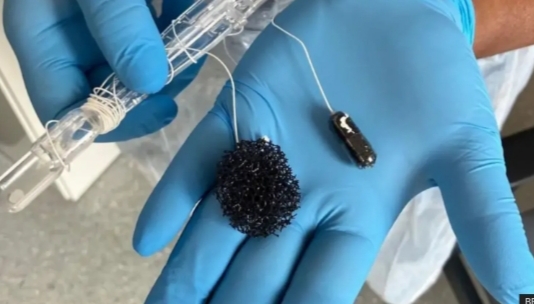
People with severe and persistent indigestion could be offered a sponge-based test to check for early signs of oesophageal cancer under draft clinical recommendations for England’s National Health Service (NHS).
The draft recommendations by the National Institute for Health and Care Excellence (NICE) propose offering the test to some people with persistent indigestion, particularly those with symptoms associated with acid reflux. Prolonged reflux can cause Barrett’s oesophagus, a condition involving changes to the cells lining the food pipe. It affects an estimated one to two per cent of adults and increases the risk of developing oesophageal cancer.
The test is designed to obtain cells from the oesophagus without requiring patients to undergo conventional endoscopy. It involves swallowing a capsule attached to a thin thread, which releases a small sponge after dissolving in the stomach. A doctor then withdraws the sponge through the mouth, allowing the collected cells to be examined for abnormalities.
The procedure takes only a few minutes and can be performed in GP surgeries. It is already available in selected locations in England, but the proposed recommendations would extend its use to more patients. The BBC reported that high demand for NHS endoscopy services means some people with Barrett’s oesophagus are not monitored as frequently as recommended.
NICE Chief Executive, Professor Jonathan Benger, said the test could help identify patients who need further investigations and treatment. NHS England’s National Clinical Director for Cancer, Professor Peter Johnson, said thousands of people had benefited from pilot programmes. NICE also cautioned that a negative result does not rule out every case, meaning continued monitoring remains important. Final recommendations are expected in the new year.