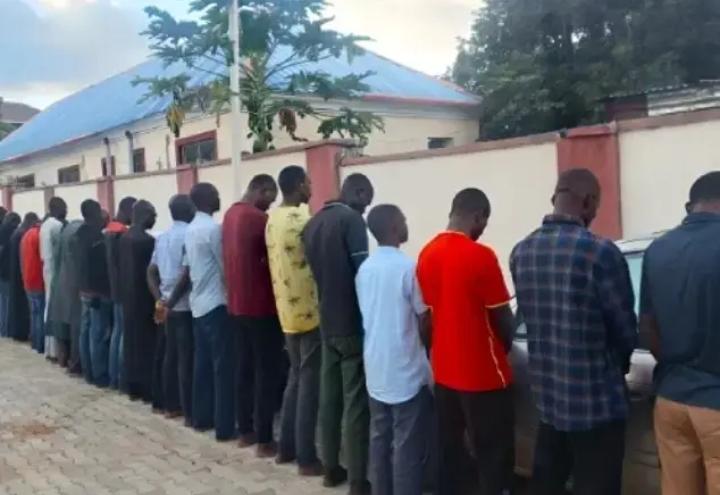
A shocking investigation into the deaths of 33 suspected illegal miners in Niger State has revealed the terrible conditions they endured inside a detention facility operated by the Nigeria Security and Civil Defence Corps (NSCDC), where some detainees reportedly resorted to drinking their own urine and sweat due to a lack of water.
The revelations were contained in a report by a 10-member Independent Investigation Committee set up by the Federal Ministry of Interior to establish the circumstances surrounding the deaths.
According to the report, obtained by PREMIUM TIMES, the victims died inside an overcrowded male cell at the Niger State NSCDC Command between the night of September 16 and the morning of September 17, 2026.
The committee established that about 50 men, including children, were locked inside a cell measuring approximately 12 square metres. The facility had poor ventilation, no running water and a non-functional toilet.
Survivors reportedly described unbearable heat, severe thirst and difficulty breathing as conditions inside the cell deteriorated. Some detainees allegedly drank urine or sweat in desperate attempts to survive.
The investigation further revealed that detainees repeatedly screamed, banged on the metal door and pleaded for water, but their calls for assistance were ignored by officers on duty.
Medical personnel had reportedly warned the guards about the danger of keeping so many people in the poorly ventilated cell. An NSCDC medical staff member, Mariam Nelson, said she advised the guards to reduce the overcrowding and leave the metal door unlocked to allow fresh air into the facility.
However, her warning was allegedly disregarded.
The report also detailed how an armoury guard, Ahmed Abubakar Wushishi, heard persistent screams and banging from the cell between 1 a.m. and 2 a.m. on September 17. He reportedly urged the night guard, Hassan Mohammed, to open the door, but the request was rejected over fears that the detainees could attempt to escape.
The night guard had allegedly been instructed by his superior, Usman Ndamaka, not to open the cell without armed backup.
The committee also found that Ndamaka failed to respond to an emergency call from Mohammed at about 10:37 p.m. on September 16. He reportedly claimed he was asleep and only returned the call around 6 a.m. the following morning.
By the time he arrived at the facility around 7 a.m. and the cell was opened, several detainees had already died.
Of the 33 confirmed deaths, 14 were children. The investigation also identified four children below the age of 14 who had been profiled and placed in adult detention cells, in violation of child-protection requirements.
Medical findings attributed the deaths to acute hypoxic respiratory failure, also known as environmental asphyxia, aggravated by extreme heat and dehydration.
However, the committee explained that its medical conclusion was based on post-mortem examinations conducted on only three bodies, as the remaining 30 victims had been buried before the medical team arrived.
It also dismissed suggestions that a disease outbreak caused the deaths, stating that available forensic and medical evidence pointed instead to suffocation and the appalling conditions inside the detention facility.
The committee identified poor detention infrastructure, failure by officers to provide basic care, inadequate emergency medical arrangements and weak supervision as contributing factors.
It subsequently recommended the prosecution of officers found culpable for offences including murder, criminal negligence, torture and inhuman treatment, depending on the evidence against them.
The findings have raised serious questions about the treatment of detainees in Nigeria’s security facilities, particularly the circumstances in which dozens of people, including children, lost their lives while in government custody.