Nigeria’s electricity crisis is being deepened by an 11-year investment drought in new power plants, with the suspension of government-backed risk guarantees discouraging investors from committing funds to the national grid, former Minister of Power, Professor Barth Nnaji, has said.
Nnaji said the absence of new generating capacity, coupled with inadequate infrastructure and a tariff regime that fails to reflect the actual cost of electricity production and distribution, had undermined the objectives of the 2013 power sector privatisation.
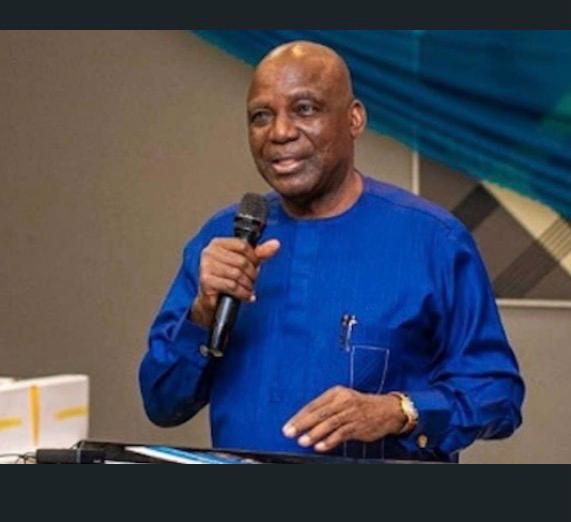
He disclosed this while delivering a keynote address at Business Forum 3.0 organised by the Club in Lagos at the weekend, where he examined the structural and financial constraints affecting electricity supply in the country.
According to him, the suspension of the Partial Risk Guarantee instrument in 2015 removed a critical assurance investors needed before committing resources to electricity generation projects.
He said that since the suspension, no new power plant had been added to the national grid, apart from the Aba power project, despite increasing population, electricity demand and the need to support industrial expansion.
Nnaji disclosed that ExxonMobil had expressed interest in developing a 500-megawatt power plant, while Century Power had also developed plans for another 500-megawatt facility, but both projects were stalled because of the absence of the required government risk guarantee.
“There was only one power plant built with a partial risk guarantee, and that is the Azure Power in Edo State,” he said.
The Geometric Power chairman argued that investors could not reasonably be expected to commit billions of dollars to power infrastructure without assurances that the government would honour its financial obligations under agreed arrangements.
He also faulted the government’s reluctance to permit electricity distribution companies (DISCOs) to charge cost-reflective tariffs, saying the decision had weakened their capacity to operate efficiently and attract fresh investment.
According to him, investors who acquired distribution companies during the 2012–2013 privatisation exercise did so on the understanding that the government would allow tariffs to reflect the actual cost of supplying electricity.
He recalled that electricity tariffs were increased from N6 to N22 per kilowatt-hour for certain customer categories in June 2012, while lower rates of N6 and N4 were retained for urban poor and rural consumers respectively.
Nnaji, however, said the subsequent tariff arrangements still failed to adequately reflect the cost of electricity, leaving distribution companies financially constrained.
He maintained that where government policy prevented operators from charging cost-reflective rates, the government must be prepared to shoulder the resulting subsidy obligations.
Illustrating the financial implications, the former minister said a subsidy of just N50 per kilowatt-hour for 5,000 megawatts of electricity would cost the government approximately N180 billion monthly, translating to N2.16 trillion annually.
He warned that the financial burden would increase substantially if generation rose to 10,000 or 20,000 megawatts, noting that debts owed to generating companies had already exceeded N7 trillion.
Nnaji further identified poor revenue collection, infrastructure deficiencies and inadequate metering as major obstacles to the financial sustainability of the electricity market.
He said Aba Power, a subsidiary of Geometric Power, had invested about N50 billion in providing smart meters to more than 96 per cent of customers within its ring-fenced distribution network.
He added that the high cost of electricity infrastructure, much of which is imported, had been worsened by the depreciation of the naira against major international currencies.
Nnaji estimated that installing one megawatt of power generation capacity costs more than $1.5 million, making sustained investment difficult without a viable tariff structure and credible government guarantees.
He urged the government to address the financial and regulatory obstacles confronting the industry, arguing that the commercial viability of distribution companies remained essential to attracting the investment required to improve electricity supply.
The former minister’s position suggests that resolving Nigeria’s power crisis will require more than tariff adjustments, with renewed investment guarantees, additional generating capacity and stronger financial arrangements across the electricity value chain also critical to ending persistent supply shortages.