Nigeria’s refining landscape is being reshaped as private and modular plants operate alongside government-owned facilities undergoing rehabilitation, testing or efforts to secure new investment.
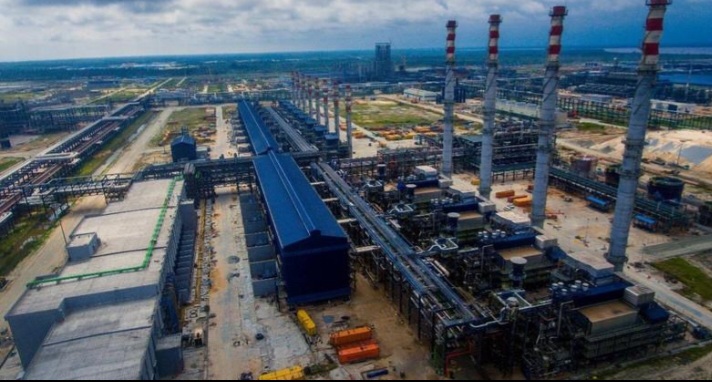
Legit.ng reported that at the centre of the sector is the Dangote Petroleum Refinery in Lagos, with a nameplate capacity of 650,000 barrels per day, making it the country’s largest refining facility. Smaller plants operated by companies including Aradel, Waltersmith and Edo Refinery have also contributed to domestic refining, although output and operational status vary across facilities.
The government-owned refineries remain a major part of Nigeria’s refining plans. The Port Harcourt complex consists of an old 60,000-barrel-per-day facility and a newer 150,000-barrel-per-day plant, while the Warri and Kaduna refineries have installed capacities of 125,000 and 110,000 barrels per day respectively. Their return to sustained production has remained a major issue for the downstream petroleum sector.
Port Harcourt’s facilities have gone through rehabilitation and restart efforts, while Warri and Kaduna remain part of wider plans to restore government-owned refining capacity. In July, petroleum retailers called on the Federal Government to bring the three state refineries back into full commercial operation, arguing that greater competition could strengthen energy security and reduce reliance on a single major supplier.
Nigeria’s modular refining segment adds another layer to the industry. Aradel operates an 11,000-barrel-per-day facility in Rivers State, while Waltersmith and Edo Refinery are among the smaller plants that have been producing at different periods. OPAC in Delta State also has a 10,000-barrel-per-day capacity, although the operational status of modular plants can change over time.
Other projects are expected to expand the country’s refining capacity. Azikel Petroleum’s 12,000-barrel-per-day facility in Bayelsa is among projects under construction, while the proposed BUA refinery in Akwa Ibom is expected to add capacity when completed.
The developments come as Nigeria continues to seek greater domestic production of refined petroleum products. However, installed capacity does not necessarily translate into actual output, with crude supply, technical constraints, financing and operational efficiency all affecting how much each facility contributes to the market.