Nigeria’s congested Lagos port corridor could face a major shift in the country’s maritime trade map as construction of the proposed Gateway Deep Sea Port in Ogun Waterside is scheduled to begin in November, with the project designed to provide a new route for large vessels, cargo and industrial production.
Ogun State Governor Dapo Abiodun announced the November commencement after the state and global ports operator DP World signed agreements in Paris for the development of the Gateway Deep Seaport and the Ogun State Blue Marine Special Economic Zone.
The two projects are expected to attract an initial investment of more than $7 billion and, when fully developed, generate over 50,000 direct jobs alongside additional opportunities across logistics, manufacturing and related industries. (State House Abuja)
Unlike a standalone port project, the Ogun development is being structured around a 10,000-hectare special economic zone, creating a model in which cargo arriving through the port can feed directly into manufacturing, processing and export activities within the wider industrial corridor. (State House Abuja)
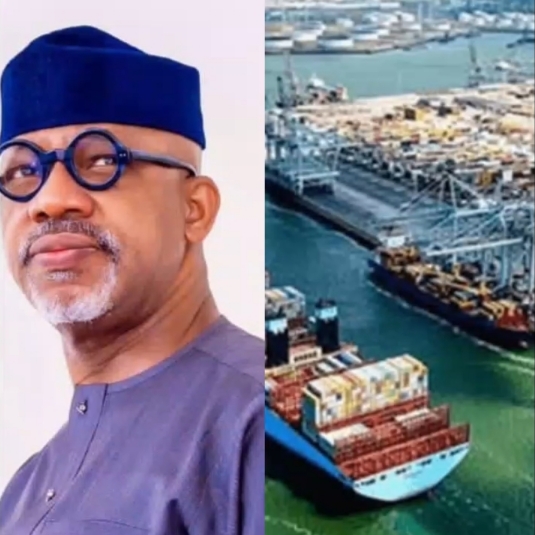
The proposed Gateway Deep Seaport will have a four-kilometre berth and an 18-metre draft, specifications intended to allow it to accommodate larger vessels and provide an alternative to the existing Lagos port corridor, particularly Apapa and Tin Can Island. (State House Abuja)
For businesses, the proposed change goes beyond having another port. The Federal Government says the development is intended to reduce cargo delays and logistics costs while strengthening Nigeria’s capacity to manufacture and export goods to African and global markets.
The project also comes with a major connectivity requirement. The Presidency said the 28-kilometre Ogun section of the Lagos-Calabar Coastal Highway is expected to provide an important link between the port and the industrial zone, Lagos, the Nigerian hinterland and wider African markets. (State House Abuja)
Abiodun said the development would move into the construction phase immediately after the groundbreaking ceremony and is expected to be substantially completed within two and a half years.
The governor said the agreements followed the signing of a Memorandum of Understanding with DP World MEA FZE, witnessed by President Bola Tinubu, describing the development as a move from planning to implementation.
The project has also been framed by the Federal Government as part of a broader effort to address Nigeria’s long-standing port congestion and logistics constraints while expanding maritime trade, manufacturing and non-oil exports.
At the Paris signing, Tinubu said the Federal Government would provide regulatory and institutional support, including road, rail and power connectivity, while insisting that all parties to the agreements would be held accountable for their commitments. (State House Abuja)
The President said the Blue Marine Special Economic Zone was already attracting interest from global manufacturing and industrial companies, with the proposed model allowing imported inputs to be transformed into finished goods and Nigerian raw materials processed for export.
The emerging corridor is also expected to connect with other planned investments around Ogun Waterside, including the proposed Nigerian Navy Operating Base and Dockyard and the OK LNG Project, linking maritime infrastructure with energy and industrial development. (State House Abuja)
For Ogun, the November construction date therefore represents more than the start of another infrastructure project. It marks the proposed physical beginning of a new trade and industrial corridor intended to shift part of Nigeria’s maritime and manufacturing activity eastward of Lagos.
The immediate test, however, will be whether the agreements, investment commitments and supporting infrastructure translate into construction on schedule and ultimately into the port capacity, industries and jobs being projected.
If delivered as planned, the Gateway Deep Seaport will not simply add another port to Nigeria’s coastline; it will create a competing logistics gateway built around the idea that a port can serve not only as a place where ships berth, but as the entry point to an entire production and export economy.