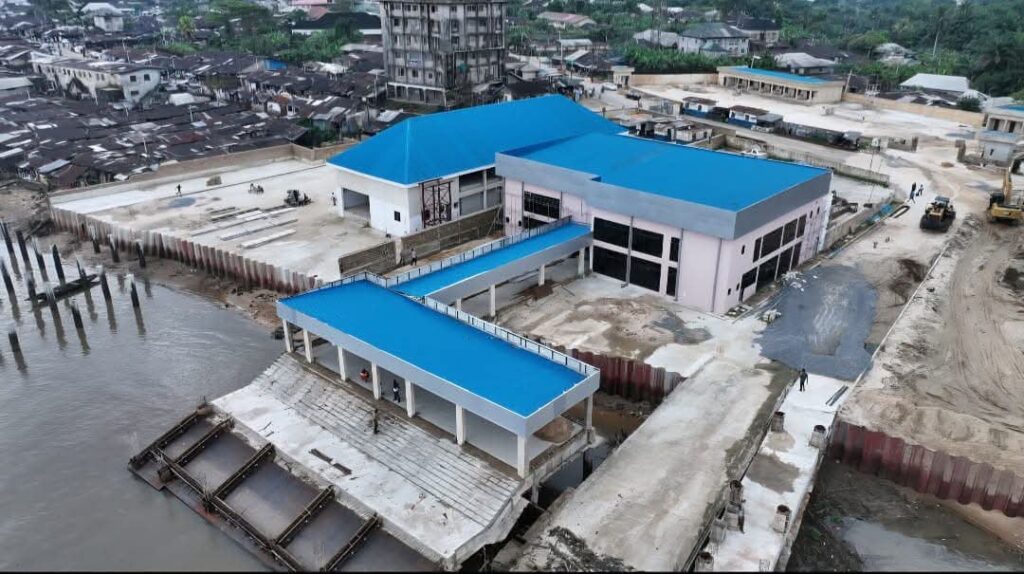
A new chapter in the economic story of Oron is taking shape, built around an asset that nature has generously bestowed on the community: its coastal location and maritime potential. With the Oron Maritime Infrastructure Project, Akwa Ibom State is looking beyond the traditional uses of its waterways towards a future in which the sea becomes a stronger driver of commerce, tourism, employment and prosperity.
Initiated by Governor Umo Bassey Eno, Ph.D., the project represents an important expression of the Blue Economy development objectives of the ARISE Agenda. It is designed to reposition Oron as a maritime and commercial hub, improve connectivity among coastal communities, stimulate private-sector investment and create new economic opportunities for the people.
Its significance extends beyond the construction of a terminal, jetties and supporting facilities. The real promise lies in the integration of transportation, fisheries, cargo handling, storage, hospitality, recreation and maritime security into a functioning economic ecosystem.
For Oron, this is an opportunity to expand its commercial relevance. For Akwa Ibom, it is a strategic step towards a more diversified economy. For Nigeria, it demonstrates how coastal infrastructure can help unlock the productive potential of the country’s maritime resources.
And for the ARISE Agenda, it is another opportunity to translate development planning into infrastructure capable of supporting livelihoods and economic growth for years to come.
The true value of a maritime project is not determined by the number of buildings erected or facilities commissioned. It is determined by what those facilities enable people to do.
A terminal creates a meeting point for passengers and operators. Jetties facilitate movement. Warehouses support the storage and distribution of goods. Cold rooms and drying facilities help preserve fish and other suitable products. Workshops sustain technical operations, while hotels and recreational facilities can attract visitors and encourage commercial activity.
When these elements function together, they create opportunities that extend far beyond the immediate project site.
Transport operators, fishermen, fish processors, traders, mechanics, artisans, hospitality workers, food vendors and small-business owners could all benefit from the economic activity generated by the maritime complex.
The project also has the potential to encourage private investment in supporting services, particularly as passenger traffic, cargo movement and tourism demand develop.
This integrated approach is particularly important for Akwa Ibom as the state pursues economic diversification. The objective is to build an economy in which opportunities emerge from several productive sectors, reducing dependence on traditional revenue sources and expanding the participation of local businesses.
The Oron Maritime Infrastructure Project fits into that vision by connecting the state’s natural coastal advantages with the practical requirements of a modern commercial economy.
The proposed terminal building will serve as the principal gateway for passengers and other users of the maritime facility.
Beyond providing an identifiable point of arrival and departure, a properly equipped terminal can support ticketing, passenger reception, waiting areas, information services and the coordination of transportation operations.
For passengers, this could mean a more organised and convenient travel experience. For ferry operators, it offers a central location for managing services. For businesses, it creates a recognisable commercial address around which related activities can develop.
The terminal could also improve the experience of visitors arriving in Oron for business, tourism or other purposes, helping to establish the maritime complex as a gateway to the surrounding coastal area.
Its wider economic importance lies in the role it can play in bringing passengers, operators, traders and service providers into one organised environment.
With effective management and reliable transportation services, the terminal could become a recognisable symbol of Oron’s emerging maritime economy.
Transportation is one of the most important foundations of economic development. Where movement is difficult, access to jobs, markets, education, healthcare and business opportunities can also become difficult.
The proposed passenger jetty and two ferries are designed to strengthen the role of water transportation in connecting Oron with other communities served by suitable waterways.
The passenger jetty will provide a designated point for boarding and disembarking, while the ferries could support organised passenger services along commercially viable routes.
For traders, improved water transportation could provide another means of reaching markets. For workers, it could widen access to employment. For visitors, it could make coastal destinations more accessible. For communities with suitable water connections, reliable ferry services could provide an additional transportation option.
These benefits would depend on route planning, affordable fares, passenger demand, regular schedules and strict safety standards.
The economic effects could also extend to businesses around ferry terminals, including retailers, food vendors, transport providers and other service operators.
The importance of these facilities is therefore not limited to the movement of passengers. They could help connect communities to economic opportunities, improve mobility and strengthen the commercial relationships that sustain local economies.
If the passenger jetty connects people, the cargo jetty is intended to connect goods with markets.
A dedicated cargo jetty can support the loading and unloading of commodities, providing a more organised setting for commercial transportation. Depending on demand and operational arrangements, it could serve fisheries, agricultural produce, manufactured goods and other commodities suitable for waterborne movement.
For traders and producers, improved cargo-handling infrastructure could make distribution more convenient and expand access to customers. Businesses could gain another option for moving goods, while logistics operators could explore new commercial services.
The cargo facility could also strengthen Oron’s connections with other parts of Akwa Ibom and, where viable routes and regulatory arrangements permit, wider coastal trading networks.
This is particularly relevant to a state seeking to develop economic opportunities from its geographical advantages.
A functioning cargo jetty can attract activity from transport operators, distributors, traders and businesses that depend on the movement of goods. As commercial demand grows, supporting services may also emerge around loading, storage, handling and distribution.
The long-term contribution of the facility will depend on its ability to attract regular cargo traffic and operate efficiently. Nevertheless, its inclusion in the project establishes an important foundation for expanding maritime commerce.
For fishing communities, economic success does not end with a good catch. The ability to preserve, process and distribute the catch can determine how much income fishermen and traders ultimately earn.
Without suitable preservation facilities, fresh fish can deteriorate quickly, forcing sellers to dispose of their products within limited periods. Spoilage can reduce earnings and waste the resources invested in fishing.
The proposed cold room could help preserve fish and other appropriate perishable products, giving traders greater flexibility in managing supplies and accessing markets.
The drying facilities would provide another preservation option, supporting the processing of fish for consumers and markets that prefer dried products. With proper hygiene and quality controls, improved processing could help reduce post-harvest losses and enhance commercial value.
The warehouse would complement these facilities by providing space for storing goods awaiting distribution. Depending on its design and management, it could support fish traders, other businesses and supply-chain operators using the maritime complex.
Together, these facilities could strengthen the value chain from production to preservation, processing, storage and sale.
The benefits could reach beyond fishermen to include fish processors, transporters, retailers and small-scale entrepreneurs, many of whom depend on the fisheries economy for their livelihoods.
This is where the Oron project intersects directly with household welfare and food security. By helping producers preserve the value of their goods, the infrastructure could support more resilient livelihoods and a stronger local trading economy.
Maritime transportation requires more than vessels and landing facilities. It also depends on reliable maintenance, technical expertise and the availability of skilled personnel.
The proposed workshop could support servicing and repairs for vessels, machinery and relevant equipment, subject to its eventual design and operational capacity.
Its importance lies in the possibility of reducing maintenance-related interruptions while creating opportunities for mechanics, welders, technicians, electricians and other skilled workers.
For young people in Akwa Ibom, the growth of maritime services could open pathways into technical occupations and practical careers.
With appropriate training and partnerships, the workshop could also contribute to developing a pool of workers with skills relevant to marine transportation and related industries.
Beyond direct employment, the presence of a technical facility could create demand for spare parts, tools, equipment and specialised services, providing additional opportunities for local businesses.
In this respect, the workshop is not merely a supporting structure. It could become part of the human-capital and enterprise foundation required to sustain a growing maritime economy.
Security is indispensable to the development of maritime commerce.
Passengers need confidence in the safety of their journeys. Fishermen need to operate in secure environments. Cargo operators and investors need assurance that their activities can be conducted without unacceptable risks.
The proposed Joint Task Force jetty is intended to provide a dedicated access point for security operations associated with the maritime complex.
Such a facility could support the movement and deployment of personnel, facilitate operational coordination and strengthen the security arrangements serving the area within the relevant agencies’ responsibilities.
Its economic importance is clear: secure waterways provide a stronger foundation for transportation, fishing, trade and tourism.
Confidence in maritime safety can encourage operators to provide services and businesses to explore opportunities that might otherwise remain undeveloped.
The JTF jetty therefore forms an important part of the project’s wider economic infrastructure. Its contribution will depend on effective inter-agency coordination, appropriate equipment, professional conduct and sustained attention to maritime safety.
The car park may appear less prominent than the terminal or cargo jetty, but its role in the overall system is practical and essential.
Passengers need convenient access to the terminal, while traders, suppliers and service providers require suitable places to stop, collect goods and connect with onward transportation.
An organised car park could improve access, support traffic management and reduce disorder around the maritime facility.
It could also make the complex more convenient for visitors, transport operators and businesses.
Its value lies in connecting the maritime infrastructure with the road network, helping ensure that movement does not end at the water’s edge.
When properly planned and managed, the car park could contribute to a safer, more accessible and more efficient transportation environment.
The Oron Maritime Infrastructure Project has a tourism dimension that could significantly broaden its economic reach.
The proposed recreational area could provide a space for leisure, relaxation and social activities, making the waterfront attractive to residents and visitors beyond those using the transportation facilities.
The floating bar could become a distinctive waterfront attraction, offering a setting for hospitality and leisure activities, subject to appropriate safety, environmental and operating standards.
The proposed hotel development could accommodate visitors, business travellers, maritime professionals and tourists who require overnight or extended stays.
These facilities could generate demand for catering, cleaning, laundry, retail, entertainment, transport and other services. They could also create opportunities for local entrepreneurs to supply food, crafts, cultural products and hospitality-related services.
The wider economic significance is the possibility of extending commercial activity beyond transportation and cargo handling.
A visitor arriving in Oron might use the ferry, stay in a hotel, dine at a local establishment, purchase locally made products and engage other service providers. Each transaction creates an opportunity for income generation.
If the waterfront develops into an attractive destination, the resulting activity could support a broader tourism economy and strengthen Oron’s visibility within Akwa Ibom’s leisure and hospitality sector.
Realising this potential will depend on service quality, competitive pricing, environmental protection, effective marketing and the development of attractions that give visitors compelling reasons to come.
The project provides a foundation upon which such opportunities can be built.
The importance of the Oron Maritime Infrastructure Project extends beyond its immediate location because maritime commerce creates connections between producers, transport operators, markets and consumers.
For Akwa Ibom State, the project could strengthen economic diversification by expanding the role of transportation, fisheries, logistics, tourism and hospitality.
Construction and subsequent operations could generate employment opportunities, while the increased demand for goods and services could support small businesses and local suppliers.
Improved transportation and storage could also help producers reach markets more efficiently, while better preservation and processing could increase the commercial value of suitable products.
The benefits could extend to neighbouring coastal communities if viable transportation routes and commercial partnerships connect them to the facility.
For Nigeria, the project reflects the wider opportunities available through the blue economy: the productive and sustainable use of marine and coastal resources to support employment, trade, investment and economic growth.
Nigeria’s extensive coastline and maritime connections provide opportunities in fishing, water transportation, logistics, tourism and other marine-related activities. However, the scale of those opportunities depends on reliable infrastructure, effective regulation, skilled personnel, private investment and responsible environmental management.
A well-operated Oron maritime complex could contribute to this wider national ambition by demonstrating how coastal infrastructure can support a network of productive economic activities.
Its regional significance could increase if commercially viable links develop with other coastal destinations and trading centres in the Gulf of Guinea.
Such possibilities must be supported by market demand, navigational suitability, safety requirements and sound commercial planning. But they illustrate why the project deserves attention as part of a broader economic development strategy.
The Oron initiative is not simply about building a facility for one community. It is about creating infrastructure that could connect local enterprise with wider economic opportunities.
As Akwa Ibom looks towards the next five years, the Oron Maritime Infrastructure Project offers a useful perspective on the long-term value of development planning.
The ARISE Agenda places emphasis on infrastructure, rural development, productive enterprise and improved opportunities for the people. The Blue Economy dimension adds another important consideration: how the state’s coastal resources can support a more diversified and resilient economy.
The Oron project brings these priorities together in one integrated development initiative.
By October 2031, five years from today, the maritime complex could be supporting a more active coastal economy if its facilities are delivered, properly maintained and operated effectively.
Passenger transportation could become more established. Fish processors and traders could have improved access to preservation and storage. Cargo operators could develop stronger commercial relationships. Hospitality businesses could benefit from increased visitor activity. Technical workers and young entrepreneurs could find opportunities in maritime services and related industries.
These outcomes will depend on implementation, patronage, investment, effective management and environmental sustainability. Infrastructure creates possibilities, but consistent operations and commercial participation are what turn those possibilities into lasting economic benefits.
Nevertheless, the project’s integrated design provides a foundation for pursuing these opportunities.
For Oron, the aspiration is to become a stronger centre of coastal commerce. For Akwa Ibom, it is an opportunity to widen the state’s productive base. For Nigeria, it is another illustration of how marine resources can contribute to national economic development.
This is the longer-term promise of ARISE Agenda 2.0: not simply to expand infrastructure, but to make infrastructure work for people by connecting investment with enterprise, employment and improved livelihoods.
The Oron Maritime Infrastructure Project also brings into focus an important question about the direction of development in Akwa Ibom State: how can the foundations being established today translate into greater economic opportunities tomorrow?
The answer is closely connected to the opportunity to consolidate and advance the ARISE Agenda through a second term.
Development projects of this nature require vision, planning, financial commitment, implementation and sustained management. Their full value often emerges over time, as infrastructure becomes operational, businesses respond to new opportunities and communities increasingly participate in the resulting economic activity.
The Oron project illustrates this principle. Its greatest contribution will not be realised merely when the facilities are completed. It will come as ferries carry passengers, cargo moves through the jetty, fish are preserved and processed, businesses expand and visitors patronise the waterfront.
This is why the next phase of the ARISE Agenda matters.
A second term for Governor Eno would provide an opportunity to build upon the development foundations established during his first term, advance ongoing initiatives and pursue the wider economic objectives associated with ARISE Agenda 2.0.
Continuity offers the prospect of carrying an established development programme forward, allowing projects and policies to mature and their benefits to reach more communities.
The argument is not simply about retaining a political leader. It is about the development direction the administration has articulated and the opportunity to deepen its implementation.
Akwa Ibom needs a broader economic base, more opportunities for its young people, stronger local enterprises and infrastructure that supports productive activity. The blue economy can contribute to these objectives, and the Oron project is one practical expression of that ambition.
As the state looks towards 2031, the opportunity is to move from infrastructure development towards an increasingly active maritime economy, one in which transportation, trade, tourism, fisheries and technical services generate tangible benefits for residents.
Therefore, the second-term proposition is linked to a larger development ambition: to consolidate the ARISE foundations, strengthen economic diversification and extend the benefits of development across the state.
The Oron Maritime Infrastructure Project gives that ambition a concrete point of reference. Its potential is visible in the range of activities it is designed to support and the connections it could establish between coastal communities and wider markets.
The ultimate measure will be the project’s performance and its contribution to people’s livelihoods. But its place within the state’s development vision demonstrates the importance of thinking beyond immediate construction towards the long-term economic life of public infrastructure.
The case for a second term, from the perspective of the Governor’s supporters, is the opportunity to sustain this development direction, build on the foundations already laid and advance the ARISE Agenda into its next phase.
For generations, the waters around Oron have been part of the community’s identity and livelihood. The Oron Maritime Infrastructure Project presents an opportunity to give that relationship a wider economic expression.
A passenger jetty can connect people to opportunities. A cargo jetty can connect goods to markets. Cold rooms and drying facilities can help preserve value. Warehouses can support distribution. Workshops can sustain technical operations. Security infrastructure can strengthen confidence. Hotels and recreational facilities can attract visitors and encourage spending.
The real opportunity emerges when these elements work together to support a productive coastal economy.
For Akwa Ibom, the project represents a strategic investment in the future of the blue economy. For Nigeria, it highlights the contribution that well-planned coastal infrastructure could make to economic diversification. For the people of Oron, it carries the promise of expanded commercial activity and new pathways to prosperity.
As Governor Umo Eno’s ARISE Agenda advances towards its next phase, the maritime project offers a powerful illustration of how a state’s natural advantages can be connected to a forward-looking development vision.
The coming years will determine how fully this potential is realised. With effective implementation, sound management, private-sector participation and sustained attention to safety and environmental responsibility, the project could become an important contributor to Oron’s commercial future.
Ultimately, the most meaningful legacy will not be the buildings along the waterfront or the vessels at the jetties. It will be the businesses that grow, the jobs that emerge, the livelihoods that strengthen and the families whose economic prospects improve.
That is the promise of Oron. That is the opportunity within the blue economy. And that is the wider development ambition that the ARISE Agenda seeks to advance for Akwa Ibom State.
#ARISEAgenda2 #UmoEnoBetterDaysAreHere #CampaignWithEvidence #AkwaIbomBlueEconomy #OronMaritimeProject #EconomicDiversification #AkwaIbomDevelopment #BlueEconomy #MaritimeDevelopment #ARISEAgenda #OronToTheWorld
Daniel, SA to the Governor on Media
Writes from Uyo, Akwa Ibom State
providencemaga@yahoo.com