The inability of Osun State’s Auditor-General for Local Governments to access bank statements of the 30 councils has raised fresh concerns over the accountability of ₦238.4 billion in federal allocations received between January 2025 and June 2026, amid a prolonged political battle over control of local government administration.
The Auditor-General, Isiaq Awotunde, said he had been unable to obtain the financial records required to audit the funds, despite repeated requests to the Central Bank of Nigeria (CBN) and United Bank for Africa (UBA), where the allocations were reportedly domiciled.
“As the auditor-general for local governments, I am to be a watchdog on public funds. Almost two years now, we are hearing about our money, but we cannot touch it,” Awotunde said.
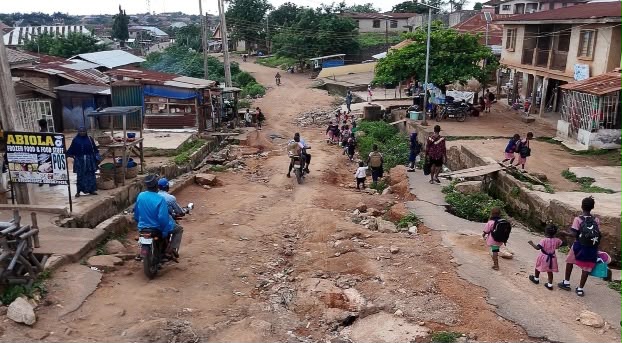
His revelation comes against the backdrop of widespread complaints by residents across the state’s 30 local government areas over deteriorating roads, poorly equipped primary healthcare centres, failing public water systems and under-resourced schools, despite the substantial allocations to the councils.
The situation has raised questions about the whereabouts of the funds, who has authority over the council accounts and why the resources have not translated into improved public services.
According to data generated through Amoye, a civic-tech artificial intelligence chatbot introduced by Insight Initiative for Community and Social Development, the councils received a total of ₦238.4 billion in federal allocations within the 18-month period.
However, the political crisis surrounding the councils has left competing factions laying claims to authority, while residents continue to grapple with the consequences of poor service delivery.
Awotunde said he had initially been asked to verify the authentic signatories to the council accounts during the dispute. After completing the exercise, he submitted the details to the CBN and UBA.
But when he requested bank statements for specific months to enable him to carry out his statutory responsibilities, the CBN reportedly declined, asking him to provide the relevant account numbers.
He said he subsequently contacted the state Attorney-General and the Ministry of Justice, which assisted in submitting another request to the apex bank, but there had been no response.
“I connected with the attorney-general; they gave me two lawyers; as the Ministry of Justice, we wrote another one. Till now, we have not heard from the bank,” he said.
The auditor-general insisted that the political disagreement should not prevent the scrutiny of public funds.
“Politically I cannot say anything about that, but based on my professional area, I must be able to access it. Whether directly or indirectly, it is public funds; we need to audit it,” he said.
The accountability concerns are reflected in the experiences of residents in several communities visited by DevReporting.
At Oore, a village near Iragbiji in Boripe Local Government Area, Suliat Oyetunji said she was forced to deliver her twins at home after failing to obtain dependable maternal care at the community’s primary healthcare centre.
She said nurses were frequently unavailable whenever she visited the facility, forcing her to seek medical attention in Iragbiji, about four kilometres away.
When reporters visited the health centre, it was locked.
At Okebode in Atakunmosa West, a healthcare worker, Ayoola Odunayo, said staff had to use mobile phone flashlights to deliver pregnant women because of the absence of electricity.
“We also do not have the necessary equipment or drugs. In addition, we need more beds for our patients,” she said.
The challenges extend to education, where communities have reported severe shortages of teachers and deteriorating school infrastructure.
At Oore, the Baale, Adekunle Mudashiru, said the renovated public primary school had only one teacher, who also served as headmaster.
“We have only one teacher in the school who is also the headmaster. We need at least five teachers,” he said.
Residents in Odofin, Ifelodun Local Government Area, also complained that flooding had repeatedly disrupted movement along community roads, while some had resorted to sand-filling damaged roads through personal contributions.
The findings have further been reinforced by BudgIT, which monitored 28 primary healthcare centres across 10 local government areas between January and June 2026.
The organisation’s Head of Tracka, Joshua Osiyemi, said none of the facilities met all the required standards.
According to him, only one facility had an ambulance, three had laboratories, four had doctors, while 12 had functioning water facilities.
Osiyemi said the findings were troubling given the increased funding available to primary healthcare facilities through the Basic Health Care Provision Fund.
“These are monies that should go into more service delivery, more improvement in terms of the quality of healthcare that you get,” he said.
BudgIT also monitored 13 school projects, finding that eight had been completed, two were ongoing and two had not been executed. It further reported a case where payment had been made for a school pit latrine that was yet to be constructed.
The organisation said it had submitted a Freedom of Information request to the state government seeking clarification on the project but had not received a response at the time of the interview.
The prolonged political dispute over the councils dates back to the local government election conducted in October 2022, which produced APC chairmen and councillors before the election was nullified by the Federal High Court in Osogbo.
The Osun State Government subsequently conducted another local government election in February 2025, producing a new set of officials. However, the APC interpreted a Court of Appeal ruling shortly before the poll as reinstating its previously elected chairmen.
The ensuing confrontation over council secretariats resulted in violent clashes and reported deaths, including that of Remi Abass, a former chairman of Irewole Local Government, and six others.
The crisis has been further complicated by competing interpretations of court decisions and the Supreme Court judgment affirming financial autonomy for local governments.
While the PDP-aligned chairmen say they have been unable to access the allocations since their election, the APC faction has confirmed opening new accounts with UBA but says it cannot determine the exact amounts credited.
Adegoke Ogunsola, the APC factional chairman of Irepodun Local Government and legal adviser to the state chapter of the APC-led Association of Local Governments of Nigeria, said the party’s chairmen complied with the CBN directive to open commercial bank accounts.
“Even as the chairman of my LGA, I cannot tell how much is in the account, because I do not receive alerts when it is credited,” he said.
The state Commissioner for Local Government and Chieftaincy Affairs, Dosu Babatunde, however, criticised the arrangement, accusing the APC factional chairmen of appointing unauthorised persons to operate the accounts.
He said the state government had approached a court to prevent the bank from releasing further funds to the factional chairmen.
UBA, through its Group Head of Media and External Relations, Ramon Nasir, declined to comment, citing the ongoing litigation.
“The case is subjudice. It is before a competent court for determination. We cannot make any comment so as not to run foul of the law,” he said.
For residents, however, the political and legal disputes have not translated into relief from the daily challenges of accessing basic services.
A professor of Political Science at Obafemi Awolowo University, Damilola Agbalajobi, said local governments were expected to provide essential services closest to the people, making accountability over their allocations particularly important.
“Those resources should be used to improve infrastructure, strengthen security and provide basic social services so that citizens can enjoy the dividends of democracy,” she said.
Agbalajobi added that the uncertainty surrounding local government administration had made it difficult for residents to determine who should be held responsible for the failure of basic services.
“More importantly, it raises critical questions about accountability. If funds are being allocated to local governments, where are those resources going?” she queried.
With ₦238.4 billion reportedly allocated to Osun’s councils within 18 months, the unresolved questions remain: who controls the money, who is spending it, and why are the communities it is meant to serve still struggling for basic amenities?