Idongesit Mishael, Abuja
The Minister of Finance and Coordinating Minister of the Economy, Mr Taiwo Oyedele, has warned that Nigeria’s efforts to attract long-term investments and sustain economic growth could be undermined by poor communication, misinformation and declining public confidence in institutions.
He said the ability of government and businesses to attract capital, secure public cooperation and sustain economic reforms depended largely on the credibility of information they provided and the extent to which their actions matched their public commitments.
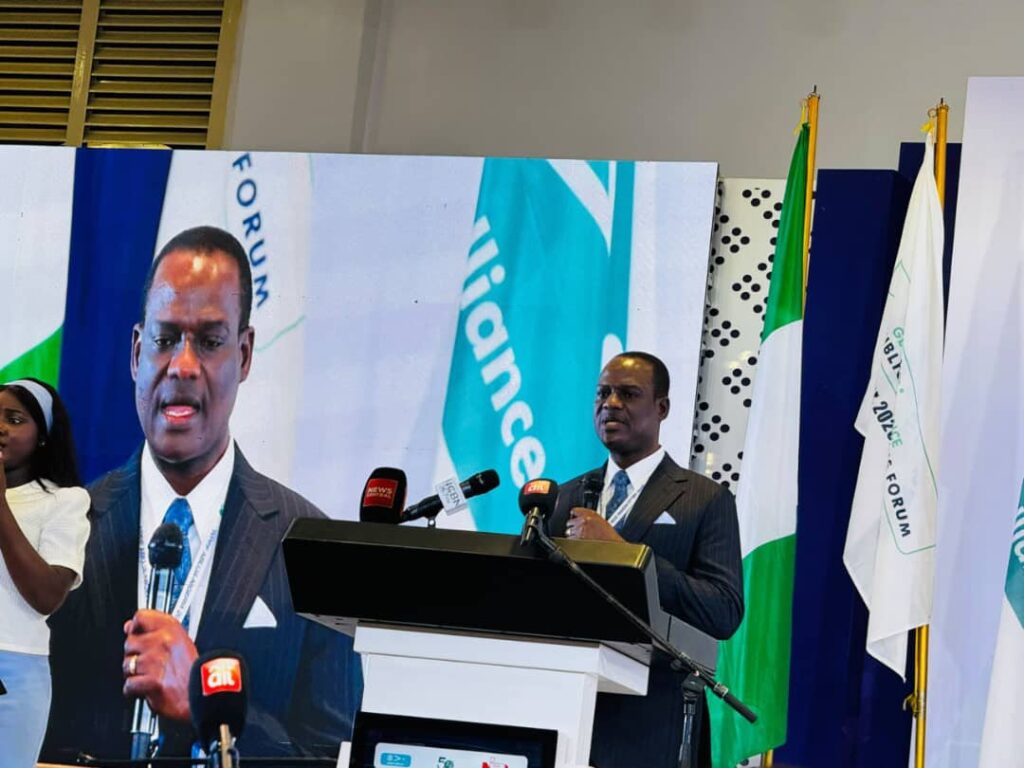
Oyedele, who spoke on Responsible Business Communication: Building Trust and Financing Investments for Sustainable Human Development at the ongoing World Public Relations Forum (WPRS 2026) in Abuja, described trust as an underlying economic asset that influences investment decisions, business expansion and citizens’ acceptance of government policies.
“As Minister of Finance, I spend much of my time thinking about currencies. How we earn them, how we manage them, and what their value is. But today, I want to speak to you about the one that sits beneath all the other currencies, and that currency is trust,” he said.
According to him, investors are more willing to commit capital to economies where institutions are credible, policies are clearly communicated and public confidence is sustained, while weak trust makes even well-intentioned reforms difficult to implement.
“When trust is strong, citizens cooperate, capital flows, and businesses invest for the long term. Difficult reforms get a fair hearing. When trust weakens, every single policy meets suspicion,” he stated.
The minister noted that Nigeria’s economic performance could not be assessed solely through official indicators without considering the experiences of households and businesses.
Citing the October 2026 inflation rate of 14.06 per cent, reportedly the lowest in six years, Oyedele acknowledged that the decline had not translated into an immediate reduction in the cost of living for many Nigerians.
He explained that falling inflation meant prices were increasing at a slower rate, not that the prices of goods and services had returned to previous levels.
“Falling inflation does not mean falling prices. It means prices are rising more slowly than before,” he said.
Oyedele argued that responsible economic communication must acknowledge the difference between improving macroeconomic indicators and the financial pressures confronting ordinary citizens.
“An improving indicator does not mean a struggling family’s experience is untrue, just as a struggling family’s experience does not make an improving indicator false. Responsible communication must make room for both,” he added.
He also identified misinformation as a major challenge to the Federal Government’s tax reforms, particularly where misleading interpretations had created apprehension among small businesses and low-income earners.
According to him, although the reforms contained provisions intended to protect vulnerable groups and exempt qualifying small businesses, inadequate explanations and frightening narratives had made some intended beneficiaries suspicious of the policy.
“Facts do not defend themselves. In a contest between a careless explanation and a frightening headline, the headline wins, and wins in the short term,” he observed.
The minister urged government institutions to communicate the provisions, exemptions and implications of economic policies early enough to prevent misinformation from shaping public perception.
He also expressed concern over the influence of social media monetisation, noting that platforms increasingly rewarded sensational and negative content, while artificial intelligence had made it easier to produce fabricated images, voices and documents capable of misleading the public.
Oyedele challenged public relations professionals to move beyond managing institutional image and become active participants in policy formulation and corporate decision-making.
“Public relations is too often invited into the room after a decision has become a crisis. Your contribution must begin earlier at the design table,” he told participants.
He said communication experts should help institutions identify public concerns, test policy assumptions and determine whether proposed decisions could be clearly explained before implementation.
On Nigeria’s international image, Oyedele warned that persistent negative portrayals of the country could carry economic consequences through weakened investor confidence, talent migration and increased perceptions of business risks.
He cited expressions such as “Nigeria is finished”, “Nigeria is a scam” and “Nigeria happened to me” as examples of narratives that, while reflecting genuine frustrations, could become damaging when repeated without adequate attention to verifiable developments.
The minister, however, acknowledged the importance of investigative journalism and citizens’ right to hold public institutions accountable, urging media practitioners to balance criticism with accurate reporting of measurable progress.
He called on journalists, publishers, broadcasters and public relations professionals to resist the pressure of social media algorithms and commercial incentives when these conflict with public interest.
“Verify before you are amplified. Correct as loudly as reported when you make mistakes. Hold good news and bad news to the same standard of proof,” he advised.
He further urged government agencies, businesses and non-governmental organisations to identify gaps between their public commitments and actual service delivery, assign responsibility for correcting them and establish clear timelines for improvement.
Oyedele maintained that the credibility of institutions should not be measured by media visibility or the volume of their publicity but by whether their communication accurately reflects their performance and citizens’ experiences.
“The most valuable currency for any economy, any enterprise, any society, is trust,” he declared.
He also encouraged international delegates at the forum to develop a more balanced understanding of Nigeria beyond prevailing negative media narratives, urging them to explore Abuja and interact with Nigerians.
“Nigeria, like the rest of Africa, is much better than the headlines suggest,” he said.