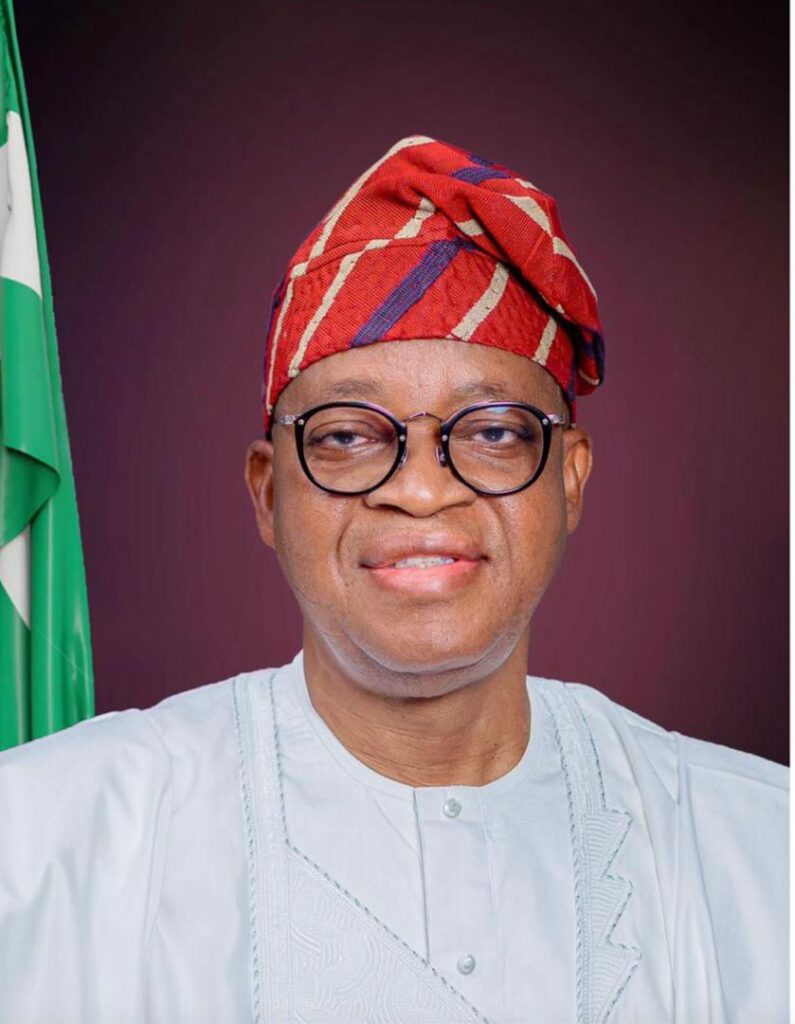

The Federal Government’s decision to end petrol subsidy has potentially saved Nigeria from an annual financial burden of about ₦21 trillion at the current exchange rate, Minister of State for Petroleum Resources (Oil), Heineken Lokpobiri, has said.
Lokpobiri, who defended the policy amid renewed pressure over rising petrol prices, said retaining the subsidy would have placed the country on an unsustainable fiscal path and could eventually have produced an economic crisis similar to that experienced by Venezuela.
Speaking on Channels Television’s Politics Today, the minister said the decision by President Bola Tinubu to end the subsidy on May 29, 2023, was taken at a critical point when government could no longer sustain the cost of keeping petrol prices artificially low.
“This decision was made at the right time and if it wasn’t made then, Nigeria would have been like Venezuela,” Lokpobiri said.
He explained that the ₦21 trillion estimate was derived from the former daily subsidy expenditure of about ₦18.4 billion, which, under the exchange rate prevailing at the time, represented roughly $15 billion annually. At an exchange rate of about ₦1,400 to the dollar, he said, the same annual obligation would translate to approximately ₦21 trillion.
According to the minister, the subsidy regime had therefore become a major drain on public finances, with government spending billions of naira daily to bridge the gap between the cost of petrol and the controlled price paid by consumers.
He said the removal of the subsidy had freed resources for distribution through the Federation Account Allocation Committee (FAAC), pointing to monthly allocations now running into trillions of naira as evidence of increased revenues available to the three tiers of government.
“When, at the end of every month, the FAAC is convened, these days we get N2.3 trillion, N2.1 trillion. This is the first time it has happened,” Lokpobiri said.
The minister also rejected the argument that Nigeria’s growing crude oil production should automatically translate into cheaper petrol, explaining that crude oil and refined petroleum products operate within an international market whose prices are influenced by global developments.
“Oil and gas is a global commodity,” he said, arguing that Nigeria cannot isolate its domestic petrol market from international energy prices while maintaining a deregulated downstream sector.
His position comes as rising global oil prices and tensions in the Middle East continue to place pressure on petrol prices in Nigeria. Recent reports put petrol prices at around ₦1,400 per litre in Lagos and Abuja, with higher prices reported in some northern markets.
Lokpobiri maintained that the Federal Government does not have the power to arbitrarily dictate pump prices under the deregulated system, insisting that doing so would effectively require government to return to subsidising the product.
“No, we don’t,” he said when asked whether government could simply control petrol prices, adding that the downstream sector was “completely deregulated in line with global best standards.”
The minister argued that deregulation was also necessary to encourage private investment across the petroleum value chain, particularly in refining, saying investors would have had less incentive to commit capital if government continued importing products and selling them below market value.
“Deregulation all over the world is to enable private sector businesses to thrive,” Lokpobiri said, pointing to the emergence of large-scale domestic refining capacity as part of the changing economics of Nigeria’s petroleum industry.
He further said the subsidy regime had not only imposed a fiscal burden on Nigeria but had also created distortions in the downstream market, including incentives for subsidised petrol to move across Nigeria’s borders.
Lokpobiri’s defence comes as the subsidy question has again become a major public issue, with higher petrol prices placing additional pressure on household purchasing power. The government maintains that the fiscal savings and investment opportunities created by deregulation justify the reform, while critics have focused on its immediate cost to consumers.
For Lokpobiri, however, reversing the policy would mean returning to the fiscal pressures that prompted its removal in the first place. He argued that the central issue was no longer whether Nigeria could keep petrol artificially cheap, but whether the country could build a petroleum market capable of attracting investment, expanding domestic refining and reducing dependence on government intervention.
He said the administration would therefore continue to allow market forces to determine petroleum prices, even as global energy shocks continue to affect the Nigerian market.