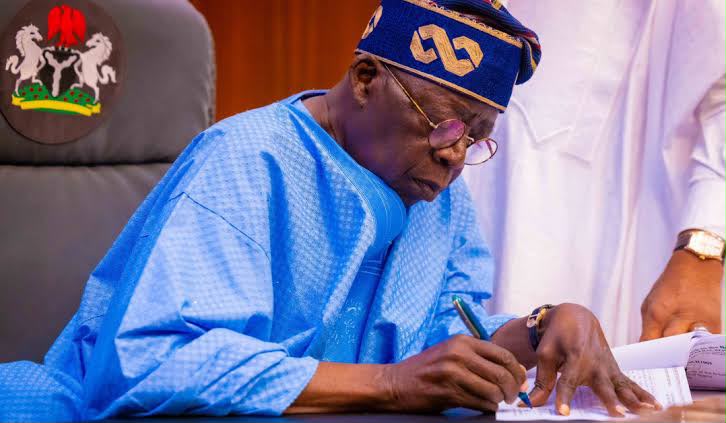
President Bola Tinubu has sought another Senate approval to secure $20.52 billion and €1.045 billion in external loans, citing Nigeria’s infrastructure deficit, employment generation, food security and economic growth as reasons for the proposed borrowing.
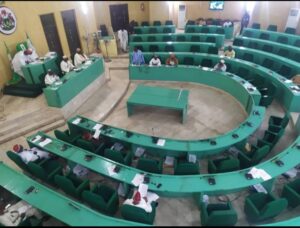
The request, covering the 2026–2027 fiscal period, was conveyed to the Senate in a letter read by Senate President Godswill Akpabio during Tuesday’s plenary.
Tinubu said the proposed facilities would finance development projects across the country, including investments in power, transportation, agriculture, healthcare, education, water supply and security.
The President argued that the scale of Nigeria’s infrastructure deficit and the substantial resources required to address it had made additional external borrowing necessary to bridge the funding gap.
He said the proposed projects were selected after technical and economic assessments and were expected to stimulate economic growth, create jobs, promote skills acquisition and entrepreneurship, reduce poverty and strengthen food security.
According to the letter, the proposed facilities amount to $20,517,755,901 and €1,045,083,643, with projects expected to be spread across the 36 states and the Federal Capital Territory.
Tinubu identified power, transportation and healthcare as among the critical sectors expected to benefit from the financing, while stressing that prompt approval would facilitate timely disbursement and project implementation.
He urged the National Assembly to give the request urgent consideration, arguing that the investments would help the government meet its development obligations to Nigerians.
However, the letter presented to the Senate did not contain a detailed breakdown of individual projects, the allocation for each sector or the specific terms and conditions of the proposed loans.
Following the presentation, Akpabio referred the request to the Senate Committee on Local and Foreign Debts for further legislative scrutiny and directed it to report back to plenary within one week.
The committee may work with the Senate Committee on Appropriations and other relevant committees in examining the proposal.
It could be recalled that since 2025, the Tinubu administration has pursued several major borrowing arrangements for budget financing, debt refinancing and infrastructure development. In July 2025, the Senate approved an external borrowing plan involving $21.54 billion, €2.19 billion and ¥15 billion, alongside a €65 million grant, to support projects across key sectors.
In October 2025, the National Assembly approved a separate $2.347 billion external financing request to part-finance the 2025 budget deficit and refinance maturing Eurobonds, alongside a proposed $500 million international Sukuk issuance for infrastructure. The Senate also approved a ₦1.15 trillion domestic borrowing request in November 2025 to cover part of the budget deficit.
In March 2026, the Senate approved additional external financing requests totalling $6 billion for budget financing, debt management and the rehabilitation of Lagos and Tin Can Island ports. The following month, it approved a further $516 million syndicated loan for the first phases of the proposed Sokoto–Badagry Super Highway.
The latest request adds to the administration’s borrowing proposals, renewing legislative scrutiny of the scale of external financing, its terms and the specific projects expected to benefit. The amounts cited represent separate financing plans and approvals, not necessarily funds already fully borrowed or disbursed.