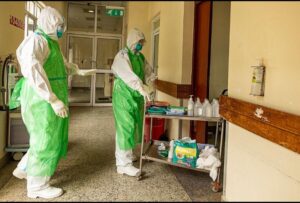

The number of Delta communities affected by the latest oil spill from the Trans Forcados pipeline has risen from an initial 86 to 216, with Governor Sheriff Oborevwori directing immediate medical intervention for residents exposed to the pollution.
Oborevwori gave the figure on Tuesday during an inspection visit to Odidi community, where he ordered the deployment of medical teams to the affected communities to assess the health implications of the spill.
The governor said the scale of the pollution had made the situation too serious for delayed action, warning that prolonged exposure could pose risks to the health and livelihoods of residents.
“We have to take this matter seriously. Once you see what is happening, you realise that it is a very big issue. We don’t want our people dying at this time,” Oborevwori said.
He directed the Commissioner for Health to immediately deploy medical personnel to the affected areas and also asked Heritage Energy Operational Services Limited (HEOSL), the operator, to provide medical support and relief materials.
The medical teams, he said, would examine residents, assess the health impact of the pollution and determine the intervention required in the affected communities.
The governor said the response would not be limited to compensation, stressing that the immediate priority was to protect lives, restore the environment and safeguard the livelihoods of residents who depend largely on fishing.
The spill, which originated around the Ekeremor manifold/loading point in an area disputed by Odidi and Yeye communities in Warri South-West and Burutu Local Government Areas, has reportedly polluted waterways and fishing grounds in the affected areas.
Oborevwori said the operating company had assured the government that the technical work to contain the spill and clean up the affected areas would be completed before the end of October.
He, however, warned that the commitments made by the company must be honoured, directing the Commissioners for Oil and Gas and Environment to monitor compliance with the agreed timeline and report back to him.
The governor also called for genuine dialogue between the oil company and host communities, saying sustained engagement was necessary to resolve the immediate crisis and prevent further tension.
He appealed to the affected communities to remain peaceful and law-abiding, assuring them that his administration would continue to engage the relevant stakeholders until their concerns were addressed.
Beyond the emergency response, Oborevwori approved the construction of a landing jetty for Odidi and directed the Chairman of Warri South-West Local Government Area to provide a modern health centre for the community.
The President of the Ijaw Youth Council, Dr. Doubra Okotete, had earlier called for urgent measures to stop the pollution and comprehensive remediation of the affected areas.
Okotete also called for compensation for affected residents and increased medical support, particularly for people experiencing respiratory problems.
The Chairman of Odidi community, Mr. Truston Gbenekama, thanked the governor for visiting the area but appealed for the provision of potable water, environmental reclamation, a landing jetty and a health centre.
Meanwhile, the General Manager, Operations Integrity, Heritage Energy Operational Services Limited, Nelson Wilbert, said the company was working with the state government, host communities, the Nigerian Upstream Petroleum Regulatory Commission and other stakeholders to resolve the crisis.
Wilbert said the immediate focus was to complete the technical operations required to stop the spill, including installation and pressure testing, before restoring normal operations safely.
He added that the company would work with regulatory authorities and affected communities to assess the environmental damage, undertake clean-up operations and provide appropriate compensation.
The latest incident has revived concerns over the vulnerability of the Trans Forcados pipeline, which has suffered several disruptions and oil spills over the years.
The 87-kilometre, 48-inch pipeline, with a capacity of more than 200,000 barrels of crude oil per day, transports crude from oil fields in the western Niger Delta to the Forcados terminal.