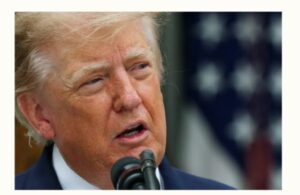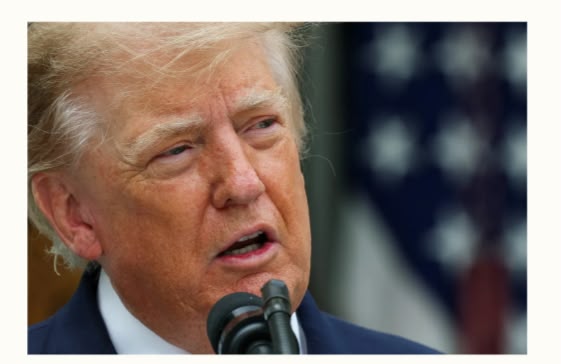
President Donald Trump is facing growing dissatisfaction among Republican voters over the cost of living, with a new poll showing that more members of his party disapprove than approve of his handling of prices, just 18 days before the November 3 midterm elections.
The Associated Press-NORC survey found that only 44 per cent of Republican voters approved of Trump’s handling of prices, while 54 per cent backed his broader management of the economy, exposing a gap between party loyalty and confidence in the administration’s economic performance.
The findings present a challenge for Republican candidates seeking to retain congressional control, as rising living costs remain a dominant concern among voters and Democrats show greater enthusiasm for participating in the election.
The survey also found that 58 per cent of Republican voters wanted substantial changes or a complete overhaul of how the country is governed, suggesting that dissatisfaction within Trump’s political base extends beyond individual economic policies.
Economic concerns are cutting across party lines. Eighty-five per cent of registered voters identified the economy as a major election consideration, while 84 per cent said the cost of living would influence their vote. Overall, 79 per cent disapproved of Trump’s handling of living costs, while 74 per cent disapproved of his broader economic performance.
Trump’s overall job approval stood at 36 per cent, against 64 per cent who disapproved, according to the poll.
The pressure on Republicans is compounded by a reported 13-point Democratic advantage in voting enthusiasm. About three-quarters of Democrats considered voting extremely important, compared with approximately six in 10 Republicans, raising the possibility that dissatisfaction could translate into lower turnout among otherwise loyal GOP supporters.
Such a development could prove consequential in closely contested congressional races, where the outcome may depend not only on persuading undecided voters but also on ensuring that existing supporters turn out.
White House spokesman Davis Ingle rejected suggestions that Republican dissatisfaction would undermine the party’s electoral prospects, describing Trump as the party’s “unequivocal leader, best messenger, and unmatched motivator.”
The Republican National Committee also maintained that it was focused on protecting and expanding the party’s congressional majorities, saying it was directing resources towards competitive races to promote the administration’s record.
Democrats, however, have sought to make economic pressure a central argument against continued Republican control, accusing Trump’s tariff policies and the prolonged conflict with Iran of worsening conditions for American households.
The poll suggests that the administration’s difficulties are not confined to prices. Only 69 per cent of Republican voters approved of Trump’s handling of foreign policy as the conflict with Iran entered its eighth month, while immigration and crime ranked below healthcare and the war among voters’ leading election concerns.
The findings also indicate that Democrats may be benefiting more from dissatisfaction with the governing party than from widespread public confidence in their own political organisation. About 47 per cent of voters preferred Democratic control of the House of Representatives, compared with 38 per cent who favoured Republican control. The Senate figures showed a similar pattern, with 46 per cent preferring Democratic control and 38 per cent supporting Republican leadership.
Neither party enjoyed broad public approval. Approximately 40 per cent of voters viewed the Democratic Party favourably, while 36 per cent held a favourable view of the Republican Party.
The electoral environment also reflects a historical disadvantage for the governing party. Republicans face the pattern of the president’s party losing House seats in 18 of the 20 midterm elections since 1946, although individual results depend on local contests, candidates and turnout.
The AP-NORC survey was conducted from October 8 to 12 among 1,119 American adults, including 925 registered voters. The margin of sampling error was 3.9 percentage points for the full adult sample and 4.2 points for registered voters, with wider margins for individual political groups.
With Election Day approaching, the central question for Republicans is whether dissatisfaction over household expenses will remain a criticism of the administration or develop into electoral disengagement that costs the party congressional seats.
For Trump, the poll presents a warning that maintaining the loyalty of Republican voters may not be enough if concerns about prices and economic conditions weaken their willingness to vote.