The United Kingdom and the European Union have reached agreements in principle on three areas of cooperation aimed at improving trade and expanding opportunities for young people, but a disagreement over university tuition fees has delayed their implementation.
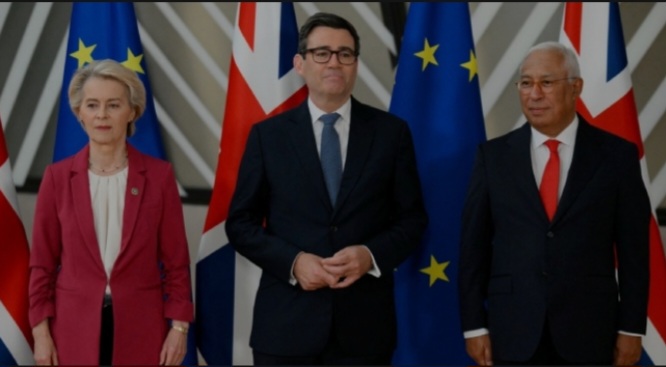
The developments followed a summit in Brussels on Friday involving British Prime Minister Andy Burnham, European Commission President Ursula von der Leyen and European Council President Antonio Costa, as both sides seek to strengthen relations following Britain’s departure from the bloc.
Channels Television reported that the proposed arrangements cover agricultural and food trade, emissions trading and a youth mobility scheme designed to allow citizens from both sides to live, work or study in each other’s territories for up to three years.
Under the youth programme, up to 100,000 participants from each side, aged 31 or younger, would be eligible to take part, creating opportunities for temporary residence, employment, education and travel.
However, the implementation of the arrangements remains tied to negotiations over tuition fees for European Union students attending British universities. Brussels wants eligible EU students to pay the same rates as their British counterparts, a position that has yet to be resolved.
Both sides have given themselves six months to settle the disagreement, with the EU making the implementation of the three agreements conditional on reaching an understanding on tuition fees. Consequently, none of the agreements was signed at Friday’s summit.
Beyond the immediate negotiations, Burnham has indicated that Britain will begin discussions with its European partners on the country’s long-term relationship with the bloc. The options could range from maintaining existing arrangements to closer economic integration through the customs union or eventual EU membership.