Ukraine has accused Russia of allegedly diverting more than 54,000 tonnes of Ukrainian wheat from occupied territory to foreign markets, warning that the disruption of its grain exports could worsen food insecurity and raise import costs for African countries.
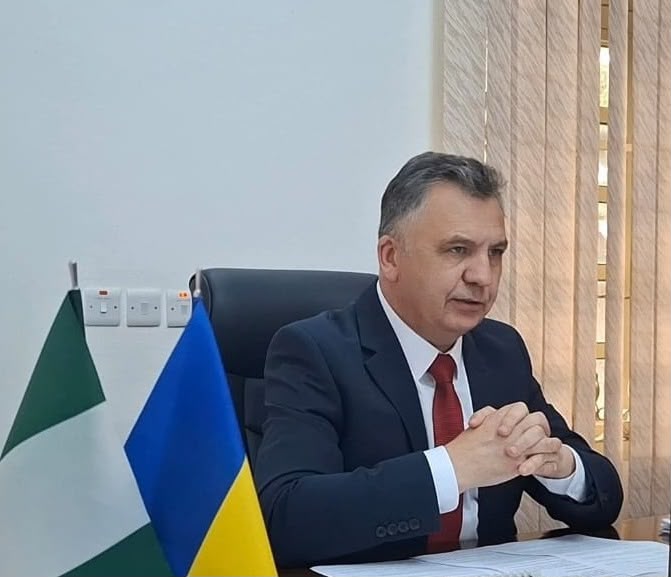
The Ukrainian Ambassador to Nigeria, Ivan Kholostenko, said the alleged diversion of grain, alongside attacks on agricultural facilities and export infrastructure, threatened the stability of international food markets and deprived Ukraine of revenue from its agricultural resources.
In a statement on Tuesday, Kholostenko cited a case announced by Ukrainian law enforcement authorities on October 19, 2026, involving the Russian cargo vessel Matros Pozynich, whose captain was accused of arranging the transportation of more than 54,000 tonnes of Ukrainian wheat from occupied Crimea to Syria.
According to the ambassador, Ukrainian investigators alleged that the shipment was presented as Russian-origin agricultural produce, while the vessel’s location data were manipulated to conceal the operation.
Ukrainian authorities have reportedly classified the alleged transportation of grain unlawfully seized from occupied territory as a war crime. The allegations against the vessel’s captain have not been independently established in the information provided.
Kholostenko said the case illustrated what Ukraine considers a two-pronged threat to its agricultural economy: the obstruction of legitimate exports and the alleged appropriation of grain from territories under Russian occupation.
He accused Moscow of using food supplies as a means of exerting political pressure, arguing that the consequences of the war extended far beyond Ukraine to countries dependent on imported wheat and other essential commodities.
“Russia has not only launched a full-scale war against Ukraine but is also attempting to use hunger as a weapon and food security as an instrument of international pressure and blackmail,” he said.
The ambassador warned that African countries could be particularly vulnerable to fluctuations in global grain prices because of their dependence on imported food, rising import costs and the effects of climate change on domestic agricultural production.
Before Russia’s full-scale invasion in February 2022, Ukraine accounted for approximately 10 per cent of global wheat exports and 12 per cent of corn and barley exports, according to figures cited by Kholostenko.
He added that estimates by the United Nations World Food Programme indicated that Ukraine’s agricultural potential, without the disruption caused by the war, could provide enough food for about 400 million people.
The ambassador identified attacks on grain storage facilities, damage to port infrastructure, mines on agricultural land and the alleged removal of grain from occupied territories as factors undermining Ukraine’s ability to maintain its contribution to global food supplies.
He also pointed to the collapse of the Black Sea Grain Initiative, an agreement brokered with United Nations support in July 2022 to facilitate the safe export of Ukrainian grain and other food commodities during the conflict.
Kholostenko said Russia launched a missile strike on the port of Odesa less than 24 hours after the agreement was signed, highlighting the vulnerability of Ukraine’s agricultural export infrastructure.
The initiative subsequently enabled millions of tonnes of Ukrainian agricultural products to reach international markets before Russia withdrew from the arrangement in July 2023.
According to the ambassador, global grain prices rose by eight per cent in a single day following the withdrawal, illustrating how developments in the Black Sea corridor could affect international commodity markets.
Ukraine has since pursued alternative export routes to sustain agricultural shipments despite continuing security risks.
Kholostenko said his country would continue documenting the alleged removal of grain from occupied territories and seeking legal accountability for those involved in its transportation and sale.
He maintained that protecting Ukrainian agricultural production and restoring reliable export routes were essential to reducing disruptions in global food supplies.
The ambassador called on the international community to oppose the use of food and agricultural commodities as instruments of military or political coercion.
“Food must never become a weapon, and hunger must never be used as an instrument of political blackmail,” he said.
He added that Ukraine remained committed to restoring stable agricultural exports and cooperating with international partners to protect food security despite the continuing war.