Global temperatures could climb by as much as 2.8°C above pre-industrial levels before the end of the century if countries maintain their existing climate policies, according to a new United Nations assessment.
The projection was contained in the United Nations Environment Programme’s (UNEP) annual Emissions Gap Report, released on Wednesday, which highlights the widening gap between current government commitments and the emissions cuts required to limit global warming.
According to The Independent, the report estimates that even if countries fulfil their existing climate pledges, global warming would reach approximately 2.6°C by 2100. The temperature increase could be restricted to 2.1°C only if governments also meet additional net-zero targets.
The assessment indicates that countries’ current nationally determined contributions under the Paris Agreement would reduce global emissions by just five to eight per cent by 2030 and 11 to 15 per cent by 2035, compared with 2025 levels.
The report also found that recently submitted climate commitments have made little difference to the overall projections. It attributed the deterioration in the outlook partly to the United States’ renewed withdrawal from the Paris Agreement and revised estimates of historical emissions.
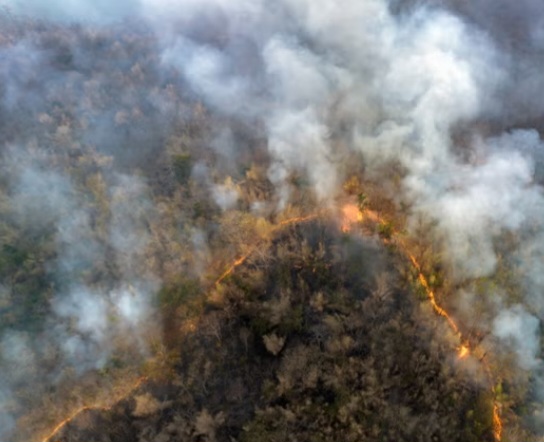
UNEP warned that exceeding the 1.5°C threshold would intensify climate-related dangers, including deadly heatwaves, droughts, wildfires and flooding. Further warming could also accelerate environmental damage, including the collapse of coral reefs, thawing permafrost and disruptions to ocean circulation.
However, the report said limiting the temperature overshoot remained possible if countries rapidly and substantially reduced greenhouse gas emissions. Under its most ambitious pathway, warming would peak between 1.7°C and 1.8°C around mid-century before potentially returning to 1.5°C or below by 2100.
Achieving that outcome would require global emissions to fall by 18 per cent by 2030, 45 per cent by 2035 and 69 per cent by 2040, relative to 2025 levels.
UN Secretary-General António Guterres maintained that temporarily exceeding the 1.5°C threshold should not prevent countries from pursuing the agreed climate target, stressing that the duration and scale of the overshoot could still be reduced.
UNEP Executive Director Inger Andersen also called for urgent action, warning that every additional fraction of a degree and each year of warming above 1.5°C would increase the risks facing communities, ecosystems and economies.
The report acknowledged progress in renewable energy deployment and climate policies since the Paris Agreement was adopted in 2015, noting that the growth in energy supplied by coal and oil had been slower than previously projected. However, it stressed that significantly faster and deeper emissions cuts were needed to bring the world closer to the agreement’s temperature goals.