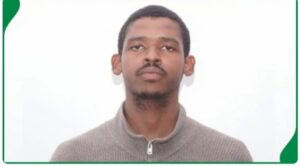

The University of Uyo says it has secured TETFund projects worth more than ₦10 billion within the first 100 days of Prof. Christopher Ekong’s tenure as Vice-Chancellor, with the intervention expected to trigger a major expansion of infrastructure on the institution’s main campus.
Ekong disclosed this in Uyo while marking his first 100 days in office, saying the volume of projects attracted from the Tertiary Education Trust Fund (TETFund) had exceeded the target he set for himself before assuming office.
According to him, the TETFund intervention, alongside more than 18 other projects and initiatives undertaken within the period, would significantly alter the physical outlook of the university, particularly as efforts intensify to relocate more faculties to the main campus.
“Since we came, we have been able to raise projects in this school from TETFund for over N10 billion. Very soon, you are going to see these projects sprouting everywhere on the landscape of this campus because we want to bring many of our faculties to this campus,” Ekong said.
He expressed concern over what he described as the comparatively limited presence of TETFund-funded infrastructure at the University of Uyo, noting that the new interventions were expected to address some of the institution’s infrastructure needs.
Beyond physical infrastructure, Ekong said his administration had introduced changes to the university’s admission process by returning the conduct of UTME admissions to departments and faculties within his first 100 days in office.
He said the move was designed to bring the admission process closer to the academic units, increase participation by relevant officers and strengthen accountability in the selection and admission of candidates.
The Vice-Chancellor also disclosed that 184 members of staff, including Deans, Heads of Departments and personnel responsible for quality assurance, had undergone training as part of efforts to strengthen institutional capacity and improve administrative effectiveness.
On digital identification and institutional data management, Ekong said the university had commenced the process of introducing biometric capturing for staff and students, with a comprehensive contract already secured for the project.
He explained that the biometric system would help establish a more reliable database of the university community while strengthening personnel management, security, access control and institutional planning.
The administration, he added, had also commenced a comprehensive institutional audit covering infrastructure, finances, human resources, academic programmes and administrative systems, while a Vice-Chancellor’s Performance Dashboard was being developed to enhance transparency and accountability.
Security also featured prominently in the administration’s first 100-day interventions, with Ekong saying efforts were underway to identify and block vulnerabilities across the university’s campuses.
He disclosed that closed-circuit television cameras had already been installed at the Administrative Block, with plans to extend the surveillance system to the institution’s five campuses.
According to him, the security architecture would also incorporate drones, biometric and log-in systems, improved access control, security personnel interventions and motorcycle patrols, while engagements with host communities had been completed.
Ekong said motorcycles had already been procured for patrol operations, adding that the combination of technology, improved surveillance and community engagement was intended to produce a stronger and more responsive security system across the university.
He further disclosed that the full digitisation of the university’s information and communication technology infrastructure had commenced, with the Central Administration Building scheduled to serve as the test location for the new digital system.