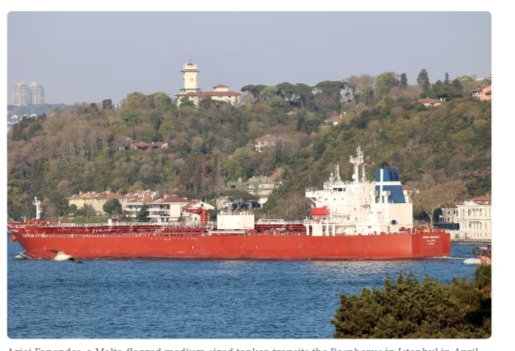
The United States appears to be taking a different approach to its relationship with Russia as a tanker carrying approximately 300,000 barrels of Russian diesel makes its way towards American shores, despite years of economic sanctions imposed on Moscow over its invasion of Ukraine.
The development marks a significant shift from Washington’s earlier position, when the US and its Western allies introduced sweeping restrictions against Russia in 2022. Those measures were designed to weaken the Russian economy, limit its oil revenue and isolate President Vladimir Putin’s government internationally.
However, the arrival of the Malta-flagged vessel, Agioi Fanendes, suggests that the administration of President Donald Trump may be willing to reopen economic channels with Moscow even as the war in Ukraine continues.
Trump’s decision has attracted criticism, particularly from those who believe that easing restrictions on Russian energy exports could undermine international efforts to hold Moscow accountable for its military actions in Ukraine.
The development also comes at a difficult time for American consumers, with fuel prices rising sharply ahead of the country’s midterm elections. Diesel prices have reportedly climbed above $6 per gallon, while average petrol prices have crossed the $4 mark.
The Trump administration has defended the arrangement, arguing that allowing Russian diesel into the market could help ease pressure on American fuel prices. However, energy analysts believe the shipment is too small to make any meaningful difference.
According to estimates from the US Energy Information Administration, the 300,000 barrels aboard the tanker represent only a fraction of America’s daily fuel consumption. Even the proposed importation of 2.2 million barrels of Russian diesel would not meet the country’s transportation needs for a full day.
Beyond the immediate fuel transaction, the development has raised questions about the possibility of broader economic cooperation between Washington and Moscow.
Reports indicate that discussions have extended to potential joint ventures involving data centres and liquefied natural gas projects in the Arctic. There are also expectations of a possible agreement involving the international assets of Russian oil giant Lukoil, with American investors reportedly part of the proposed arrangement.
Meanwhile, uncertainty remains over whether the tanker will successfully deliver its cargo to the United States. Two other vessels carrying Russian diesel have reportedly changed course, with concerns about possible legal consequences discouraging American buyers.
New Jersey Governor Mikie Sherrill has also warned port authorities and terminal operators that receiving Russian diesel could violate federal law and expose them to civil and criminal penalties. She accused Trump of helping finance Russia’s war in Ukraine rather than protecting American interests.
Despite the administration’s defence of the arrangement, questions remain about how far Trump is prepared to go in restoring economic relations with Putin. The latest development could represent an important turning point in US-Russia relations, but it has also exposed growing disagreements over America’s approach to the ongoing Ukraine conflict.