President Bola Tinubu has called on BRICS member states to support reforms of the global financial and governance systems, arguing that developing economies require institutions that better reflect current economic and demographic realities.
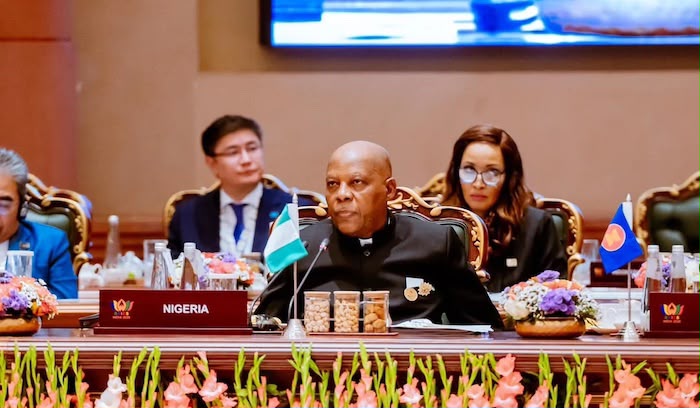
Tinubu made the call on Sunday at the 2026 BRICS Summit in New Delhi, India, in an address delivered on his behalf by Vice President Kashim Shettima, where he also positioned Nigeria as a major investment gateway to Africa.
The President said Nigeria supported reforms of the international financial system and the United Nations Security Council, stressing that BRICS could strengthen the voice of developing countries and promote a more equitable global economic order.
He urged BRICS to move beyond declarations to practical economic cooperation, particularly in trade, agriculture, food security, energy, infrastructure and manufacturing, with emphasis on technology transfer, local value addition, industrial capacity and job creation.
Tinubu identified Nigeria’s participation in the BRICS process as an opportunity to attract investment into the country, urging investors to consider Nigeria as a gateway to the continent’s expanding market under the African Continental Free Trade Area.
He said his administration’s economic reforms were focused on building resilience against global shocks through improved macroeconomic stability, production diversification, higher productivity, infrastructure development, human-capital investment and stronger private-sector participation.
The President also highlighted Nigeria’s young population as a major economic asset and called for deeper BRICS partnerships in artificial intelligence, digital infrastructure, fintech, telecommunications, cybersecurity, biotechnology and advanced manufacturing, saying countries must increasingly develop and own technology rather than depend on external systems.
Tinubu said stronger cooperation in these areas would help developing economies create knowledge, expand industrial capacity, generate employment and retain greater value from their resources, while Nigeria’s market size, youthful population and AfCFTA access could strengthen its position as a strategic destination for BRICS-linked investment.