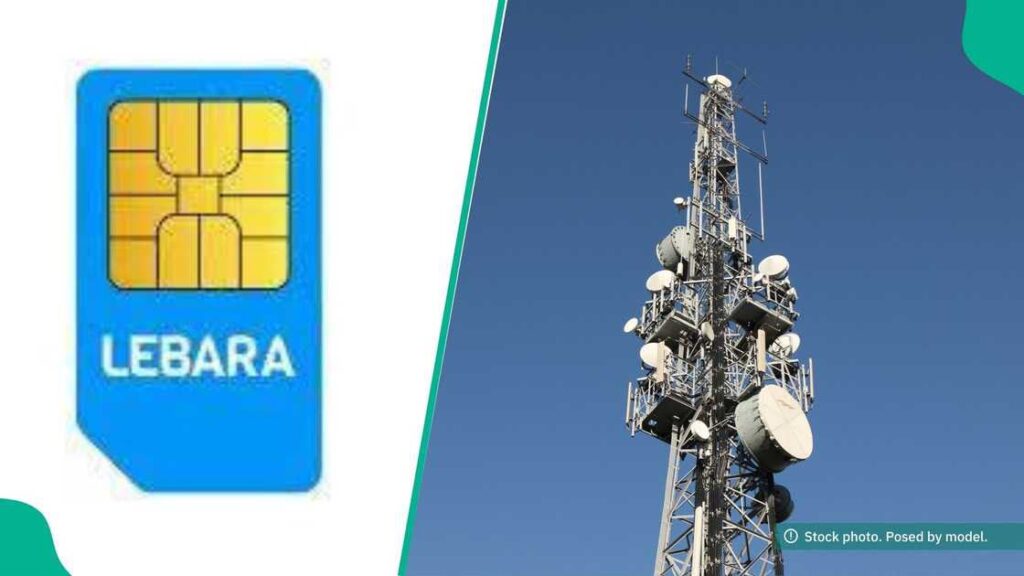
Nigeria’s telecommunications market is set for another layer of competition as Lebara, a new mobile network operator, has commenced nationwide commercial operations, bringing both physical SIM cards and eSIM services to consumers.
The operator officially opened its services to the public on Monday, according to a report by Legit.ng, positioning the company to compete in a market already dominated by established operators including MTN Nigeria, Airtel, Globacom and 9mobile.
Rather than building an entirely new telecommunications infrastructure, Lebara is entering the Nigerian market as a Mobile Virtual Network Operator (MVNO), using existing network infrastructure to deliver its services. The model allows the company to concentrate on customer-facing services and digital offerings while leveraging existing telecommunications networks.
Consumers can obtain Lebara SIM cards through more than 1,000 registered retail agents nationwide, with Slot stores among the outlets participating in the rollout. Customers seeking a fully digital onboarding process can also complete Know Your Customer verification and activate an eSIM through the My LebaraNG application.
Chief Executive Officer of Lebara Nigeria, Teniola Stuffman, said the nationwide launch marked an important stage in the company’s effort to establish its services in the Nigerian market, with emphasis on accessible connectivity and digital customer experiences.
Beyond conventional voice calls, SMS and mobile data, Lebara said its initial offerings would include usage monitoring, cloud storage, Buy Now Pay Later options for eligible devices and access to its entertainment platform, LebaraPlay.
The company is also opening opportunities for additional distributors as it seeks to expand its retail footprint beyond the more than 1,000 agents already connected to its distribution network.
With its nationwide rollout, Lebara becomes another player in Nigeria’s evolving telecom ecosystem, where MVNOs are increasingly creating alternatives to the traditional network-operator model and introducing new approaches to how consumers access connectivity and digital services.