Idara Jerome, Uyo
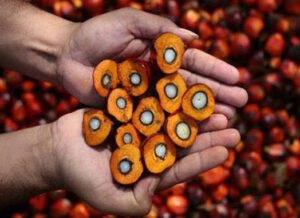
Thousands of smallholder oil palm farmers may remain trapped in low productivity and poor income unless ageing plantations are replaced with improved planting materials, Solidaridad Nigeria has said.
The organisation’s Programme Manager, Ernest Ita, said many farmers were still cultivating oil palm trees inherited from previous generations, with some plantations containing trees as old as 50 to 60 years.
Ita, who spoke in Uyo on Friday, said the problem of ageing palms was one of the major factors undermining efforts to raise farmers’ income and improve Nigeria’s competitiveness in the oil palm sector.
“You see trees, farmers, high-investment trees that are up to 50, 60 years. When something is old, it’s old. No matter the treatment you give, it cannot be productive,” he said.
He said Solidaridad had therefore developed a Sustainable Management Plan (SMP) to provide a framework for improving productivity, farmers’ livelihoods, environmental protection, social inclusion and policy coordination in Akwa Ibom, Cross River, Enugu and Kogi states.
According to him, the organisation’s interventions showed that farmers could significantly increase production through improved farming practices without clearing additional forests.
Ita said farmers who adopted the organisation’s Best Management Practices (BMP) increased their yield from a baseline of about 2.7 tonnes per hectare per year to more than six tonnes per hectare.
He, however, noted that adopting the practices required investment in farm maintenance, including pruning, canopy management and proper frond stacking, which many farmers could not afford because of limited access to finance.
“The major challenge is lack of access to finance, and then weak policy implementation on the part of government,” Ita said.
He said Solidaridad had reached more than 10,000 smallholder oil palm farmers and almost 5,000 palm oil processors as part of its efforts to improve both production and processing practices.
The organisation, he added, had distributed harvesting tools to about 7,000 farmers and supported about 600 farmer groups with improved planting materials.
In Akwa Ibom, Ita said about 120 farmers, organised in groups of 25, had received support and training on improved production practices.
He said the organisation had also introduced Village Savings and Loans Associations (VSLAs) to enable farmers mobilise funds within their communities to finance farm activities.
“It’s like a mini banking system. The farmers are the shareholders,” he said.
Ita said farmers were also being supported to obtain improved oil palm seeds from the Nigerian Institute for Oil Palm Research (NIFOR), raise seedlings and sell them to other farmers, creating an additional source of income.
Beyond productivity, he said the SMP was designed to address environmental and social problems associated with oil palm production, including deforestation, inappropriate use of fertilisers and agrochemicals, land tenure disputes and exclusion of women and young people from access to productive resources.
He said Solidaridad’s assessments conducted since the commencement of its oil palm project in 2019 had included scoping studies in 24 oil palm-producing states, climate vulnerability assessments in eight states and gender situation analysis in four states.
Ita said the findings showed that some farmers still believed that clearing forests was necessary to obtain higher yields, a practice he said the SMP sought to discourage through intensification of existing plantations.
“Rather than expansion, farmers should apply Best Management Practices to improve their yield,” he said.
He also linked sustainable production to Nigeria’s access to international markets, citing the European Union Deforestation Regulation, which places restrictions on commodities associated with deforestation.
Ita said the Sustainable Management Plan was developed through consultations with community, local government and state stakeholders before being validated, adding that Solidaridad was seeking government adoption or adaptation of relevant sections into agricultural policies and local bylaws.
Also speaking, Solidaridad Project Coordinator, Samson Shaibu, described the SMP as “the practical framework of oil palm development” across the four project states.
Shaibu said the framework was anchored on environmental stewardship, social inclusion, economic development and governance through policy coordination.
He said the plan focused on improving existing oil palm landscapes rather than encouraging expansion into forests, particularly because many plantations were dominated by wild and ageing palms.
Shaibu said smallholder farmers account for between 80 and 82 per cent of oil palm production, making improved productivity at that level critical to the development of the sector.
He said the SMP was ultimately aimed at improving the livelihoods of smallholder farmers while ensuring that oil palm production was carried out in an environmentally and socially sustainable manner.