Prospective cement distributors seeking to join the nationwide distribution network of HBM Nigeria Plc may need access to hundreds of millions of naira, with the Chinese-owned company setting a minimum working capital of N250 million for applicants.
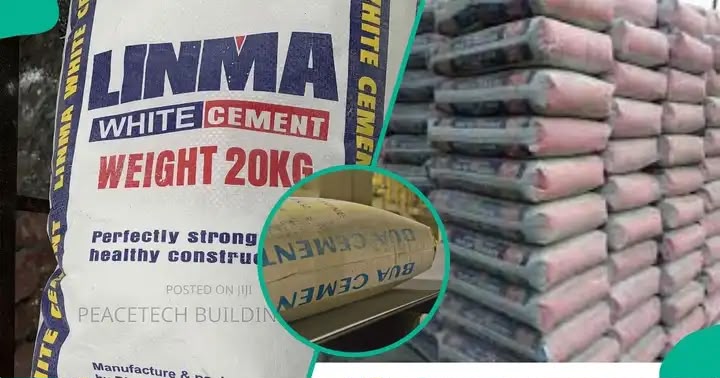
The recruitment drive, reported by Legit.ng on Monday, comes as the retail price of a 50kg bag of cement remains as high as N15,000 in some parts of Nigeria, putting fresh focus on the cost structure and availability of one of the country’s key construction materials.
Beyond the N250 million working-capital threshold, HBM is requiring prospective distributors to have a warehouse covering at least 500 square metres and access to five trucks, each with a capacity of either 20 or 40 tonnes.
Successful applicants will also be required to undergo training at the company’s Business Development Academy as part of the distributor onboarding process.
The requirements mean that becoming an HBM distributor could require substantially more capital than the headline N250 million working-capital figure.
According to an analysis cited by Legit.ng from Proshare, a prospective distributor who seeks to provide the required warehouse and trucking capacity could ultimately commit between N595 million and N1.25 billion.
At an assumed ex-factory price of N8,500 per 50kg bag, the N250 million working-capital requirement alone could finance the purchase of about 29,400 bags of cement in one lifting cycle, according to the analysis.
The recruitment is being undertaken as HBM seeks to expand its distribution footprint across Nigeria following its acquisition by China’s Huaxin Building Materials Limited.
Huaxin acquired an 83.81 per cent stake in Lafarge Africa Plc, which subsequently became HBM Nigeria Plc. The company operates production plants in Sagamu, Ewekoro, Ashaka and Mfamosing, with an installed annual production capacity of 10.5 million tonnes.
Rather than limiting its recruitment to traditional cement dealers, the company is seeking entrepreneurs with adequate financial capacity, logistics infrastructure and what it describes as a “growth mindset.”
The new requirements could potentially attract investors from sectors outside conventional cement distribution, including logistics, trading, agriculture, real estate and petroleum marketing, according to the Proshare analysis cited by Legit.ng.
But the expansion comes against a difficult price environment for cement consumers.
Proshare estimates that a 50kg bag currently sells for between N12,500 and N15,000, compared with about N5,500 to N6,000 in 2023.
At the midpoint of those respective price ranges, the cost of purchasing 100 bags would have risen from roughly N575,000 in 2023 to about N1.375 million currently—an increase of approximately N800,000.
The Federal Competition and Consumer Protection Commission has also been monitoring developments in the cement market. According to Premium Times, the regulator said cement prices increased from between N9,300 and N9,700 in January 2026 to as much as N13,000 by the middle of the year, with prices reaching N15,000 in some locations by July.
HBM’s wider distribution strategy could increase the availability of its products and intensify competition among distributors, but the expansion does not automatically guarantee lower retail prices.
Energy costs, transportation, inflation, foreign-exchange pressures and other production and distribution expenses remain significant factors in the final price paid by consumers.
The recruitment therefore presents a potentially significant business opportunity for well-capitalised entrepreneurs while simultaneously highlighting the considerable financial barrier to entry into formal cement distribution.
For the construction industry, the immediate issue remains whether expanded distribution and increased market reach will translate into improved availability and eventually moderate the cost burden facing builders, developers and prospective homeowners.